
Being alive on land: Proceedings of the International Symposium on Adaptations to the Terrestial Environment Held in Halkidiki, Greece, 1982: Tasks for Vegetation Science, cartea 13
Editat de N.S. Margaris, Margarita Arianoutsou-Faraggitaki, W.C. Oechelen Limba Engleză Paperback – 9 oct 2011
Din seria Tasks for Vegetation Science
-
 Preț: 33.22 lei
 - 18%
 Preț: 1171.70 lei
 - 20%
 Preț: 599.79 lei
 -
 Preț: 382.49 lei
 -
 Preț: 380.99 lei
 - 24%
 Preț: 854.48 lei
 - 18%
 Preț: 1754.49 lei
 - 18%
 Preț: 1171.27 lei
 - 18%
 Preț: 1263.54 lei
 -
 Preț: 71.00 lei
 - 18%
 Preț: 1174.45 lei
 - 18%
 Preț: 1171.27 lei
 -
 Preț: 424.29 lei
 -
 Preț: 381.92 lei
 - 18%
 Preț: 1172.94 lei
 - 18%
 Preț: 905.27 lei
 - 18%
 Preț: 907.10 lei
 - 24%
 Preț: 1707.09 lei
 - 18%
 Preț: 1183.12 lei
 - 24%
 Preț: 916.13 lei
 - 24%
 Preț: 1136.03 lei
 -
 Preț: 401.02 lei
 - 18%
 Preț: 1268.20 lei
 - 24%
 Preț: 847.22 lei
 - 18%
 Preț: 904.83 lei
 - 18%
 Preț: 947.94 lei
 - 24%
 Preț: 1148.45 lei
 - 18%
 Preț: 1183.12 lei
 - 18%
 Preț: 1228.89 lei
 - 24%
 Preț: 856.71 lei
 - 24%
 Preț: 1210.38 lei
 - 18%
 Preț: 914.66 lei
 - 18%
 Preț: 985.87 lei
 - 24%
 Preț: 849.83 lei
 - 18%
 Preț: 913.62 lei
 - 24%
 Preț: 849.89 lei
 - 24%
 Preț: 873.74 lei
 - 15%
 Preț: 679.53 lei
 - 18%
 Preț: 1000.20 lei
 - 18%
 Preț: 920.28 lei
 - 24%
 Preț: 948.53 lei
 -
 Preț: 389.65 lei
 - 18%
 Preț: 1170.96 lei
Preț: 387.47 lei
Puncte Express: 581
Carte tipărită la comandă
Livrare economică 07-21 decembrie
Livrare prin curier în România Termenul estimat este afișat lângă disponibilitate.
Transport gratuit de la 400.00 lei Plată online sau ramburs, în funcție de opțiunile comenzii.
Retur gratuit în 14 zile Comandă securizată și suport în română.
Specificații
ISBN-13: 9789400965805
ISBN-10: 940096580X
Pagini: 336
Ilustrații: 334 p.
Dimensiuni: 210 x 280 x 18 mm
Greutate: 0.76 kg
Ediția:Softcover reprint of the original 1st ed. 1984
Editura: SPRINGER NETHERLANDS
Colecția Springer
Seria Tasks for Vegetation Science
Locul publicării:Dordrecht, Netherlands
ISBN-10: 940096580X
Pagini: 336
Ilustrații: 334 p.
Dimensiuni: 210 x 280 x 18 mm
Greutate: 0.76 kg
Ediția:Softcover reprint of the original 1st ed. 1984
Editura: SPRINGER NETHERLANDS
Colecția Springer
Seria Tasks for Vegetation Science
Locul publicării:Dordrecht, Netherlands
V-ar putea interesa
-
 Anatomy of the Monocotyledons Volume X: OrchidaceaeWilliam Louis Stern-33%Preț: 1143.69 lei1699.34 lei
 -
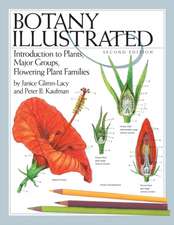 Botany IllustratedJanice Glimn-LacyPreț: 518.65 lei
 -
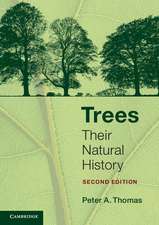 TreesPeter A. ThomasPreț: 419.24 lei
 -
 Plant Pathogen Resistance BiotechnologyDavid B Collinge-9%Preț: 1295.85 lei1424.01 lei
 -
 Principles of Plant NutritionKonrad Mengel-18%Preț: 2783.54 lei3394.56 lei
 -
 Nectaries and NectarSusan W. Nicolson-18%Preț: 1276.02 lei1556.13 lei
 -
 Rainfed Farming SystemsPhilip Tow-18%Preț: 1290.25 lei1573.48 lei
 -
 -18%Preț: 983.19 lei1199.01 lei
 -
 Physiological Plant EcologyWalter Larcher-18%Preț: 771.23 lei940.53 lei
 -
 Mutation Breeding in Chickpea:Imran Kozgar-15%Preț: 532.41 lei626.37 lei
 -
 Forest Tree Breeding in EuropeLuc E. Pâques-18%Preț: 1283.48 lei1565.22 lei
Public țintă
ResearchCuprins
One: Systems’ Adaptations.- 1. Convergence and non-convergence of Mediterranean type communities in the old and the new world.- 2. Functioning of tundra vegetation in relation to life forms.- 3. Adaptive plant evolution in the alpine environment of the Greek mountains.- 4. History and genetics of tolerance to the natural phyto-toxic media of western Balkans.- 5. Morpho-anatomical syndromes in phyto-indicators of extreme stormy habitats in the northeastern Adriatic.- 6. Leaf form of the woody plants of Indiana as related to environment.- 7. Fire adaptation strategies of plants in the French Mediterranean area.- Two: Adaptations to Water (Availability or Deficiency).- 8. Root sheaths as an adaptation to soil moisture stress in arid zone grasses.- 9. Osmotic and turgor relations in selected chaparral shrub species.- 10. Adaptations of the photosynthetic pigment system to ecological conditions with respect to water in different terrestrial plants.- 11. Ways of detecting adaptive responses of cultivated plants to drought. An agronomic approach.- 12. Structural aspects of the adaptation of some blue-green algae and diatoms to desiccation.- Three: Adaptations to Temperature.- 13. Species-specific responses to temperature in acid metabolism and gas exchange performance of Macaronesian sempervivoideae.- 14. Soil temperature effects on carbon exchange in Taiga trees.- 15. Influence of the environment on cold hardening and winter survival of forage and cereal species with consideration of proline as a metabolic marker of hardening.- Four: Adaptations to Light.- 16. Adaptations of understorey species to exist in temperate deciduous forests.- 17. Growth of Dactylis glomerata L. and Bromus erectus Huds. in natural habitats and along light and water gradients.- 18. A model of growthkinetic theory of Anacystis nidulans in light-limited culture.- Five: Nutrition.- 19. Fe, Co, Zn, Br, Cs, Se, Cr, Sb and Sc content and growth of soybean nodules as affected by nutrient deficiency.- 20. Effect of Molybdenum and Cobalt on the nitrogen-fixing activity of Rhizobium japonicum and soybean yield.- Six: Interactions.- 21. The measurement of adaptation in cultivated plants.- 22. Branching patterns in columnar cacti.- 23. Edaphic restriction of Cupressus forbesii (Tecate Cypress) in Southern California, U.S.A. — A hypothesis.- 24. Ultrastructure and cytochemistry of retinacles and pollinia from Mediterranean Orchids— their relation with pollination.- 25. Observations on the dynamics of three populations of oak seedlings (Quercus sessiliflora Ehrl.) in the Fontainebleau forest.- 26. Effect of plant volatiles on rhizospheric and phyllospheric mycoflora.- 27. Moss growth and development is facilitated by natural bacterial flora.- 28. Comparative ability of Rhizobium phaseoli strains.- Seven: Pollution.- 29. The importance of forests in the region of the Pardubice industrial agglomeration.- 30. Modification of pollutant effects by ecological factors.- 31. Tree barks and pollutant zoning.- 32. Heavy metal uptake by radish in relation to soil fertility and chemical extractability of metals.- 33. Adaptation of soil microorganisms to decomposition of some herbicides.- 34. Determination of Zinc, Iron and Aluminum in halophytic species of the river Sado estuary-Portugal, by atomic absorption spectrometry.