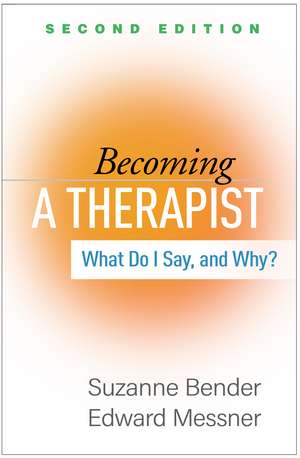
Becoming a Therapist, Second Edition: What Do I Say, and Why?
Autor Suzanne Bender, Edward Messneren Limba Engleză Paperback – 15 iun 2022
Pregătirea pentru primii pași în practica clinică sau pentru examenele de certificare în psihoterapie necesită mai mult decât o bază teoretică solidă; necesită o înțelegere a mecanismelor subtile care guvernează relația terapeutică. În Becoming a Therapist, Second Edition, semnată de Suzanne Bender și Edward Messner, găsim un ghid pragmatic conceput să facă tranziția de la mediul academic la cabinetul de consultații. Putem afirma că forța acestui volum rezidă în abordarea directă a nesiguranțelor specifice debutanților, oferind răspunsuri la întrebări esențiale despre gestionarea cadrului de lucru și a impasurilor clinice.
Remarcăm o organizare riguroasă, care urmărește progresia firească a actului terapeutic. Prima parte se concentrează pe etapa crucială a consultației — de la primul contact și evaluarea siguranței până la formularea cazului. Ulterior, autorii extind discuția către „cadrul” terapeutic, adaptat în această ediție la provocările tehnologice actuale: teleterapia, utilizarea dosarelor electronice și comunicarea prin email. Acolo unde The Beginning Psychotherapist's Companion de Jan Willer acoperă relația cu supervizorul și bunăstarea emoțională a terapeutului, acest volum aprofundează scenariile clinice specifice, oferind scripturi reale și exemple de dialog pentru a naviga situații precum întârzierile pacienților, erorile de empatie sau gestionarea transferului.
Un element distinctiv al acestei ediții este integrarea unor teme contemporane sensibile, precum rasismul sistemic și umilința culturală, alături de o secțiune revizuită despre tulburările cauzate de consumul de substanțe. Structura modulară permite cititorului să consulte rapid soluții pentru dileme profesionale, transformând textul într-un instrument de lucru indispensabil pentru construirea unei identități clinice sigure și etice.
Preț: 306.99 lei
Preț vechi: 323.15 lei
-5%
Carte disponibilă
Livrare economică 18 mai-01 iunie
Livrare express 01-07 mai pentru 41.27 lei
Specificații
ISBN-10: 1462549462
Pagini: 472
Dimensiuni: 152 x 229 x 28 mm
Greutate: 0.66 kg
Ediția:2nd edition
Editura: Guilford Publications
Colecția Guilford Press
De ce să citești această carte
Recomandăm această carte oricărui psihoterapeut aflat la început de drum care dorește să depășească anxietatea primelor ședințe. Cititorul câștigă acces la un set de instrumente practice și formulare descărcabile care simplifică planificarea tratamentului. Este o resursă valoroasă deoarece transformă concepte abstracte precum „alianța terapeutică” în strategii de comunicare concrete, oferind claritate în momentele de incertitudine clinică.
Despre autor
Suzanne Bender și Edward Messner sunt practicieni cu o vastă experiență clinică și academică, afiliați unor instituții de prestigiu precum Harvard Medical School și Massachusetts General Hospital. Dr. Bender este recunoscută pentru expertiza sa în psihiatria copilului și adolescentului, în timp ce Dr. Messner a dedicat decenii predării psihoterapiei, fiind premiat pentru contribuțiile sale pedagogice. Împreună, aceștia combină rigoarea academică cu o înțelegere profundă a realităților din cabinet, oferind o perspectivă echilibrată asupra formării noilor generații de terapeuți.
Cuprins
Introduction
I. The Consultation
1. First Contact
2. The First Moments
3. Initiating an Alliance and Assessing Safety
4. Enhancing the Therapeutic Alliance and Eliciting History
5. Collecting a Psychosocial History and Screening for Common Psychological Disorders
6. Creating a Formulation and a Treatment Plan
II. Frame and Variations
7. The Frame
8. Setting the Fee and Billing
9. Telephone Calls and Emails: From Dependencies to Emergencies
10. No-Shows, Late Arrivals, and Late Departures
11. When the Therapist’s Life Affects the Frame: Vacations, Pregnancies, and Illness
12. Confidentiality and Its Limits
III. Chemistry
13. Substance Use Disorders
14. Integrating Psychopharmacology with Psychotherapy
IV. Therapeutic Dilemmas
15. Managing Impasses
16. Empathic Lapses
17. Transference and Countertransference
18. Termination
V. Being a Therapist
19. Professional Development
Glossary
Additional Readings
References
Index
Notă biografică
Edward Messner, MD, until his death in 2006, was a Senior Psychiatrist at Massachusetts General Hospital (MGH) and Associate Clinical Professor of Psychiatry at Harvard Medical School. Dr. Messner trained as a psychiatrist at the Boston VA Hospital, at Boston’s Thom Clinic, and at MGH. He also graduated from the Boston Psychoanalytic Institute as a certified psychoanalyst. Dr. Messner received the Teacher of the Year award from the MGH Department of Psychiatry eight times. To honor him and his qualities of “kindness, compassion, understanding, insightfulness, humility, and selflessness in his daily work with patients and as an untiring teacher and supervisor of residents,” the MGH/McLean Adult Psychiatry Residency created the Edward Messner Faculty and Resident Awards in 2008. These awards annually recognize outstanding and committed teaching in Adult Psychiatry by both a faculty member and a graduating resident.
Recenzii
“I highly recommend this text for master's-level clinical mental health counseling courses. Bender and Messner provide very practical 'dos and don’ts' for developing the therapeutic relationship and maintaining the therapeutic alliance. The training process for beginning counselors can be extremely anxiety provoking, as students move from hypothetical situations to actual client interactions and engagement. Becoming a Therapist, Second Edition, recognizes and honors the transition to clinical practice and provides real-time support for students' feelings and experiences”--Robtrice D. Brawner, PhD, LCPC, Department of Psychology, Professional Counseling, and Neuroscience, University of Wisconsin–Parkside
"For years, I’ve recommended Becoming a Therapist to trainees seeking a thoughtful, accessible approach to learning psychotherapy, as well as to faculty supervising them. The second edition is even better than the first, expanding its reach to so many topics relevant for 21st-century practice. Bender and Messner exhibit a unique ability to connect with the beginner’s mind and provide wise guidance on complex topics. Reading this book is like conversing with the authors about a range of everyday tricky situations in clinical practice, and leaving with a treasure trove of ideas, scripts, tools, and further resources to try out."--Donna T. Chen, MD, MPH, Department of Psychiatry and Neurobehavioral Sciences, University of Virginia
"As a career psychiatric educator and as a therapist, I have reviewed all sorts of books about how to practice psychotherapy. Becoming a Therapist is still my favorite and most useful resource. Bender and Messner provide easily digested, readily applicable answers to fundamental questions that often go unasked or are considered in too cerebral a fashion. The updated second edition addresses important societal changes and clinical advances, and is absolutely essential. Anyone who practices psychotherapy or is training to become a practitioner should have a copy on the shelf. Without question, this is the most valuable resource I have encountered about the difficult and immensely rewarding art of psychotherapy."--Steven Schlozman, MD, Department of Psychiatry, Geisel School of Medicine at Dartmouth
"Bender and Messner provide clear, direct, approachable guidance for new clinicians. Enhanced content on exploring cultural identity, managing the demands of technological changes in therapy and health care, and the influence of social media on confidentiality are important changes in the second edition. The authors' admission of real feelings and responses as newer therapists are validating and engaging. I would consider incorporating this book at multiple levels within our clinical psychology PhD program, including in our early clinical interviewing course and our practicum section for new student clinicians seeing their very first clients. We will keep it on hand as an essential reference in our training clinic."--Jill D. Stinson, PhD, Department of Psychology, East Tennessee State University
“In Becoming a Therapist, we meet two warm and down-to-earth teachers who humanize the psychotherapy process and make it feel accessible to all of us. It’s like having a trusted supervisor close at hand when you need expert help and thoughtful encouragement. The second edition combines decades of clinical wisdom with vivid examples to offer us a resource that’s both rich in theoretical understanding and highly practical. This book is an invaluable companion for beginners and veterans alike.”--Robert J. Waldinger, MD, Department of Psychiatry, Harvard Medical School; Director, Program in Psychodynamics, Massachusetts General Hospital-
Descriere scurtă
New to This Edition
*Reflects two decades of technological changes--covers how to develop email and texting policies, navigate social media, use electronic medical records, and optimize teletherapy.
*New chapters on professional development and on managing the impact of therapist life events (pregnancy and parental leave, vacations, medical issues).
*Instructive discussion of systemic racism, cultural humility, and implicit bias.
*Significantly revised chapter on substance use disorders, with a focus on motivational interviewing techniques.
*Reproducible/downloadable Therapist Tools.
See also other essential resources for new clinicians--The Mental Health Clinician's Workbook, by James Morrison, which takes a learn-by-doing approach to building diagnostic skills, and The Therapist's Journey, by Robert Taibbi, which offers guidance for navigating professional development, boundaries, self-care, and more.