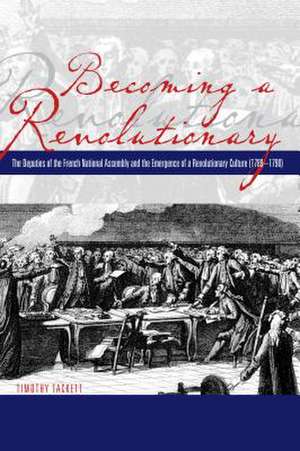
Becoming a Revolutionary
Autor Timothy Tacketten Limba Engleză Paperback – 1996
Adresându-se cercetătorilor, studenților la istorie și cititorilor pasionați de originile democrației moderne, Becoming a Revolutionary propune o reevaluare a profilului celor care au declanșat Revoluția Franceză. În loc să accepte imaginea unor ideologi fără experiență, Timothy Tackett examinează itinerariile psihologice ale deputaților din Stările Generale, utilizând o bază documentară impresionantă formată din scrisori și jurnale intime. Remarcăm modul în care autorul demontează ortodoxia „revizionistă”, demonstrând că acești bărbați erau, în realitate, spirite practice, ancorate în drept și administrație locală, nu doar teoreticieni ai Iluminismului. Subliniem perspectiva originală asupra procesului de radicalizare: ideile revoluționare nu au fost importate integral din cărți, ci s-au cristalizat în dinamica Adunării Naționale. Această abordare completează temele explorate de autor în When the King Took Flight, unde analiza se mută pe momentul de ruptură al fugii monarhului, sau în The Glory and the Sorrow, care privește viața cotidiană a cetățeanului de rând. Dacă în Religion, Revolution, and Regional Culture in Eighteenth-Century France autorul se concentra pe fracturile religioase și geografice, aici focalizarea este strict umană și biografică. Stilul este riguros, academic, dar narativul rămâne alert datorită citatelor directe care oferă o voce autentică personajelor istorice. Este o lucrare esențială pentru a înțelege cum niște reformatori pragmatici s-au transformat, sub presiunea evenimentelor, în arhitecții unei noi lumi.
Preț: 382.55 lei
Carte tipărită la comandă
Livrare economică 05-19 decembrie
Specificații
ISBN-10: 0271028882
Pagini: 376
Ilustrații: 1
Dimensiuni: 156 x 234 x 21 mm
Greutate: 0.52 kg
Editura: Pennsylvania State University Press
V-ar putea interesa
-
 -15%Preț: 185.18 lei218.47 lei
 -
 -30%Preț: 650.74 lei927.26 lei
 -
 -18%Preț: 1128.77 lei1376.56 lei
 -
 Law, Magistracy, and Crime in Old Regime Paris, 1735-1789Richard Mowery Andrews-11%Preț: 643.52 lei723.07 lei
 -
 Opting for OilRaymond G. Stokes-11%Preț: 530.76 lei596.36 lei
 -
 The Damascus AffairJonathan Frankel-14%Preț: 875.51 lei1018.04 lei
 -
 When the King Took FlightTimothy TackettPreț: 217.35 lei
 -
 The Coming of the Terror in the French RevolutionTimothy TackettPreț: 143.40 lei
 -
 The Coming of the French RevolutionGeorges LefebvrePreț: 127.92 lei
 -
 Priest and Parish in Eighteenth-Century FranceTimothy TackettPreț: 486.10 lei
 -
 -35%Preț: 439.48 lei673.78 lei
 -
 Le Grand HommeL C L D SPreț: 82.68 lei
 -
 Preț: 160.93 lei
 -
 Preț: 255.57 lei
 -
 Preț: 207.57 lei
 -
 Notes Sur l'Histoire En France Au XIXe Siècle (Éd.1897)Camille JullianPreț: 112.19 lei
 -
 Preț: 134.90 lei
 -
 Preț: 97.92 lei
 -
 Notice Historique Sur La Ville de Conches (Éd.1865)Alexandre GardinPreț: 119.89 lei
 -
 Preț: 97.92 lei
 -
 Preț: 112.58 lei
 -
 Preț: 97.14 lei
De ce să citești această carte
Recomandăm această carte celor care doresc să înțeleagă latura umană a politicii revoluționare. Veți descoperi că Revoluția Franceză nu a fost doar rezultatul unor teorii abstracte, ci un proces viu, născut din interacțiunea unor oameni reali. Este o lectură fundamentală pentru a înțelege cum contextul social și experiența politică practică pot schimba radical mentalitatea unei elite în perioade de criză.
Despre autor
Timothy Tackett este profesor de istorie la University of California, Irvine, fiind unul dintre cei mai respectați specialiști în istoria Franței secolului al XVIII-lea. Lucrările sale se remarcă prin utilizarea extensivă a surselor primare și prin capacitatea de a combina istoria socială cu cea politică. Printre cele mai cunoscute titluri ale sale se numără When the King Took Flight, o analiză a crizei monarhiei din 1791, și studii fundamentale despre impactul religiei și culturii regionale asupra comportamentului politic revoluționar.
Textul de pe ultima copertă
Descriere scurtă
Timothy Tackett s Becoming a Revolutionary revisits one of the most controversial moments in history: the beginning of the French Revolution. How did it arise? Why did French men and women become revolutionaries? To answer these questions, Tackett focuses on the experiences of the 1200 members of the first French National Assembly. Drawing upon on a wide range of sources, including contemporary letters and diaries, Tackett shows that the deputies were a group of practical men, whose ideas were governed more by concrete subjects than by abstract philosophy. Though it may seem surprising now, most of the deputies were actually in support of the king. Instead of being initiated as a result of a specific ideology founded on Enlightenment principles, the ideas that eventually led to the French Revolution were, instead, a direct result of the actual process of the Assembly.
First published in 1996 and hailed as an exemplary product of the historian s craft, Becoming a Revolutionary is now available in paperback for the first time."