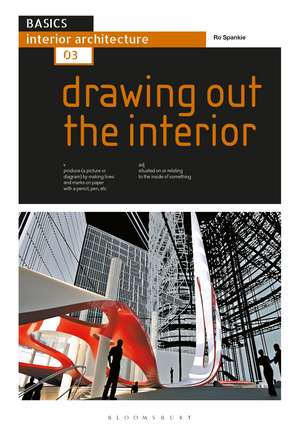
Basics Interior Architecture 03: Drawing Out the Interior: Basics Interior Architecture
Autor Dr Ro Spankieen Limba Engleză Paperback – 3 noi 2022
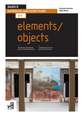
The book introduces the reader to a range of techniques and methods and describes when and where to use them. Starting with what is meant by interior architecture and why designers draw in the first place, it goes on to explore what one might draw and when.
The text is supported by detailed studies of contemporary work, alongside activities and resources.
Starting with what is meant by interior architecture and why designers draw in the first place, it goes on to explore what one might draw and when.
It considers the idea that the method we choose to draw with influences the way we think and therefore what we design. It includes sketches and drawings from Le Corbusier, Iannis Xenakis, Mies van der Rohe and Carlo Scarpa.
Preț: 166.91 lei
Preț vechi: 208.04 lei
-20%
Puncte Express: 250
Carte disponibilă
Livrare economică 17-31 octombrie
Livrare prin curier în România Termenul estimat este afișat lângă disponibilitate.
Transport gratuit de la 400.00 lei Plată online sau ramburs, în funcție de opțiunile comenzii.
Retur gratuit în 14 zile Comandă securizată și suport în română.
Specificații
ISBN-13: 9781350368279
ISBN-10: 135036827X
Pagini: 176
Ilustrații: 200 colour illus
Dimensiuni: 160 x 232 x 12 mm
Greutate: 0.41 kg
Editura: Bloomsbury Publishing
Colecția Bloomsbury Visual Arts
Seria Basics Interior Architecture
Locul publicării:London, United Kingdom
ISBN-10: 135036827X
Pagini: 176
Ilustrații: 200 colour illus
Dimensiuni: 160 x 232 x 12 mm
Greutate: 0.41 kg
Editura: Bloomsbury Publishing
Colecția Bloomsbury Visual Arts
Seria Basics Interior Architecture
Locul publicării:London, United Kingdom
Cuprins
Introduction
How to get the most out of this book
The design process: What is interior architecture?; Why draw?; What is drawing?; Drawing conventions.
Thinking drawings: Programme brief; Concept board; Use; Space-time; Inspiration; Sketch; Diagram. Drawing to measure: Scale and proportion; Orthographic projection; Developed surface or unfolded wall plan; Axonometric and isometric; Detail; Survey drawing. Drawing space: Perspective; Physical model: Digital model; CADCAM; Animation. Drawing effect: Light; Colour; Pattern; Texture; Illusion; Furniture. Hybrid techniques: Borrowed mediums; Collage and montage; Storyboard; Layout.
Glossary
Acknowledgements
How to get the most out of this book
The design process: What is interior architecture?; Why draw?; What is drawing?; Drawing conventions.
Thinking drawings: Programme brief; Concept board; Use; Space-time; Inspiration; Sketch; Diagram. Drawing to measure: Scale and proportion; Orthographic projection; Developed surface or unfolded wall plan; Axonometric and isometric; Detail; Survey drawing. Drawing space: Perspective; Physical model: Digital model; CADCAM; Animation. Drawing effect: Light; Colour; Pattern; Texture; Illusion; Furniture. Hybrid techniques: Borrowed mediums; Collage and montage; Storyboard; Layout.
Glossary
Acknowledgements
Recenzii
Drawing Out The Interior ... is easily one of the best academic books of its kind. Ro Spankie's book is beautifully structured and written with the right balance between text and image to engage the reader visually and intellectually. This book will, in my view, be a big hit with students but ... also ... an even bigger hit in the realm of professional practice.
Accessible for first year students while still interesting for second and third year. Some great examples of how designers use drawing not only as a visualisation tool but also as a design tool. The book can be used as a textbook for specific workshops as well as a great reference book for students to understand the different ways of communicating their design intent.
I love this range, always clear and very student friendly.
I found it lively, stimulating and informative on the role of drawing within the design process. Page layout was well structured and the text covered a wide range of relevant commentary about the importance of drawing in all contexts.
Provides an interesting perspective on the drawing of interiors ... Like the rest of the Basics range, it's well presented and the layout is good.
Useful and relevant. Easy to navigate and understand.
This is useful for students interested in developing woth for their portfolio for spatial design-related HE courses. Well structured with useful visual examples of different drawing styles to choose from and explanations of when they would be relevant.
Great book!
This is a lively little book which redresses the importance of drawn imagery, in its myriad forms, to the process of designing. The format and imagery is well suited to the design student seeking to find new devices to support their design communication.
Accessible for first year students while still interesting for second and third year. Some great examples of how designers use drawing not only as a visualisation tool but also as a design tool. The book can be used as a textbook for specific workshops as well as a great reference book for students to understand the different ways of communicating their design intent.
I love this range, always clear and very student friendly.
I found it lively, stimulating and informative on the role of drawing within the design process. Page layout was well structured and the text covered a wide range of relevant commentary about the importance of drawing in all contexts.
Provides an interesting perspective on the drawing of interiors ... Like the rest of the Basics range, it's well presented and the layout is good.
Useful and relevant. Easy to navigate and understand.
This is useful for students interested in developing woth for their portfolio for spatial design-related HE courses. Well structured with useful visual examples of different drawing styles to choose from and explanations of when they would be relevant.
Great book!
This is a lively little book which redresses the importance of drawn imagery, in its myriad forms, to the process of designing. The format and imagery is well suited to the design student seeking to find new devices to support their design communication.