
Barth Reception in Britain
Autor Prof D. Densil Morganen Limba Engleză Hardback – 10 iun 2010
Preț: 979.93 lei
Preț vechi: 1139.45 lei
-14%
Puncte Express: 1470
Carte tipărită la comandă
Livrare economică 20 noiembrie-04 decembrie
Livrare prin curier în România Termenul estimat este afișat lângă disponibilitate.
Transport gratuit pentru acest produs Plată online sau ramburs, în funcție de opțiunile comenzii.
Retur gratuit în 14 zile Comandă securizată și suport în română.
Specificații
ISBN-13: 9780567031860
ISBN-10: 0567031861
Pagini: 322
Dimensiuni: 156 x 234 x 22 mm
Greutate: 0.63 kg
Editura: Bloomsbury Publishing
Colecția T&T Clark
Locul publicării:London, United Kingdom
ISBN-10: 0567031861
Pagini: 322
Dimensiuni: 156 x 234 x 22 mm
Greutate: 0.63 kg
Editura: Bloomsbury Publishing
Colecția T&T Clark
Locul publicării:London, United Kingdom
V-ar putea interesa
-
 Calvinism: A Very Short IntroductionJon BalserakPreț: 67.97 lei
 -
 -28%Preț: 413.63 lei576.28 lei
 -
 -31%Preț: 662.18 lei960.87 lei
 -
 Race and Redemption in Puritan New EnglandRichard A. Bailey-13%Preț: 300.82 lei345.94 lei
 -
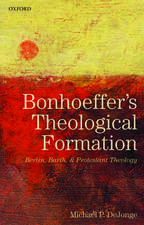 Bonhoeffer's Theological Formation: Berlin, Barth, and Protestant TheologyMichael P. DeJonge-14%Preț: 721.90 lei839.42 lei
 -
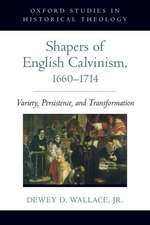 -31%Preț: 743.32 lei1077.91 lei
 -
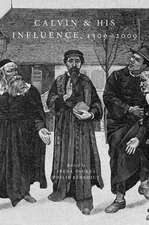 Calvin and His Influence, 1509-2009Irena Backus-21%Preț: 361.40 lei457.62 lei
 -
 -19%Preț: 379.11 lei466.42 lei
 -
 Charles Hodge: Guardian of American OrthodoxyPaul C. Gutjahr-21%Preț: 457.20 lei578.01 lei
 -
 The LutheransL. DeAne Lagerquist-48%Preț: 134.92 lei259.17 lei
 -
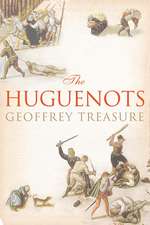 The HuguenotsGeoffrey TreasurePreț: 152.76 lei
 -
 Preț: 137.12 lei
 -
 John CalvinMichael MullettPreț: 383.39 lei
 -
 The Diary of Robert Woodford, 1637 1641Robert Woodford-11%Preț: 493.07 lei554.01 lei
 -
 American Protestants and TV in the 1950sM. RosenthalPreț: 396.87 lei
 -
 To the Ends of the EarthMichael A G HaykinPreț: 108.99 lei
 -
 -21%Preț: 381.91 lei483.86 lei
Recenzii
'This is a very welcome addition to the history of Christian thought in modern Britain.'
'Morgan, like Barth, prompts us to go on asking more questions in search of greater understanding. His thorough study of how Barth has been received so far encourages us to explore more fully the way in which Barth is read and responded to here and now, in Britain and beyond.'
... while this work may be primarily intended for a scholarly audience, it should be enjoyed by all who are interested in English language Barth studies and contemporary ecclesial life in Britain.
'In this illuminating study, Densil Morgan shows the lasting impact of Karl Barth's theology in the UK soon after his emergence as a leading dialectical theologian in Germany in the 1920s. It is a substantial contribution to our understanding not only of the diverse reception of Barth but also to British theology in the mid-twentieth century.' - David Fergusson, Professor of Divinity and Principal of New College, University of Edinburgh, UK.
'Morgan brings to his task a unique combination of wide knowledge of the theological life of the British churches in the twentieth century and sympathetic understanding of Barth's corpus. His account of the matter could hardly be bettered: the portraits of theologians and institutions are animated; the judgements are thoroughly informed and persuasive. This is a book of rare intelligence and penetration.' - John Webster, King's College, Aberdeen, Scotland, UK.
'D. Densil Morgan narrates the ups and downs of the reception of Karl Barth in Great Britain with style and verve. He covers all the major British scholars of Barth, but uncovers many surprisingly neglected figures as well. He pays careful attention to denominational contexts as well as to national differences; his treatment of Welsh-language scholarship on Barth is eye-opening. I commend D. Densil Morgan's history to all students of Karl Barth on the theory that to make progress in the present one must come to terms with the past.' - Clifford B. Anderson, Curator of Special Collections, Princeton Theological Seminary, USA.
This study is full of interesting information and evaluation. It deserves to be widely read, and it will no doubt be used as a work to which readers will wish to return for reference.
'Morgan, like Barth, prompts us to go on asking more questions in search of greater understanding. His thorough study of how Barth has been received so far encourages us to explore more fully the way in which Barth is read and responded to here and now, in Britain and beyond.'
... while this work may be primarily intended for a scholarly audience, it should be enjoyed by all who are interested in English language Barth studies and contemporary ecclesial life in Britain.
'In this illuminating study, Densil Morgan shows the lasting impact of Karl Barth's theology in the UK soon after his emergence as a leading dialectical theologian in Germany in the 1920s. It is a substantial contribution to our understanding not only of the diverse reception of Barth but also to British theology in the mid-twentieth century.' - David Fergusson, Professor of Divinity and Principal of New College, University of Edinburgh, UK.
'Morgan brings to his task a unique combination of wide knowledge of the theological life of the British churches in the twentieth century and sympathetic understanding of Barth's corpus. His account of the matter could hardly be bettered: the portraits of theologians and institutions are animated; the judgements are thoroughly informed and persuasive. This is a book of rare intelligence and penetration.' - John Webster, King's College, Aberdeen, Scotland, UK.
'D. Densil Morgan narrates the ups and downs of the reception of Karl Barth in Great Britain with style and verve. He covers all the major British scholars of Barth, but uncovers many surprisingly neglected figures as well. He pays careful attention to denominational contexts as well as to national differences; his treatment of Welsh-language scholarship on Barth is eye-opening. I commend D. Densil Morgan's history to all students of Karl Barth on the theory that to make progress in the present one must come to terms with the past.' - Clifford B. Anderson, Curator of Special Collections, Princeton Theological Seminary, USA.
This study is full of interesting information and evaluation. It deserves to be widely read, and it will no doubt be used as a work to which readers will wish to return for reference.
Notă biografică
D. Densil Morgan is Professor in the School of Theology and Religious Studies, University of Wales, Bangor, and has published on Karl Barth, modern doctrine and twentieth century church history.