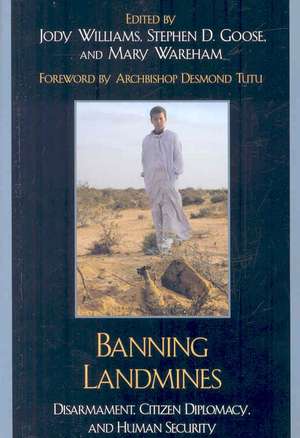
Banning Landmines: Disarmament, Citizen Diplomacy, and Human Security: National State Papers
Editat de Jody Williams, Stephen D. Goose, Mary Warehamen Limba Engleză Paperback – 20 mar 2008
Preț: 353.09 lei
Preț vechi: 449.62 lei
-21%
Puncte Express: 530
Carte tipărită la comandă
Livrare economică 08-22 iunie
Specificații
ISBN-13: 9780742562417
ISBN-10: 0742562417
Pagini: 327
Dimensiuni: 154 x 234 x 22 mm
Greutate: 0.55 kg
Editura: Bloomsbury Publishing
Colecția Rowman & Littlefield
Seria National State Papers
Locul publicării:New York, United States
ISBN-10: 0742562417
Pagini: 327
Dimensiuni: 154 x 234 x 22 mm
Greutate: 0.55 kg
Editura: Bloomsbury Publishing
Colecția Rowman & Littlefield
Seria National State Papers
Locul publicării:New York, United States
Cuprins
Chapter 1 Foreword
Chapter 2 Chapter 1. Banning Landmines and Beyond
Part 3 Part I. Banning Landmines
Chapter 4 Chapter 2. A Beacon of Light: The Mine Ban Treaty since 1997
Chapter 5 Chapter 3. Still Alive and Kicking: The International Campaign to Ban Landmines
Chapter 6 Chapter 4. Evidence-Based Advocacy: Civil Society Monitoring of the Mine Ban Treaty
Chapter 7 Chapter 5. Surround the Cities with the Villages: Universalization of the Mine Ban Treaty
Chapter 8 Chapter 6. An Emphasis on Action: The Mine Ban Treaty's Implementation Mechanisms
Chapter 9 Chapter 7. Goodwill Yields Good Results: Cooperative Compliance and the Mine Ban Treaty
Chapter 10 Chapter 8. An Indispensable Tool: The Mine Ban Treat and Mine Action
Chapter 11 Chapter 9. Beyond the Rhetoric: The Mine Ban Treaty and Victim Assistance
Chapter 12 Chapter 10. Outside the Treaty not the Norm: Non-State Armed Actors and the Landmine Ban
Part 13 Part II. Beyond Landmines
Chapter 14 Chapter 11. Citizen Diplomacy and the Ottawa Process: A Lasting Model?
Chapter 15 Chapter 12. Unacceptable Behavior: How Norms are Established
Chapter 16 Chapter 13. Cluster Munitions in the Crosshairs: In Pursuit of a Prohibition
Chapter 17 Chapter 14. Nothing About Us Without Us: Securing the Disability Rights Convention
Chapter 18 Chapter 15. Tackling Disarmament Challenges
Chapter 19 Chapter 16. New Approaches in a Changing World: The Human Security Agenda
Chapter 20 Appendix. 1997 Mine Ban Treaty and Its Status
Chapter 2 Chapter 1. Banning Landmines and Beyond
Part 3 Part I. Banning Landmines
Chapter 4 Chapter 2. A Beacon of Light: The Mine Ban Treaty since 1997
Chapter 5 Chapter 3. Still Alive and Kicking: The International Campaign to Ban Landmines
Chapter 6 Chapter 4. Evidence-Based Advocacy: Civil Society Monitoring of the Mine Ban Treaty
Chapter 7 Chapter 5. Surround the Cities with the Villages: Universalization of the Mine Ban Treaty
Chapter 8 Chapter 6. An Emphasis on Action: The Mine Ban Treaty's Implementation Mechanisms
Chapter 9 Chapter 7. Goodwill Yields Good Results: Cooperative Compliance and the Mine Ban Treaty
Chapter 10 Chapter 8. An Indispensable Tool: The Mine Ban Treat and Mine Action
Chapter 11 Chapter 9. Beyond the Rhetoric: The Mine Ban Treaty and Victim Assistance
Chapter 12 Chapter 10. Outside the Treaty not the Norm: Non-State Armed Actors and the Landmine Ban
Part 13 Part II. Beyond Landmines
Chapter 14 Chapter 11. Citizen Diplomacy and the Ottawa Process: A Lasting Model?
Chapter 15 Chapter 12. Unacceptable Behavior: How Norms are Established
Chapter 16 Chapter 13. Cluster Munitions in the Crosshairs: In Pursuit of a Prohibition
Chapter 17 Chapter 14. Nothing About Us Without Us: Securing the Disability Rights Convention
Chapter 18 Chapter 15. Tackling Disarmament Challenges
Chapter 19 Chapter 16. New Approaches in a Changing World: The Human Security Agenda
Chapter 20 Appendix. 1997 Mine Ban Treaty and Its Status
Recenzii
The book considers how we might better approach our global problems in an increasingly intertwined world where overlooking even the most basic needs of the many threatens the security of us all.
Banning Landmines: Disarmament, Citizen Diplomacy and Human Security tells the story of and analyzes the first ten years of the Mine Ban Treaty. Civil society and international organization practitioners involved in the implementation of and compliance with the Treaty offer their perspectives of different aspects of that work. The book also considers the impact of the Ottawa Process model - government and civil society partnership that brought about the Treaty - on other issues related to human security. It is an important contribution to the developing body of work on the global movement to ban landmines.
Banning Landmines: Disarmament, Citizen Diplomacy and Human Security is an important book for anyone interested in the ongoing work around the 1997 Mine Ban Treaty and the impact of the important model of government-civil society partnership not only on Treaty implementation but also on responding to other issues related to peace and human security. Williams, Goose and Wareham have made a tremendous contribution to understanding the critical importance of individual involvement in addressing our common problems.
Banning Landmines: Disarmament, Citizen Diplomacy and Human Security tells the story of and analyzes the first ten years of the Mine Ban Treaty. Civil society and international organization practitioners involved in the implementation of and compliance with the Treaty offer their perspectives of different aspects of that work. The book also considers the impact of the Ottawa Process model - government and civil society partnership that brought about the Treaty - on other issues related to human security. It is an important contribution to the developing body of work on the global movement to ban landmines.
Banning Landmines: Disarmament, Citizen Diplomacy and Human Security is an important book for anyone interested in the ongoing work around the 1997 Mine Ban Treaty and the impact of the important model of government-civil society partnership not only on Treaty implementation but also on responding to other issues related to peace and human security. Williams, Goose and Wareham have made a tremendous contribution to understanding the critical importance of individual involvement in addressing our common problems.