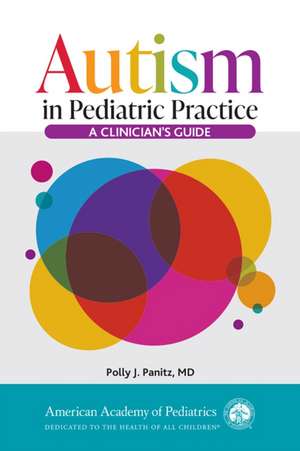
Autism in Pediatric Practice
Autor Polly J Panitzen Limba Engleză Paperback – iul 2026
Key concepts are introduced through hypothetical case vignettes and explored in depth throughout each chapter, helping clinicians translate theory into everyday practice. The guide includes practical tools for clinical documentation and resources for parent education to enable pediatric primary care clinicians to effectively engage in patient care and support families of autistic children.
Topics include
- Etiology, presentation, screening, and diagnosis
- Strategies for optimizing office visits, including scheduling considerations, office accommodations, and billing and coding
- Understanding and management of behavioral challenges
- Therapy options, including guidance for choosing appropriate therapies and information on pharmacological and complementary approaches
- Management of co-occurring conditions, including attention-deficit/hyperactivity disorder, insomnia, and gastrointestinal symptoms and conditions
- Care transition planning
- Special education services, including evaluations, early intervention, and the individualized education program process
Preț: 413.84 lei
Preț vechi: 435.62 lei
-5% Nou
Puncte Express: 621
Carte disponibilă
Livrare economică 19 octombrie-02 noiembrie
Livrare prin curier în România Termenul estimat este afișat lângă disponibilitate.
Transport gratuit pentru acest produs Plată online sau ramburs, în funcție de opțiunile comenzii.
Retur gratuit în 14 zile Comandă securizată și suport în română.
Specificații
ISBN-13: 9781610028837
ISBN-10: 161002883X
Pagini: 280
Dimensiuni: 152 x 229 mm
Greutate: 0.5 kg
Editura: American Academy of Pediatrics
ISBN-10: 161002883X
Pagini: 280
Dimensiuni: 152 x 229 mm
Greutate: 0.5 kg
Editura: American Academy of Pediatrics
Cuprins
Introduction
Chapter 1 Caring for the Child with Autism in the Medical Home
Chapter 2 Demographics, Etiology, and Clinical Presentation
Chapter 3 Joint Attention: What Is It and Why Is It Important?
Chapter 4 The Pragmatics of the Pediatric Visit
Chapter 5 Autism Screening in Primary Care
Chapter 6 Establishing the Autism Diagnosis
Chapter 7 The Medical Evaluation of the Child With Presumptive or Confirmed Autism
Chapter 8 Evidence-Based Interventions
Chapter 9 Autism and Challenging Behaviors: Why They Occur and How to Approach Them
Chapter 10 Diagnosing and Managing Co-occurring Conditions
Chapter 11 Gastrointestinal Symptoms and Feeding Challenges
Chapter 12 Insomnia: Identification and Interventions
Chapter 13 Review of Pharmacotherapy and Complementary Interventions
Chapter 14 Working With Special Education Services: A Primer
Chapter 15 Long-Term Transition Planning: It Takes a Village
Appendix A Autism Spectrum Disorder Monitoring Tool for the Pediatric Primary Care Clinician
Appendix B Parent Handout: What Is Autism Spectrum Disorder and How Do I Know if My Preschool-Aged Child Has It?
Appendix C Sample Intake Questionnaire
Appendix D Diagnostic Criteria for Electronic Medical Record Documentation
Appendix E Diagnostic Criteria Checklist With Developmental Anchors
Appendix F Parent Resources on Autism Spectrum Disorder
Appendix G Sample Letter to Request Evaluation for Special Education Services
Chapter 1 Caring for the Child with Autism in the Medical Home
Chapter 2 Demographics, Etiology, and Clinical Presentation
Chapter 3 Joint Attention: What Is It and Why Is It Important?
Chapter 4 The Pragmatics of the Pediatric Visit
Chapter 5 Autism Screening in Primary Care
Chapter 6 Establishing the Autism Diagnosis
Chapter 7 The Medical Evaluation of the Child With Presumptive or Confirmed Autism
Chapter 8 Evidence-Based Interventions
Chapter 9 Autism and Challenging Behaviors: Why They Occur and How to Approach Them
Chapter 10 Diagnosing and Managing Co-occurring Conditions
Chapter 11 Gastrointestinal Symptoms and Feeding Challenges
Chapter 12 Insomnia: Identification and Interventions
Chapter 13 Review of Pharmacotherapy and Complementary Interventions
Chapter 14 Working With Special Education Services: A Primer
Chapter 15 Long-Term Transition Planning: It Takes a Village
Appendix A Autism Spectrum Disorder Monitoring Tool for the Pediatric Primary Care Clinician
Appendix B Parent Handout: What Is Autism Spectrum Disorder and How Do I Know if My Preschool-Aged Child Has It?
Appendix C Sample Intake Questionnaire
Appendix D Diagnostic Criteria for Electronic Medical Record Documentation
Appendix E Diagnostic Criteria Checklist With Developmental Anchors
Appendix F Parent Resources on Autism Spectrum Disorder
Appendix G Sample Letter to Request Evaluation for Special Education Services
Notă biografică
Polly J. Panitz, MD, is a developmental pediatrician whose career has centered on partnering with general pediatricians and families to support the development of young children. Her approach emphasizes teaching strategies for structuring the natural environment of children and fostering collaboration among caregivers, educators, and health care clinicians.
Dr Panitz earned her medical degree from Boston University School of Medicine and completed her residency in general pediatrics at Lurie Children's Hospital of Chicago. She completed a fellowship in behavioral and developmental pediatrics at Evanston Hospital. Her clinical career has included positions in general pediatrics at the University of Texas at San Antonio and in private practice in Northern Virginia. She later established herself as a specialist embedded within a large 5-site pediatric practice, where she provided both diagnostic assessments and longitudinal care for children with developmental concerns, attention-deficit/hyperactivity disorder, and autism. In addition to direct patient care, Dr Panitz has run parenting support groups and classes, coordinated care across medical and educational teams, and provided consultation on school-based educational planning. She has contributed to statewide pediatric education through Virginia's Mental Health Access Program for general pediatric clinicians where she taught about early childhood development and led case-based discussions.
Dr Panitz is now retired from practice and is involved in a variety of community-based volunteer endeavors. She enjoys playing cello, biking, hiking, and spending as much time as possible with her family.
Dr Panitz earned her medical degree from Boston University School of Medicine and completed her residency in general pediatrics at Lurie Children's Hospital of Chicago. She completed a fellowship in behavioral and developmental pediatrics at Evanston Hospital. Her clinical career has included positions in general pediatrics at the University of Texas at San Antonio and in private practice in Northern Virginia. She later established herself as a specialist embedded within a large 5-site pediatric practice, where she provided both diagnostic assessments and longitudinal care for children with developmental concerns, attention-deficit/hyperactivity disorder, and autism. In addition to direct patient care, Dr Panitz has run parenting support groups and classes, coordinated care across medical and educational teams, and provided consultation on school-based educational planning. She has contributed to statewide pediatric education through Virginia's Mental Health Access Program for general pediatric clinicians where she taught about early childhood development and led case-based discussions.
Dr Panitz is now retired from practice and is involved in a variety of community-based volunteer endeavors. She enjoys playing cello, biking, hiking, and spending as much time as possible with her family.