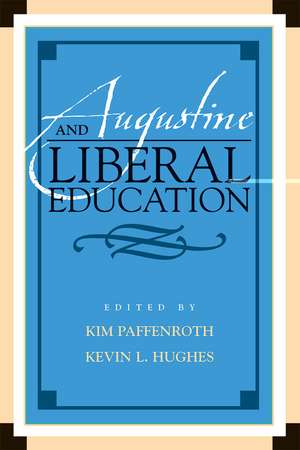
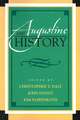
Augustine and Liberal Education: Augustine in Conversation: Tradition and Innovation
Editat de Kim Paffenroth, Kevin L. Hughes Contribuţii de Felix B. Asiedu, Debra Romanick Baldwin, Phillip Cary, Mark J. Doorley, Daniel Doyle, Marylu Hill, John Immerwahr, Richard M. Jacobs, Thomas F. Martin, Andrew R. Murphy, Thomas W. Smithen Limba Engleză Paperback – 11 mar 2008


Preț: 336.62 lei
Preț vechi: 435.80 lei
-23%
Puncte Express: 505
Carte tipărită la comandă
Livrare economică 24 noiembrie-08 decembrie
Livrare prin curier în România Termenul estimat este afișat lângă disponibilitate.
Transport gratuit de la 400.00 lei Plată online sau ramburs, în funcție de opțiunile comenzii.
Retur gratuit în 14 zile Comandă securizată și suport în română.
Specificații
ISBN-13: 9780739123836
ISBN-10: 0739123831
Pagini: 232
Dimensiuni: 153 x 230 x 17 mm
Greutate: 0.35 kg
Editura: Bloomsbury Publishing
Colecția Lexington Books
Seria Augustine in Conversation: Tradition and Innovation
Locul publicării:New York, United States
ISBN-10: 0739123831
Pagini: 232
Dimensiuni: 153 x 230 x 17 mm
Greutate: 0.35 kg
Editura: Bloomsbury Publishing
Colecția Lexington Books
Seria Augustine in Conversation: Tradition and Innovation
Locul publicării:New York, United States
V-ar putea interesa
-
 Conflict Resolution and Peace EducationC. CarterPreț: 288.31 lei
 -
 Preț: 263.75 lei
 -
 Preț: 304.34 lei
 -
 On EducationBertrand RussellPreț: 170.56 lei
 -
 Preț: 455.56 lei
 -
 Chomsky on Democracy and EducationNoam ChomskyPreț: 436.53 lei
 -
 -23%Preț: 615.85 lei799.80 lei
 -
 Education StudiesSteve Bartlett-15%Preț: 623.41 lei733.42 lei
 -
 Global Trends in Educational PolicyDavid P. Baker-9%Preț: 738.63 lei811.68 lei
 -
 Learning as a Way of LeadingStephen PreskillPreț: 298.72 lei
 -
 The Ignorant Schoolmaster: Five Lessons in Intellectual EmancipationJacques RancièrePreț: 221.71 lei
 -
 The salmon of knowledgeNick OwenPreț: 153.50 lei
 -
 Making Schools DifferentKitty Te RielePreț: 446.20 lei
Cuprins
Chapter 1 Table of Contents
Chapter 2 List of Contributors
Chapter 3 Foreward
Part 4 I Education in the Confessions
Chapter 5 1 Bad Habits and Bad Company: Education and Evil in the Confessions
Chapter 6 2 Models of Teaching and Models of Learning in the Confessions
Chapter 7 3 Augustine'sConfessions as Pedagogy: Exercises in Transformation
Part 8 II Education in Augustine's Other Works
Chapter 9 4 Study as Love: Augustinian Vision and Catholic Education
Chapter 10 5 The Bishop as Teacher
Chapter 11 6 The "Arts Reputed Liberal": Augustine on the Perils of Liberal Education
Part 12 III Teaching and Authority in Augustine
Chapter 13 7 Augustine's Pedagogy of Intellectual Liberation: Turning Students from the "Truth of Authority" to the "Authority of Truth"
Chapter 14 8 The Limits of Augustine's Personal Authority: The Hermaneutics of Trust in De utilitate credendi
Chapter 15 9 Limit and Possibility: An Augustinian Counsel to Authority
Chapter 16 10 Augustine and English Protestants: Authority and Order, Coercion and Dissent in the Earthly City
Part 17 IV Liberal Education Since Augustine
Chapter 18 11 Reading without Moving Your Lips: The Role of the Solitary Reader in Liberal Education
Chapter 19 12 The Motives for Liberal Education
Chapter 2 List of Contributors
Chapter 3 Foreward
Part 4 I Education in the Confessions
Chapter 5 1 Bad Habits and Bad Company: Education and Evil in the Confessions
Chapter 6 2 Models of Teaching and Models of Learning in the Confessions
Chapter 7 3 Augustine'sConfessions as Pedagogy: Exercises in Transformation
Part 8 II Education in Augustine's Other Works
Chapter 9 4 Study as Love: Augustinian Vision and Catholic Education
Chapter 10 5 The Bishop as Teacher
Chapter 11 6 The "Arts Reputed Liberal": Augustine on the Perils of Liberal Education
Part 12 III Teaching and Authority in Augustine
Chapter 13 7 Augustine's Pedagogy of Intellectual Liberation: Turning Students from the "Truth of Authority" to the "Authority of Truth"
Chapter 14 8 The Limits of Augustine's Personal Authority: The Hermaneutics of Trust in De utilitate credendi
Chapter 15 9 Limit and Possibility: An Augustinian Counsel to Authority
Chapter 16 10 Augustine and English Protestants: Authority and Order, Coercion and Dissent in the Earthly City
Part 17 IV Liberal Education Since Augustine
Chapter 18 11 Reading without Moving Your Lips: The Role of the Solitary Reader in Liberal Education
Chapter 19 12 The Motives for Liberal Education
Recenzii
This book tries to come to terms with a particular tradition of inquiry in the light of contemporary challenges to liberal education, through the renewal and reevaluation of Augustine's thought and writings. It is an interesting and thought-provoking volume, one that will have particular application to Catholic institutions of higher education, and even Protestant and secular colleges and universities as they seek to define what 'liberal Education' means in today's society.
The quality of the essays is remarkably uniform, and copious endnotes will please the serious scholar. This is a book that can be appreciated across the humanities, especially in a time when the mission and purpose of church-related education is under serious scrutiny. The essays are too sophisticated to suggest less than a nuanced reading of both Augustine and the current milieu.
The loving and thoughtful study much in evidence in this work would have been appreciated by the person whose writings are honoured here.
To meditate on the master texts of our culture as we face present challenges is one of the hallmarks of liberal education. The essays in this volume teach not only by what they say, but by the exemplary way in which they show us how learning and judgment, deeply rooted in the thought of Augustine, can be vividly relevant to the needs of today.
Short but insightful chapters....This volume would be gladly received as a companion reader by faculty teaching philosophy of knowledge or philosophy of education courses. Recommendeddddd
These essays probe an important topic, and do so from an intriguing perspective-namely bringing Augustine into the conversation about the future of liberal education.
The quality of the essays is remarkably uniform, and copious endnotes will please the serious scholar. This is a book that can be appreciated across the humanities, especially in a time when the mission and purpose of church-related education is under serious scrutiny. The essays are too sophisticated to suggest less than a nuanced reading of both Augustine and the current milieu.
The loving and thoughtful study much in evidence in this work would have been appreciated by the person whose writings are honoured here.
To meditate on the master texts of our culture as we face present challenges is one of the hallmarks of liberal education. The essays in this volume teach not only by what they say, but by the exemplary way in which they show us how learning and judgment, deeply rooted in the thought of Augustine, can be vividly relevant to the needs of today.
Short but insightful chapters....This volume would be gladly received as a companion reader by faculty teaching philosophy of knowledge or philosophy of education courses. Recommendeddddd
These essays probe an important topic, and do so from an intriguing perspective-namely bringing Augustine into the conversation about the future of liberal education.