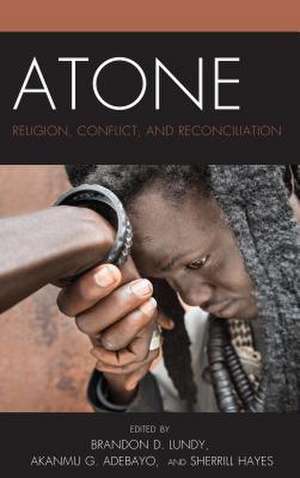
Atone: Religion, Conflict, and Reconciliation: Conflict and Security in the Developing World
Editat de Brandon D. Lundy, Akanmu G. Adebayo, Sherrill Hayes Contribuţii de Ziaul Haque, Aaron Clarke, Daniel Cere, Ratna Ghosh, Dilmurat Mahmut, Abiodun Odusote, Olatunde O. Taiwo, Monsuru O. Muritala, Jusuf Salih, D. Clint Johnson, Chux Ibekwe, Edoh Agbehonou, Joyce D. Acquah, Dolapo Z. Olupayimo, Sherrie D. Alexander, Joel Elliott, Joseph G. Bock, John B. Idamkue, Johan Galtung, Albert I. Slomovitz, Michael J. Elliston, Julian Godwin, Tom Pynnen Limba Engleză Hardback – 26 feb 2018


Preț: 681.94 lei
Preț vechi: 1055.83 lei
-35%
Puncte Express: 1023
Carte tipărită la comandă
Livrare economică 09-23 decembrie
Livrare prin curier în România Termenul estimat este afișat lângă disponibilitate.
Transport gratuit pentru acest produs Plată online sau ramburs, în funcție de opțiunile comenzii.
Retur gratuit în 14 zile Comandă securizată și suport în română.
Specificații
ISBN-13: 9781498560689
ISBN-10: 1498560687
Pagini: 368
Ilustrații: 21 tables;
Dimensiuni: 158 x 240 x 33 mm
Greutate: 0.73 kg
Editura: Bloomsbury Publishing
Colecția Lexington Books
Seria Conflict and Security in the Developing World
Locul publicării:New York, United States
ISBN-10: 1498560687
Pagini: 368
Ilustrații: 21 tables;
Dimensiuni: 158 x 240 x 33 mm
Greutate: 0.73 kg
Editura: Bloomsbury Publishing
Colecția Lexington Books
Seria Conflict and Security in the Developing World
Locul publicării:New York, United States
Cuprins
Tables
Preface and Acknowledgments, by Brandon D. Lundy, Akanmu G. Adebayo, and Sherrill W. Hayes
Introduction: Examining the Paradoxical Role of Religion in Conflict and Reconciliation, by Brandon D. Lundy, Ziaul Haque, Akanmu G. Adebayo, Sherrill W. Hayes, and Aaron Clarke
Part I: Reconciling Religious Conflicts
Chapter 1: Sources of the Radical Self: Extremism, Modernity, and Religion, by Daniel Cere
Chapter 2: Education, Religion, and Religious Extremism, by Ratna Ghosh
Chapter 3: Revisiting Muslim Identity and Islamophobia in the Contemporary World, by Dilmurat Mahmut
Chapter 4: The Limits of Law in Resolving Religious Conflicts: Perspectives from Nigeria and Beyond, by Abiodun Odusote
Chapter 5: Transnational Insurgency and Counterinsurgency around the Lake Chad Basin: Rethinking Boko Haram, by Olatunde O. Taiwo
Chapter 6: Land Use and Religious Movements: Entangled Spaces and Impending Conflict along Lagos-Ibadan Expressway, Nigeria, by Monsuru O. Muritala
Part II: Reconciling Conflict through Religion
Chapter 7: Islamic Approach to Abrahamic Traditions, by Jusuf Salih
Chapter 8: How Mysticism Can Point the Way to Tolerance: Recognizing a Common Ground of Non-conceptual Experience in Meister Eckhart and Zen, by D. Clint Johnson
Chapter 9: Reconciliation: Examining the Charleston AME Tragedy Victims' Forgiveness of Dylann Roof, by Chux Ibekwe
Chapter 10: Truth, Justice, and Reconciliation Commission in Togo: A Useful Tool for Regime Maintenance or for Healing the Wounds of the Past for Peaceful Democratic Alternations? by Edoh Agbehonou
Chapter 11: Faith-Based Organizations and Refugee Women: A Case Study of the Assistance Provided by Faith-Based and Other Organization to Liberian Women Refugees in Ghana, by Joyce D. Acquah
Chapter 12: Religious Songs in Conflict Situation: An Interrogation of Selected Yorùbá Coded Church Songs, by Dolapo Z. Olupayimo
Chapter 13: Halal in Context: A Reconciliation of Muslim Foodways and Animal Welfare in Islam, by Sherrie D. Alexander
Chapter 14: Testing the Co-Religionist Hypothesis in Sri Lanka, by Joel Elliott and Joseph G. Bock
Chapter 15: The Role of the Catholic Church in Managing Interstate Conflict: An Examination of the Intervention of Pope Francis in Cuba-U.S. Relations, by John B. Idamkue
Part III: Religious Reconciliations
Chapter 16: A Pope, a Patriarch, a Spiritual Revolution, by Johan Galtung
Chapter 17: Searching for Shalom, by Albert Slomovitz
Chapter 18: Framing Conflict and Reconciliation in the Context of Zen Buddhism, by Michael J. Elliston
Chapter 19: Soka Nichiren Buddhism, by Julian Godwin
Chapter 20: Religious Resources for Reconciliation, by Tom Pynn
Preface and Acknowledgments, by Brandon D. Lundy, Akanmu G. Adebayo, and Sherrill W. Hayes
Introduction: Examining the Paradoxical Role of Religion in Conflict and Reconciliation, by Brandon D. Lundy, Ziaul Haque, Akanmu G. Adebayo, Sherrill W. Hayes, and Aaron Clarke
Part I: Reconciling Religious Conflicts
Chapter 1: Sources of the Radical Self: Extremism, Modernity, and Religion, by Daniel Cere
Chapter 2: Education, Religion, and Religious Extremism, by Ratna Ghosh
Chapter 3: Revisiting Muslim Identity and Islamophobia in the Contemporary World, by Dilmurat Mahmut
Chapter 4: The Limits of Law in Resolving Religious Conflicts: Perspectives from Nigeria and Beyond, by Abiodun Odusote
Chapter 5: Transnational Insurgency and Counterinsurgency around the Lake Chad Basin: Rethinking Boko Haram, by Olatunde O. Taiwo
Chapter 6: Land Use and Religious Movements: Entangled Spaces and Impending Conflict along Lagos-Ibadan Expressway, Nigeria, by Monsuru O. Muritala
Part II: Reconciling Conflict through Religion
Chapter 7: Islamic Approach to Abrahamic Traditions, by Jusuf Salih
Chapter 8: How Mysticism Can Point the Way to Tolerance: Recognizing a Common Ground of Non-conceptual Experience in Meister Eckhart and Zen, by D. Clint Johnson
Chapter 9: Reconciliation: Examining the Charleston AME Tragedy Victims' Forgiveness of Dylann Roof, by Chux Ibekwe
Chapter 10: Truth, Justice, and Reconciliation Commission in Togo: A Useful Tool for Regime Maintenance or for Healing the Wounds of the Past for Peaceful Democratic Alternations? by Edoh Agbehonou
Chapter 11: Faith-Based Organizations and Refugee Women: A Case Study of the Assistance Provided by Faith-Based and Other Organization to Liberian Women Refugees in Ghana, by Joyce D. Acquah
Chapter 12: Religious Songs in Conflict Situation: An Interrogation of Selected Yorùbá Coded Church Songs, by Dolapo Z. Olupayimo
Chapter 13: Halal in Context: A Reconciliation of Muslim Foodways and Animal Welfare in Islam, by Sherrie D. Alexander
Chapter 14: Testing the Co-Religionist Hypothesis in Sri Lanka, by Joel Elliott and Joseph G. Bock
Chapter 15: The Role of the Catholic Church in Managing Interstate Conflict: An Examination of the Intervention of Pope Francis in Cuba-U.S. Relations, by John B. Idamkue
Part III: Religious Reconciliations
Chapter 16: A Pope, a Patriarch, a Spiritual Revolution, by Johan Galtung
Chapter 17: Searching for Shalom, by Albert Slomovitz
Chapter 18: Framing Conflict and Reconciliation in the Context of Zen Buddhism, by Michael J. Elliston
Chapter 19: Soka Nichiren Buddhism, by Julian Godwin
Chapter 20: Religious Resources for Reconciliation, by Tom Pynn
Recenzii
This book provides an interesting and eclectic set of case studies that problematize the paradoxical position of religion in modern conflict. With an important emphasis on under-addressed contexts like Africa, halal food, and religious songs, the book's unique approach to the complicated interconnections between religion and reconciliation provides both academics and religious practitioners with evidence-based examples of religion's social influence in the contemporary world. The book's attempt to blend insider and outsider perspectives on religion as a driver of peaceful social change interrupts long held debates within the fields of Religious Studies and Peace and Conflict Studies.
Though images of religion-related violence around the world shape our perception of activist faith in the global era, these thoughtful essays show that religion can be not only a source for conflict but also a basis for tolerance, acceptance, and reconciliation. It is a useful corrective and a significant contribution to the growing literature on religion and peacebuilding in all traditions.
Though images of religion-related violence around the world shape our perception of activist faith in the global era, these thoughtful essays show that religion can be not only a source for conflict but also a basis for tolerance, acceptance, and reconciliation. It is a useful corrective and a significant contribution to the growing literature on religion and peacebuilding in all traditions.