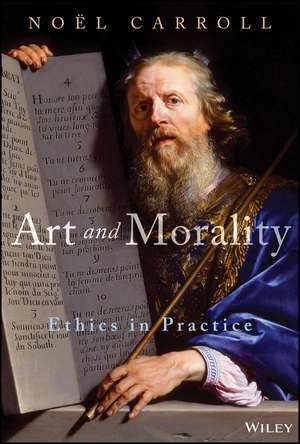
Art and Morality
Autor Noel Carrollen Limba Engleză Paperback – 5 oct 2026
The relationship between art and ethics remains one of the most contested areas in philosophical aesthetics. offers a sustained Art and Morality investigation of how artworks engage moral life-through the emotions they arouse, the beliefs they shape, and the evaluative frameworks we apply to them. Written by a leading philosopher of art, history, and ethics, the book presents arguments for and against the ethical significance of artistic experience with analytical precision.
Three chapters examine the ways art engenders emotions for both good and ill, analyzing competing positions on whether emotional responses carry genuine moral weight. A fourth chapter turns to cognition, investigating art's capacity to influence moral beliefs. The final two chapters engage directly with autonomism-the position that art should be appreciated solely for its own sake, independent of social practices including morality- presenting arguments both supporting and challenging this view.
Art and Morality serves undergraduate and graduate courses on the relation of art to morality and society. Written in an accessible style, it also addresses general readers drawn to philosophical questions raised by the arts, providing a structured framework for debates that have shaped aesthetics over two centuries.
Preț: 251.70 lei
Nou
Puncte Express: 378
Carte disponibilă
Livrare economică 12-26 noiembrie
Livrare express 29 octombrie-04 noiembrie pentru 25.68 lei
Livrare prin curier în România Termenul estimat este afișat lângă disponibilitate.
Transport gratuit de la 400.00 lei Plată online sau ramburs, în funcție de opțiunile comenzii.
Retur gratuit în 14 zile Comandă securizată și suport în română.
Specificații
ISBN-13: 9781405187145
ISBN-10: 140518714X
Pagini: 208
Dimensiuni: 153 x 227 x 15 mm
Greutate: 0.31 kg
Editura: John Wiley & Sons, Inc.
ISBN-10: 140518714X
Pagini: 208
Dimensiuni: 153 x 227 x 15 mm
Greutate: 0.31 kg
Editura: John Wiley & Sons, Inc.
Notă biografică
NOËL CARROLL is Distinguished Professor in the Philosophy Program at The Graduate Center, CUNY. His research focuses on the philosophy of art and the arts, encompassing literature, fine art, photography, theater, dance, and motion pictures. He has held positions at NYU, Wesleyan, Cornell, the University of Wisconsin-Madison, and Temple. A former journalist, he has written five documentary motion pictures. His books include The Philosophy of Horror, A Philosophy of Mass Art, The Philosophy of Motion Pictures, and Art in Three Dimensions.
Cuprins
Acknowledgments x
Introduction xi
1 Art, Emotion, and Morality 1
Introduction 1
Plato and the Theory of Identification 3
On Identification as a General Account of Audience/Character Emotive Engagement 13
Emotions, Art, and Criterial Prefocusing 17
An Objection: What About Moral Change? 23
2 Further Criticisms of the Effects of Emotional Engagement with Art 27
Introduction 27
Plato Redux 28
The Imitation Argument 29
Questioning the Imitation Argument 32
The Illusion Argument 34
The Economic Argument 44
Descendants of Plato 48
Saint Augustine 48
The Response Argument 49
The Pleasure Argument 51
Jean-Jacques Rousseau 53
Bertolt Brecht (1898-1956) 56
3 Alternative Positive Views of the Nexus of Art, Emotion, and Morality 60
Introduction 60
Empathy 61
On the Very Many Meanings of "Empathy" 62
Empathy and Sympathy 63
"What Is Empathy?" 65
On the Strong Version of the Common View of Empathy 65
Revisiting the Common View of Empathy 67
Empathy and Morality 69
Is Empathy Ethically Reliable? 72
Art, Empathy, and Moral Cultivation 75
Simulation 78
Explaining Mind-Reading 78
What Is Simulation? 79
Questioning Simulation 83
Appendix: Empathy Revisited 89
Admiration 90
4 Art, Cognition, and Morality 97
Introduction 97
Part I: For and Against: Specific Skeptical Arguments Regarding Moral Cognitivism 98
Arguments Against Moral Cognitivism 98
Skeptical Arguments Against Art as a Source of Knowledge 98
Challenging the Skeptic's Arguments Against Moral Cognitivism 104
The No-Evidence Argument 105
The Tainted-Representation Argument 109
The No-Argument Argument 110
The As-Art Argument 117
The No-Expertise Argument 121
The No-Artistic-Truths Argument 124
The Banality Argument 124
The No-Originality Argument 126
The No-Critical-Argument Argument 126
The Skeptic's Error Theory 127
Part II: Recurring Skeptical Presuppositions Reviewed and Challenged 129
Cognitively Valuable? 130
5 Autonomism 137
Introduction 137
The Emergence of Autonomism 137
Formalism 144
Aesthetic Art Theory 149
Summary 156
6 Moralism Versus Autonomism 157
Introduction 157
Extreme Moralism 157
Autonomism Redux 159
Moderate Moralism Versus Moderate Autonomism 161
Objections to Moderate Moralism and Rejoinders 167
Index 181
Introduction xi
1 Art, Emotion, and Morality 1
Introduction 1
Plato and the Theory of Identification 3
On Identification as a General Account of Audience/Character Emotive Engagement 13
Emotions, Art, and Criterial Prefocusing 17
An Objection: What About Moral Change? 23
2 Further Criticisms of the Effects of Emotional Engagement with Art 27
Introduction 27
Plato Redux 28
The Imitation Argument 29
Questioning the Imitation Argument 32
The Illusion Argument 34
The Economic Argument 44
Descendants of Plato 48
Saint Augustine 48
The Response Argument 49
The Pleasure Argument 51
Jean-Jacques Rousseau 53
Bertolt Brecht (1898-1956) 56
3 Alternative Positive Views of the Nexus of Art, Emotion, and Morality 60
Introduction 60
Empathy 61
On the Very Many Meanings of "Empathy" 62
Empathy and Sympathy 63
"What Is Empathy?" 65
On the Strong Version of the Common View of Empathy 65
Revisiting the Common View of Empathy 67
Empathy and Morality 69
Is Empathy Ethically Reliable? 72
Art, Empathy, and Moral Cultivation 75
Simulation 78
Explaining Mind-Reading 78
What Is Simulation? 79
Questioning Simulation 83
Appendix: Empathy Revisited 89
Admiration 90
4 Art, Cognition, and Morality 97
Introduction 97
Part I: For and Against: Specific Skeptical Arguments Regarding Moral Cognitivism 98
Arguments Against Moral Cognitivism 98
Skeptical Arguments Against Art as a Source of Knowledge 98
Challenging the Skeptic's Arguments Against Moral Cognitivism 104
The No-Evidence Argument 105
The Tainted-Representation Argument 109
The No-Argument Argument 110
The As-Art Argument 117
The No-Expertise Argument 121
The No-Artistic-Truths Argument 124
The Banality Argument 124
The No-Originality Argument 126
The No-Critical-Argument Argument 126
The Skeptic's Error Theory 127
Part II: Recurring Skeptical Presuppositions Reviewed and Challenged 129
Cognitively Valuable? 130
5 Autonomism 137
Introduction 137
The Emergence of Autonomism 137
Formalism 144
Aesthetic Art Theory 149
Summary 156
6 Moralism Versus Autonomism 157
Introduction 157
Extreme Moralism 157
Autonomism Redux 159
Moderate Moralism Versus Moderate Autonomism 161
Objections to Moderate Moralism and Rejoinders 167
Index 181