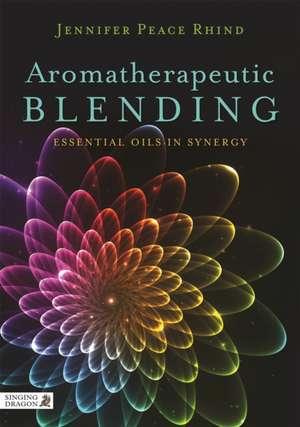
Aromatherapeutic Blending: Essential Oils in Synergy
Autor Jennifer Peace Peace Rhinden Limba Engleză Paperback – 21 oct 2015
The author covers new and exciting developments in research into the use of essential oils, explores the merits and limitations of holistic, psychosensory and molecular approaches to blending and suggests effective ways of choosing the most suitable approach for individual clients. Evidence-based profiles of essential oils and absolutes are included and the comprehensive tables summarising their actions enable practitioners to identify easily potential contenders for synergistic blends.
Throughout the book, the author encourages students and practitioners of all levels to reflect on their practice, appraising the intended outcomes of their blends and treatment plans, so that they can emerge more knowledgeable and insightful practitioners.
Preț: 248.85 lei
Preț vechi: 325.70 lei
-24%
Puncte Express: 373
Carte disponibilă
Livrare economică 29 octombrie-12 noiembrie
Livrare express 14-20 octombrie pentru 124.20 lei
Livrare prin curier în România Termenul estimat este afișat lângă disponibilitate.
Transport gratuit de la 400.00 lei Plată online sau ramburs, în funcție de opțiunile comenzii.
Retur gratuit în 14 zile Comandă securizată și suport în română.
Specificații
ISBN-13: 9781848192270
ISBN-10: 1848192274
Pagini: 336
Dimensiuni: 178 x 252 x 22 mm
Greutate: 0.65 kg
Editura: JESSICA KINGSLEY PUBLISHERS
Colecția Singing Dragon
Locul publicării:London, United Kingdom
ISBN-10: 1848192274
Pagini: 336
Dimensiuni: 178 x 252 x 22 mm
Greutate: 0.65 kg
Editura: JESSICA KINGSLEY PUBLISHERS
Colecția Singing Dragon
Locul publicării:London, United Kingdom
V-ar putea interesa
-
 Fragrance and Wellbeing: Plant Aromatics and Their Influence on the PsycheJennifer Peace Peace Rhind-23%Preț: 267.77 lei348.16 lei
 -
 Listening to Scent: An Olfactory Journey with Aromatic Plants and Their ExtractsJennifer Peace Peace Rhind-21%Preț: 143.12 lei180.20 lei
Recenzii
The wealth of information on essential oils contained within this book make it an indispensable reference for all aromatherapists, and others interested in essential oils. Jennifer Rhind draws from her many years of study, experience and exploration, and combines her insights with a rigorous scientific understanding to shed new light on the actions and character of individual essential oils, together with ideas on how best to combine them into therapeutic blends. Highly recommended.
In Aromatherapeutic Blending, Jennifer Rhind explores this fascinating subject from a variety of angles, including up-to-date scientific data, the bio-chemical interaction of essential oils, individual case studies and her own experiential expertise. The material detailed in Part II, Essential Oils & Absolutes: Actions & Evidence, presents a unique contribution to aromatherapy literature and provides a valuable resource for all those involved in creating effective synergy blends. I can highly recommend this book as a well-researched reference source, as well as a practical guide to blending.
Aromatherapeutic Blending is a book that every aromatherapy practitioner should own and every aromatherapy educator should incorporate into their curriculum. The author takes you on a journey that encompasses and reviews various approaches to aromatherapetic blending and then compares and contrasts them. She provides a summary of relevant discussion of what we (as aromatherapists) have learned from many teachers and schools of thought over time; including various models of client assessment, blending and care. What is refreshing is that alongside the chemistry and biology, the author encourages the reader to discover (or renew) their relationship with plants and the personality and aromatic impact of the essential oils they provide. This book is not a "re-telling" of information, but rather a presentation of many approaches to provide a meaningful exploration, leaving it to the reader to determine what fits best into his/her holistic practice. In addition to providing current information to support the text, she provides key reflective points serving as a catalyst for a dynamic discussion between teacher and student or between colleagues. This is not a book for passive learners, but rather those who want to fully engage in the process of learning about the essential oils and their therapeutic benefits.
Rhind's enthusiastic approach makes for compelling reading from a scientific and holistic point of view. It is a useful functional aid for inspirational blending and a great reference for evidence-based practice. I would recommend it for students and well-versed aromatherapists alike and will be adding it to my recommended reading list for future aromatherapy students.
[This book] gives the reader a tool, or method, on how to bring these aromas, or essential oils, together in a synergistic blend to address the physical and emotional issues we may experience during life (...) this book gives you some techniques for perfecting aromatherapy blends for such conditions as acne, pain, inflammation, infections, wounds, allergies, anxiety, and depression.
In Aromatherapeutic Blending, Jennifer Rhind explores this fascinating subject from a variety of angles, including up-to-date scientific data, the bio-chemical interaction of essential oils, individual case studies and her own experiential expertise. The material detailed in Part II, Essential Oils & Absolutes: Actions & Evidence, presents a unique contribution to aromatherapy literature and provides a valuable resource for all those involved in creating effective synergy blends. I can highly recommend this book as a well-researched reference source, as well as a practical guide to blending.
Aromatherapeutic Blending is a book that every aromatherapy practitioner should own and every aromatherapy educator should incorporate into their curriculum. The author takes you on a journey that encompasses and reviews various approaches to aromatherapetic blending and then compares and contrasts them. She provides a summary of relevant discussion of what we (as aromatherapists) have learned from many teachers and schools of thought over time; including various models of client assessment, blending and care. What is refreshing is that alongside the chemistry and biology, the author encourages the reader to discover (or renew) their relationship with plants and the personality and aromatic impact of the essential oils they provide. This book is not a "re-telling" of information, but rather a presentation of many approaches to provide a meaningful exploration, leaving it to the reader to determine what fits best into his/her holistic practice. In addition to providing current information to support the text, she provides key reflective points serving as a catalyst for a dynamic discussion between teacher and student or between colleagues. This is not a book for passive learners, but rather those who want to fully engage in the process of learning about the essential oils and their therapeutic benefits.
Rhind's enthusiastic approach makes for compelling reading from a scientific and holistic point of view. It is a useful functional aid for inspirational blending and a great reference for evidence-based practice. I would recommend it for students and well-versed aromatherapists alike and will be adding it to my recommended reading list for future aromatherapy students.
[This book] gives the reader a tool, or method, on how to bring these aromas, or essential oils, together in a synergistic blend to address the physical and emotional issues we may experience during life (...) this book gives you some techniques for perfecting aromatherapy blends for such conditions as acne, pain, inflammation, infections, wounds, allergies, anxiety, and depression.
Cuprins
Preface. Acknowledgements. Introduction. Part I. Principles and Practice. 1. Essential oil synergy. 2. The individual prescription. 3. A spectrum of approaches: science-based, psychosensory and vitalistic paradigms. 4. Aromatherapeutic blending. 5. Applications, carrier media, dosage and ratios. 6. Acne vulgaris: a case study. Part II. Essential oils: Actions and Evidence. 7. Pain and Inflammation: analgesic and anti-inflammatory actions. 8. Smooth Functioning: antispasmodic, vasorelaxant, antihyperlipidemic and anticonvulsant actions. 9. Health Maintenance and Enhancement: antioxidant and anti-cancer actions. 10. Infection and Immunity: antimicrobial and immunomodulant actions. 11. Respiratory Support: expectorant, mucolytic, decongestant and antitussive actions. 12. The Skin and Soft Tissues: wound-healing, anti-allergic and antipruritic actions. 13. The Psyche: anxiolytic, antidepressant and cognition-enhancing actions. Part III. Aromatics. 14. Essential oils and Absolutes: evidence-based practice. 15. Expanded Practice Aromatics: abbreviated profiles for synergistic blending. Afterword. Appendix. Fixed and Macerated Oils in Aromatherapy. Glossary. References. Recommended Texts and Further Reading. Resources.