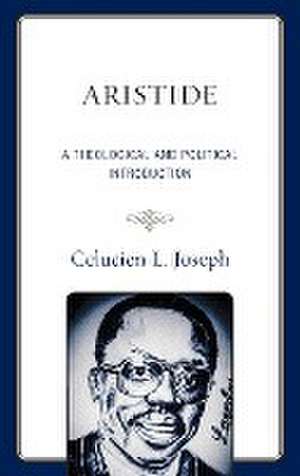
Aristide: A Theological and Political Introduction
Autor Celucien L. Josephen Limba Engleză Hardback – 2 feb 2023
Preț: 599.11 lei
Preț vechi: 913.35 lei
-34%
Puncte Express: 899
Carte tipărită la comandă
Livrare economică 16-30 noiembrie
Livrare prin curier în România Termenul estimat este afișat lângă disponibilitate.
Transport gratuit pentru acest produs Plată online sau ramburs, în funcție de opțiunile comenzii.
Retur gratuit în 14 zile Comandă securizată și suport în română.
Specificații
ISBN-13: 9781978713260
ISBN-10: 1978713266
Pagini: 356
Dimensiuni: 160 x 231 x 26 mm
Greutate: 0.69 kg
Editura: Bloomsbury Publishing
Colecția Fortress Academic
Locul publicării:New York, United States
ISBN-10: 1978713266
Pagini: 356
Dimensiuni: 160 x 231 x 26 mm
Greutate: 0.69 kg
Editura: Bloomsbury Publishing
Colecția Fortress Academic
Locul publicării:New York, United States
Cuprins
Chapter One: Decolonialism and Postcolonialism in Intellectual Discourse: Method in Political Theology & Developing World Liberation Theologies
Chapter Two: Toward the Intellectual and Political Life: Intellectual Foundations for Aristide's Political Theory and Democratic Participation
Chapter Three: Biblical and Theological Foundations for Aristide's Political Theology and Hermeneutics
Chapter Four: Toward a Politico-Theology of Relationality and Justice as Solidarity
Chapter Five: Aristide and Critical (Theological) Anthropology and Ethics
Chapter Six: Connecting Democracy and Human Freedom with the Ethics of Ubuntu
Chapter Seven: Ubuntu as a Humanism of Love and Interdependence: Aristide's Theology of Love and Relationality
Chapter Eight: Theology, Retributive Justice, and Violence in the Struggle for Democracy in Haiti
Conclusion: Haiti After Aristide: Hope for a New Future in the 21st Century
Appendix I: Selected Documents of Universal Catholic Social Teaching
Appendix II: English Translation of Jean-Bertrand Aristide's famous Pere Lebrun Speech (Sept. 27, 1991)
Appendix III: "One Step at a Time: An interview with Jean-Bertrand Aristide" (July 2006)
Chapter Two: Toward the Intellectual and Political Life: Intellectual Foundations for Aristide's Political Theory and Democratic Participation
Chapter Three: Biblical and Theological Foundations for Aristide's Political Theology and Hermeneutics
Chapter Four: Toward a Politico-Theology of Relationality and Justice as Solidarity
Chapter Five: Aristide and Critical (Theological) Anthropology and Ethics
Chapter Six: Connecting Democracy and Human Freedom with the Ethics of Ubuntu
Chapter Seven: Ubuntu as a Humanism of Love and Interdependence: Aristide's Theology of Love and Relationality
Chapter Eight: Theology, Retributive Justice, and Violence in the Struggle for Democracy in Haiti
Conclusion: Haiti After Aristide: Hope for a New Future in the 21st Century
Appendix I: Selected Documents of Universal Catholic Social Teaching
Appendix II: English Translation of Jean-Bertrand Aristide's famous Pere Lebrun Speech (Sept. 27, 1991)
Appendix III: "One Step at a Time: An interview with Jean-Bertrand Aristide" (July 2006)
Recenzii
Haiti holds a revered place in the long history of the Black liberation movement, as the first Black republic in the west and the scene of the greatest anti-colonial uprising the world has ever seen. This hugely impressive book on Aristide by Celucien Joseph provides a theo-political commentary on the continued struggle for Black liberation on this Caribbean island where self-determination remains an essential marker for a people who will never give in or give up on their dreams to be free.
This book provides a needed and interesting theological approach to the study of Aristide's political trajectory.
[There] are brilliant, helpful and constructive insights here that would add towards a fuller picture and greater appreciation of Jean-Bertrand Aristide. Celucien Joseph has clearly produced a much-needed volume in reclaiming Aristide as part of the history of Caribbean ideas and intellectual discourse. The research, thought and intentional work towards delivering this volume cannot be underestimated and is certainly an addition to Caribbean critical, theological and historical scholarship that others will build upon and expand.
This book provides a needed and interesting theological approach to the study of Aristide's political trajectory.
[There] are brilliant, helpful and constructive insights here that would add towards a fuller picture and greater appreciation of Jean-Bertrand Aristide. Celucien Joseph has clearly produced a much-needed volume in reclaiming Aristide as part of the history of Caribbean ideas and intellectual discourse. The research, thought and intentional work towards delivering this volume cannot be underestimated and is certainly an addition to Caribbean critical, theological and historical scholarship that others will build upon and expand.