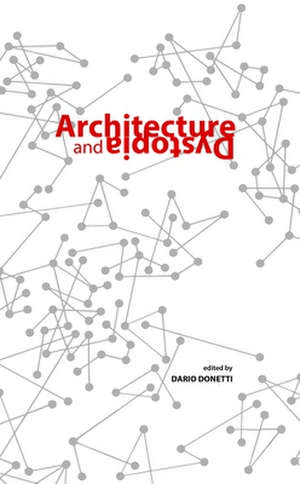
Architecture and Dystopia
Editat de Dario Donettien Limba Engleză Paperback – 7 ian 2020
Perioada radicală a anilor '60 a marcat un punct de cotitură ireversibil în teoria arhitecturii, transformând optimismul modernist într-o explorare viscerală a limitelor societății de consum. În volumul Architecture and Dystopia, editat de Dario Donetti, suntem invitați să parcurgem o analiză densă a modului în care eșecul utopiilor a generat un nou limbaj vizual. Remarcăm felul în care autorii documentează tranziția de la proiectele iconoclastice ale Superstudio sau Archizoom către structurile copleșitoare de scară industrială ale mișcării High Tech. Experiența lecturii este una provocatoare, textul fiind structurat ca un dialog critic ce chestionează dacă aceste manifestări antirale sunt simple cazuri izolate sau fac parte dintr-un peisaj teoretic mai larg al „gândirii negative”. Complementar volumului Perspecta 54, care explorează conceptul de „atopie” ca spațiu neutru al sistemelor hegemonice, Architecture and Dystopia se concentrează pe forța perturbatoare a imaginilor distopice. În timp ce Perspecta 54 analizează aplatizarea culturii de masă, lucrarea de față, publicată de Actar D, caută să legitimeze distopia ca metodă constructivă capabilă să genereze posibilități urbane neașteptate. Este o incursiune academică riguroasă în 296 de pagini care transformă arhitectura într-un instrument de critică socială.
Preț: 189.45 lei
Carte disponibilă
Livrare economică 12-26 mai
Specificații
ISBN-10: 1945150947
Pagini: 296
Dimensiuni: 150 x 230 x 16 mm
Greutate: 0.4 kg
Ediția:English edition
Editura: Actar D
V-ar putea interesa
-
 Selected Poems and FragmentsFriedrich Hölderlin-20%Preț: 82.01 lei102.77 lei
 -
 The Great SeaDavid Abulafia-22%Preț: 108.67 lei139.74 lei
 -
 The Logic of the Cultural Sciences: Five StudiesErnst CassirerPreț: 215.11 lei
 -
 Preț: 149.83 lei
 -
 Berlin Cabaret (Paper)Peter JelavichPreț: 330.88 lei
 -
 Changing DifferenceCatherine MalabouPreț: 139.73 lei
 -
 -11%Preț: 102.01 lei115.04 lei
 -
 Bataille's DogMaia NewleyPreț: 60.67 lei
 -
 Gustave CourbetLacey Belinda SmithPreț: 83.67 lei
 -
 Preț: 119.33 lei
 -
 Walter BenjaminGershom ScholemPreț: 122.98 lei
 -
 That Awful Mess on the Via MerulanaCarlo Emilio GaddaPreț: 100.01 lei
 -
 Walter Benjamin's ArchiveWalter BenjaminPreț: 214.81 lei
 -
 KathmanduThomas Bell-28%Preț: 75.61 lei105.04 lei
 -
 -39%Preț: 118.44 lei194.86 lei
 -
 Sylva SylvarumFrancis BaconPreț: 257.61 lei
 -
 Manifesto Architecture – The Ghost of MiesBeatriz ColominaPreț: 117.99 lei
De ce să citești această carte
Recomandăm această carte arhitecților și teoreticienilor care doresc să înțeleagă rădăcinile critice ale urbanismului contemporan. Cititorul câștigă o perspectivă clară asupra modului în care „eșecul” poate deveni o resursă creativă. Este un titlu esențial pentru cei care caută să descifreze estetica radicală a anilor '60 și influența ei asupra unor figuri majore precum Rem Koolhaas.