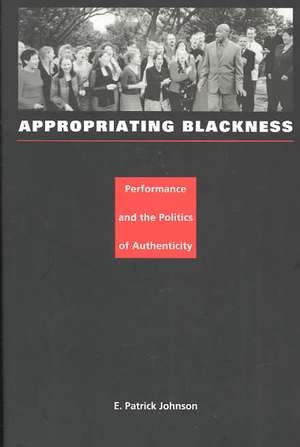
Appropriating Blackness
Autor E. Patrick Johnsonen Limba Engleză Paperback – 13 aug 2003
Dacă sociologia clasică a lui W.E.B. Du Bois încerca să definească sufletul poporului de culoare prin termeni istorici și politici, Appropriating Blackness ne propune o schimbare radicală de perspectivă: identitatea nu este un dat biologic, ci o serie de acțiuni performate pe o scenă socială tensionată. Suntem de părere că autorul reușește să surprindă momentul dramatic în care „autenticitatea” devine atât o armă de rezistență, cât și un mecanism de excludere. Cine a apreciat portretul complex al reprezentării din Understanding Blackness Through Performance de Anne Cremieux va găsi aici aceeași profunzime biografică, aplicată însă unui spectru mult mai larg de contexte culturale. Simțim în paginile acestei cărți o dorință de a deconstrui miturile, de la modul în care comedia lui Eddie Murphy sau Damon Wayans modelează percepția publică, până la analizele scrierilor naționaliste ale lui Amiri Baraka. Structura volumului reflectă această diversitate, fiind organizat în șase capitole care progresează de la analiza cinematografică a lui Marlon Riggs spre spații mult mai intime, precum „spațiul domestic transgresiv” sau sala de curs ca laborator de performanță. Autorul nu ezită să includă istorii orale, cum este cea a bunicii sale, oferind o bază umană unor teorii complexe. În contextul operei sale, Appropriating Blackness funcționează ca fundament teoretic pentru lucrări ulterioare precum Black Queer Studies sau No Tea, No Shade. Dacă în acele volume E. Patrick Johnson se concentrează pe consolidarea unui domeniu de studiu, aici el explorează însăși natura fluidă a identității. Credem că este o lucrare esențială pentru a înțelege cum muzica gospel poate fi preluată de un cor din Australia sau cum identitatea masculină este negociată în cultura vernaculară gay, totul într-un stil care îmbină rigoarea academică cu o sensibilitate narativă rară.
Preț: 229.14 lei
Carte tipărită la comandă
Livrare economică 10-24 noiembrie
Specificații
ISBN-10: 0822331918
Pagini: 384
Ilustrații: 16 b&w photographs
Dimensiuni: 152 x 231 x 23 mm
Greutate: 0.52 kg
Ediția:New.
Editura: Duke University Press
V-ar putea interesa
-
 How to Be BlackBaratunde ThurstonPreț: 70.98 lei
 -
 Black in BluesImani PerryPreț: 95.23 lei
 -
 A Little Devil in AmericaHanif Abdurraqib-31%Preț: 63.24 lei91.96 lei
 -
 -21%Preț: 166.61 lei211.08 lei
 -
 Goin' Viral: Uncontrollable Black PerformanceGabriel A. PeoplesPreț: 195.76 lei
 -
 Major LabelsKelefa SannehPreț: 111.17 lei
 -
 Disidentifications: Queers of Color And The Performance of PoliticsJosé Esteban MuñozPreț: 157.58 lei
 -
 Preț: 383.28 lei
 -
 -21%Preț: 143.53 lei181.03 lei
 -
 Sex on Stage: Performing the Body PoliticAlison J Carr-11%Preț: 159.53 lei178.42 lei
 -
 This is Why I Resist: Don't Define My Black IdentityDr Shola Mos-ShogbamimuPreț: 91.48 lei
 -
 BlackfaceProfessor Ayanna Thompson-33%Preț: 50.57 lei75.28 lei
 -
 Darkening BlacknessNorman AjariPreț: 139.40 lei
 -
 Reframing BlacknessAlayo AkinkugbePreț: 142.73 lei
 -
 From Black Power to Hip HopPatricia Hill CollinsPreț: 170.33 lei
 -
 No Sense in Wishing: EssaysLawrence Burney-20%Preț: 112.64 lei140.43 leiRecomandat
 -
 Blackness at the IntersectionProfessor Kehinde Andrews-11%Preț: 158.55 lei178.50 lei
 -
 To Be Young, Gifted and BlackKadiatu Kanneh-MasonPreț: 121.91 lei
 -
 Black MemeLegacy RussellPreț: 109.30 lei
De ce să citești această carte
Recomandăm această carte cititorilor interesați de antropologie culturală și studii de gen care doresc să depășească clișeele despre identitate. Veți câștiga o înțelegere profundă a modului în care cultura este „jucată” și negociată în viața de zi cu zi. Este o lectură rară care pune față în față analiza critică a cinematografiei cu istoria orală a Sudului american, oferind instrumente pentru a descifra mecanismele puterii din spatele fiecărei performanțe identitare.
Despre autor
E. Patrick Johnson este profesor distins (Carlos Montezuma Professor) de Studii de Performanță și Studii Afro-Americane la Northwestern University. Cariera sa este marcată de o dublă vocație: cea de cercetător riguros și cea de artist de performance, o dualitate care infuzează scrierile sale cu o vitalitate aparte. Recunoașterea sa academică este dublată de un impact social semnificativ, fiind inclus în Chicago Gay and Lesbian Hall of Fame în anul 2010 pentru contribuțiile sale la vizibilitatea și studiul comunităților queer de culoare. Prin lucrări precum Blacktino Queer Performance, el continuă să exploreze intersecția dintre rasă, sexualitate și reprezentare artistică.
Descriere scurtă
Recenzii
Textul de pe ultima copertă
Cuprins
Introduction
"Blackness" and Authenticity: What's Performance Got to Do with It? 1
1. The Pot is Brewing: Marlon Riggs's Black Is . . . Black Ain't 17
2. Manifest Faggotry: Queering Masculinity in African American Culture 48
3. Mother Knows Best: Blackness and Transgressive Domestic Space 76
4. "Nevah Had uh Cross Word": Mammy and the Trope of Black Womanhood 104
5. Sounds of Blackness Down Under: The Cafe of the Gate of Salvation 160
6. Performance and/as Pedagogy: Performing Blackness in the Classroom 219
Appendix A Mary Rhyne's Narrative 257
Appendix B Interview with Mrs. Smith 311
Notes 315
Bibliography 345
Index 361