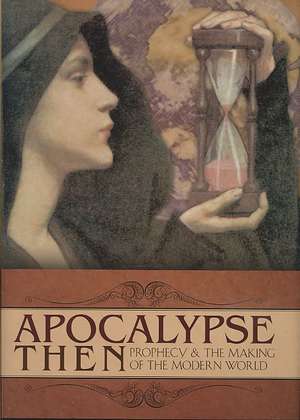
Apocalypse Then: Prophecy and the Making of the Modern World: Praeger Series on the Early Modern World
Autor Arthur Williamsonen Limba Engleză Hardback – 29 mar 2008 – vârsta până la 17 ani
Considerăm că Apocalypse Then reprezintă o resursă academică esențială pentru studenții și cercetătorii istoriei ideilor, fiind de o relevanță imediată pentru cursurile de istorie modernă timpurie și studii culturale. Lucrarea lui Arthur Williamson demonstrează cum o structură de gândire profund religioasă a facilitat, paradoxal, tranziția către modernitatea seculară. Ne-a atras atenția modul în care autorul nu tratează apocalipsa ca pe o simplă curiozitate teologică, ci ca pe un motor ideologic ce a subminat vechile ordini pentru a face loc științei și democrației.
Textul este organizat riguros în zece capitole care urmăresc evoluția conceptului de la primele confruntări cu „Fiara” în perioada Reformei, până la „Anticristul în era post-apocaliptică”. Un punct forte al structurii este analiza interdisciplinară din capitolele centrale, unde profeția este pusă în dialog cu natura, sexul și fizica lui Newton. Această progresie clară ajută cititorul să înțeleagă cum viziunile eschatologice au influențat nu doar amvonul, ci și laboratorul de cercetare sau câmpul de luptă politic.
Acoperă aceeași arie tematică precum A Beautiful Ending de John Jeffries Martin, însă Apocalypse Then adoptă o perspectivă mai axată pe sinteza politică și pe formarea instituțiilor moderne americane și britanice. În timp ce alte lucrări din domeniu, cum este Millenarianism and Messianism in Early Modern European Culture, se concentrează pe nișe geografice sau perioade mai scurte, volumul de față oferă o panoramă vastă de trei secole, fiind ideal pentru înțelegerea rădăcinilor intelectuale ale lumii contemporane.

Preț: 370.61 lei
Preț vechi: 451.67 lei
-18%
Carte tipărită la comandă
Livrare economică 30 noiembrie-14 decembrie
Specificații
ISBN-10: 0275985083
Pagini: 368
Dimensiuni: 156 x 235 x 36 mm
Greutate: 0.73 kg
Editura: Bloomsbury Publishing
Colecția Praeger
Seria Praeger Series on the Early Modern World
Locul publicării:New York, United States
V-ar putea interesa
-
 The Emperor's Friend: Marshal Jean LannesMargaret S. Chrisawn-32%Preț: 610.13 lei902.85 lei
 -
 The Insurgency in Chechnya and the North Caucasus: From Gazavat to JihadRobert W. Schaefer-29%Preț: 390.66 lei553.11 lei
 -
 Bloody Scottish History: EdinburghGeoff HolderPreț: 112.51 lei
 -
 -19%Preț: 350.84 lei430.88 lei
 -
 Letters from AlbaniaM.Edith Durham-11%Preț: 172.96 lei195.13 lei
 -
 NapoleonAlan Forrest-26%Preț: 74.81 lei101.02 lei
 -
 Not in Front of the CorgisBrian HoeyPreț: 65.20 lei
 -
 Liverpool FC Match of My LifeLeo MoynihanPreț: 69.62 lei
 -
 Wolves Match of My LifeSimon Lowe-6%Preț: 65.59 lei69.42 lei
 -
 Stoke City Match of My LifeSimon LowePreț: 68.38 lei
De ce să citești această carte
Recomandăm această carte celor care doresc să înțeleagă mecanismele invizibile care au construit Occidentul modern. Cititorul va câștiga o perspectivă inedită asupra modului în care radicalismul religios a pavat drumul către raționalism și democrație. Este o lectură fundamentală pentru oricine studiază istoria politică sau evoluția gândirii științifice, oferind instrumentele necesare pentru a decoda retorica apocaliptică prezentă încă în discursul public actual.
Despre autor
Arthur Williamson este un istoric respectat, specializat în perioada modernă timpurie, cu un interes academic profund pentru intersecția dintre teologie, politică și istoria ideilor. Prin contribuția sa în cadrul Praeger Series on the Early Modern World, acesta s-a impus ca o autoritate în analiza modului în care credințele eschatologice au modelat identitățile naționale britanice și americane. Cercetările sale sunt recunoscute pentru rigoarea documentară și pentru capacitatea de a sintetiza curente intelectuale complexe în narațiuni istorice coerente.
Notă biografică
Cuprins
Recenzii
Seeking 'to understand the foundations of modernity,' Williamson (California State Univ., Sacramento) focuses on profound shifts in attitude toward time and nature effected by Protestant apocalypticism. . . . Recommended. Undergraduate and general collections.
This work is a tour de force, a clear testimony to the author's amazing range of interests and the depth of his research. It is a welcome, unique contribution to the puzzle of the relationship between apocalypse and history, modes of persuasion and modes of conduct. The book clearly succeeds in demonstrating the central role of ideological, apocalyptic considerations in the history of early modernity. Scholars and students alike will greatly benefit from the discussion and analysis of Williamson's most valuable work.'