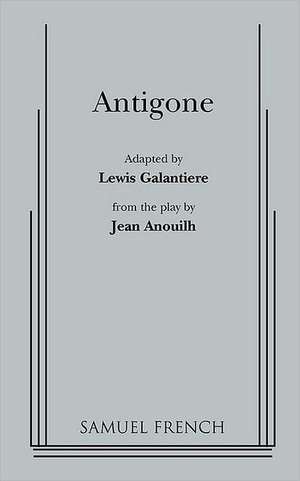
Antigone
Autor Jean Anouilh, Lewis Galantiereen Limba Engleză Paperback – 22 iul 2010
"Its dimensions are noble, its intentions uncompromising."-Southwestern University, Texas
Preț: 95.79 lei
Puncte Express: 144
Carte disponibilă
Livrare economică 14-28 noiembrie
Livrare prin curier în România Termenul estimat este afișat lângă disponibilitate.
Transport gratuit de la 400.00 lei Plată online sau ramburs, în funcție de opțiunile comenzii.
Retur gratuit în 14 zile Comandă securizată și suport în română.
Specificații
ISBN-13: 9780573605468
ISBN-10: 0573605467
Pagini: 76
Dimensiuni: 127 x 200 x 10 mm
Greutate: 0.09 kg
Editura: Concord Theatricals
ISBN-10: 0573605467
Pagini: 76
Dimensiuni: 127 x 200 x 10 mm
Greutate: 0.09 kg
Editura: Concord Theatricals
V-ar putea interesa
-
 The Theban PlaysSophocles-20%Preț: 57.13 lei71.10 lei
 -
 The Oresteian TrilogyAeschylus-32%Preț: 62.94 lei92.17 lei
 -
 AntigoneSophocles-39%Preț: 17.44 lei28.47 lei
 -
 Tartuffe, by MolièreRichard WilburPreț: 87.07 lei
 -
 Antigone: A New Adaptation of the Classic Greek TragedyHollie McNish-27%Preț: 57.13 lei78.06 lei
 -
 The Resistible Rise of Arturo UiBertolt Brecht-46%Preț: 56.20 lei104.07 lei
 -
 Cyrano de BergeracEdmond RostandPreț: 49.42 lei
 -
 Ubu RoiAlfred JarryPreț: 28.65 lei
 -
 The Burial at ThebesSeamus HeaneyPreț: 91.21 lei
 -
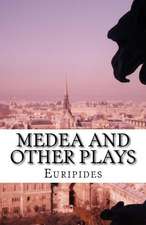 Medea and Other PlaysEuripidesPreț: 43.30 lei
 -
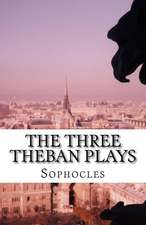 The Three Theban PlaysSophoclesPreț: 45.74 lei
 -
 Antigona and MeKate ClanchyPreț: 78.13 lei
 -
 -18%Preț: 71.31 lei86.98 lei
 -
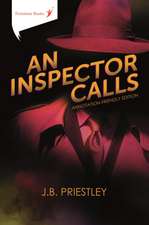 An Inspector Calls: Annotation-Friendly EditionJ. B. PriestleyPreț: 86.45 lei
 -
 Long Day's Journey into NightEugene O'NeillPreț: 57.13 lei
 -
 Twelve Angry MenReginald RosePreț: 48.64 lei