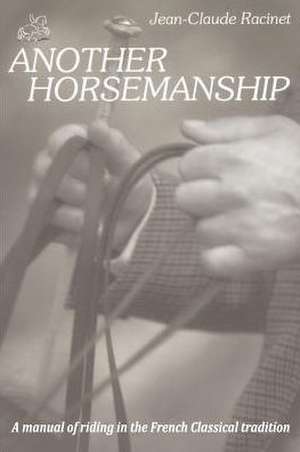
Another Horsemanship
Autor Jean-Claude Racineten Limba Engleză Paperback – 4 iun 2014
Prin parcurgerea acestui manual practic, cititorul va dobândi capacitatea de a instaura un dialog subtil cu partenerul său ecvestru, înlocuind constrângerea fizică cu echilibrul și relaxarea. Suntem de părere că Another Horsemanship reprezintă o pledoarie esențială pentru „L'equitation de L'egerete”, acea filozofie a lejerității care transformă echitația dintr-o luptă de forțe într-o formă de artă. Ne-a atras atenția modul extrem de pragmatic în care Jean-Claude Racinet demonstrează ineficiența metodelor moderne de a împinge calul în zăbală: prin ordinele contradictorii „du-te - nu te duce”, călărețul riscă să obțină doar un animal confuz sau greoi pe mână. Notăm cu interes cum autorul propune, în schimb, deschiderea degetelor în momentul impulsiei, eliminând obstacolul major din calea mișcării naturale. Ca și Horse Training de Etienne Beudant, lucrarea pune accent pe un cal receptiv la semnale fine, dar o face cu un stil propriu, mult mai ancorat în realitatea cotidiană a dresajului modern, oferind explicații „down-to-earth”. În contextul operei sale, dacă în TOTAL HORSEMANSHIP autorul căuta soluții interne pentru problemele de echilibru, în volumul de față el sistematizează tradiția franceză într-un ghid aplicat. Această abordare este continuată și în Racinet Explains Baucher, unde fundamentele teoretice sunt explorate în profunzime. Stilul narativ este cel al unui mentor care a testat totul pe teren — de la terenurile de luptă din Coreea și Algeria, până la competițiile de sărituri din Tunisia — oferind o perspectivă rară, ce îmbină rigoarea militară de la Saumur cu finețea jurnalismului ecvestru.
Preț: 204.20 lei
Carte tipărită la comandă
Livrare economică 30 noiembrie-14 decembrie
Specificații
ISBN-10: 0933316038
Pagini: 140
Dimensiuni: 152 x 229 x 8 mm
Greutate: 0.22 kg
Editura: Xenophon Press LLC
V-ar putea interesa
-
 What Your Horse Wants You to KnowGincy Self BucklinPreț: 114.81 lei
 -
 The All-Around Horse and RiderDonna Snyder-SmithPreț: 179.62 lei
 -
 TOTAL HORSEMANSHIPJean-Claude RacinetPreț: 205.01 lei
 -
 Dressage in the French TraditionDom Diogo De BragancePreț: 221.35 lei
 -
 'Spanish Riding School' and 'Piaffe and Passage' by DecarpentryGeneral Albert DecarpentryPreț: 218.58 lei
 -
 THE LEGACY OF MASTER NUNO OLIVEIRAStephanie Grant MillhamPreț: 218.57 lei
 -
 Horse TrainingEtienne BeudantPreț: 216.24 lei
 -
 H. DV. 12 German Cavalry ManualStefanie ReinholdPreț: 237.50 lei
 -
 Truth in the Teaching of Master Nuno OliveiraEleanor RussellPreț: 310.62 lei
 -
 Learning to RidePiero SantiniPreț: 192.81 lei
 -
 Gymnasium of the HorseGustav SteinbrechtPreț: 306.56 lei
 -
 Classic Show JumpingBertalan De NemethyPreț: 304.40 lei
 -
 The CB CowboysBilly WilcoxsonPreț: 177.48 lei
 -
 Be strict im SattelMichael GeitnerPreț: 184.08 lei
 -
 Das TherapiepferdSonja HoffmannPreț: 89.72 lei
De ce să citești această carte
Recomandăm această carte oricărui călăreț care simte că progresul său este blocat de rezistența fizică a calului. Veți câștiga o înțelegere clară a modului în care mâna și piciorul trebuie să lucreze independent pentru a păstra impulsia fără tensiune. Este un motiv concret pentru a renunța la forță în favoarea tehnicilor clasice franceze, asigurând longevitatea și bunăstarea calului în orice disciplină sportivă.
Despre autor
Jean-Claude Racinet (1929-2009) a fost un maestru al echitației franceze, absolvent al prestigioasei academii militare St. Cyr și al Școlii de Cavalerie de la Saumur. Veteran de război și campion de sărituri peste obstacole, Racinet și-a dedicat viața apărării principiilor de lejeritate specifice tradiției franceze. După o carieră militară distinsă, a devenit antrenor și jurnalist ecvestru, fiind celebru pentru capacitatea de a reabilita cai dificili. Din 1983 s-a stabilit în Statele Unite, unde a devenit un autor și clinician de succes, promovând moștenirea lui Baucher și Gueriniere.