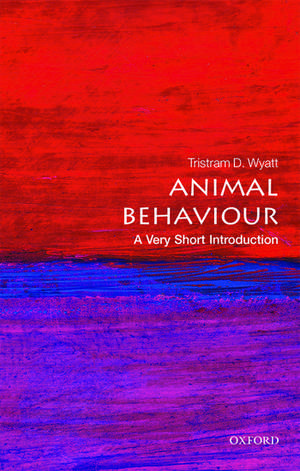
Animal Behaviour: A Very Short Introduction: Very Short Introductions
Autor Tristram D. Wyatten Limba Engleză Paperback – 23 feb 2017
Considerăm acest volum un punct de plecare esențial pentru studenții la biologie și zoologie, fiind conceput pentru a oferi o bază teoretică solidă necesară în examenele de etologie și ecologie comportamentală. Animal Behaviour de Tristram D. Wyatt reușește să sintetizeze revoluția actuală din domeniu, unde instrumentele de analiză a imaginii și genomica transformă modul în care înțelegem supraviețuirea și reproducerea speciilor. Observăm o structură riguroasă care ghidează cititorul de la mecanismele evolutive la comportamentele colective complexe, precum zborul sincronizat al graurilor.
Remarcăm modul în care autorul echilibrează studiile de laborator cu cele de teren. Această abordare acoperă aceeași arie tematică precum Behaviour and Evolution de Peter J. B. Slater, dar Animal Behaviour propune o perspectivă mai actualizată asupra tehnologiilor moleculare și a impactului epigeneticii. În comparație cu The Study of Animal Behaviour de Felicity Huntingford, care se concentrează pe evaluarea ariilor de discuție activă, lucrarea de față este mai sintetică, fiind ideală pentru o introducere rapidă și structurată în disciplina etologiei.
Poziționarea cărții în contextul operei autorului este clară: dacă în Pheromones and Animal Behavior Tristram D. Wyatt explora în detaliu comunicarea chimică, aici el extinde cadrul de analiză la întregul regat animal. Tonul este precis și academic, dar accesibil, beneficiind de 27 de ilustrații care clarifică conceptele de bază ale ecologiei comportamentale, inclusiv scurte incursiuni în comportamentul uman.
Din seria Very Short Introductions
-
 Preț: 52.98 lei
 -
 Preț: 52.49 lei
 -
 Preț: 45.59 lei
 -
 Preț: 51.55 lei
 - 5%
 Preț: 64.72 lei
 -
 Preț: 51.76 lei
 -
 Preț: 64.74 lei
 -
 Preț: 52.01 lei
 - 19%
 Preț: 57.59 lei
 - 20%
 Preț: 56.92 lei
 - 20%
 Preț: 55.70 lei
 -
 Preț: 70.75 lei
 - 19%
 Preț: 57.70 lei
 - 20%
 Preț: 57.15 lei
 - 19%
 Preț: 57.80 lei
 - 19%
 Preț: 57.62 lei
 - 19%
 Preț: 57.59 lei
 - 20%
 Preț: 56.97 lei
 - 19%
 Preț: 58.16 lei
 - 19%
 Preț: 58.03 lei
 - 20%
 Preț: 57.26 lei
 - 20%
 Preț: 56.69 lei
 - 20%
 Preț: 57.32 lei
 - 19%
 Preț: 57.23 lei
 - 20%
 Preț: 57.15 lei
 - 31%
 Preț: 49.03 lei
 - 19%
 Preț: 57.46 lei
 - 19%
 Preț: 57.72 lei
 - 20%
 Preț: 57.15 lei
 -
 Preț: 70.98 lei
 - 20%
 Preț: 57.12 lei
 - 19%
 Preț: 57.88 lei
 - 19%
 Preț: 57.59 lei
 - 19%
 Preț: 57.09 lei
 - 19%
 Preț: 57.72 lei
 - 19%
 Preț: 57.46 lei
 - 19%
 Preț: 57.73 lei
 - 19%
 Preț: 57.09 lei
 - 20%
 Preț: 56.77 lei
 - 18%
 Preț: 58.22 lei
 - 20%
 Preț: 56.77 lei
 - 18%
 Preț: 58.25 lei
 - 19%
 Preț: 57.48 lei
 -
 Preț: 68.81 lei
 - 18%
 Preț: 58.34 lei
 - 19%
 Preț: 57.79 lei
 - 19%
 Preț: 57.59 lei
 - 19%
 Preț: 57.82 lei
 - 18%
 Preț: 58.37 lei
 - 19%
 Preț: 57.46 lei
Preț: 57.46 lei
Preț vechi: 71.12 lei
-19%
Carte disponibilă
Livrare economică 19-24 noiembrie
Livrare express 30 octombrie-05 noiembrie pentru 30.01 lei
Specificații
ISBN-10: 0198712154
Pagini: 176
Ilustrații: 27 black and white illustrations
Dimensiuni: 113 x 174 x 12 mm
Greutate: 0.14 kg
Editura: OUP OXFORD
Colecția OUP Oxford
Seria Very Short Introductions
Locul publicării:Oxford, United Kingdom
V-ar putea interesa
-
 -13%Preț: 580.25 lei666.95 lei
 -
 Animal BehaviorDustin Rubenstein-22%Preț: 897.90 lei1154.64 lei
 -
 Animal Behavior: Concepts, Methods, and ApplicationsShawn Nordell-22%Preț: 855.89 lei1103.78 lei
 -
 An Introduction to Molecular EcologyGraham Rowe-19%Preț: 468.58 lei576.27 lei
 -
 Analytic Philosophy: A Very Short IntroductionMichael Beaney-20%Preț: 56.74 lei70.53 lei
 -
 Jesus: A Very Short IntroductionRichard Bauckham-19%Preț: 57.09 lei70.88 lei
 -
 The Animal Kingdom: A Very Short IntroductionPeter Holland-20%Preț: 56.97 lei70.82 lei
 -
 -10%Preț: 228.27 lei254.60 lei
 -
 Doctors by NatureJaap de RoodePreț: 160.71 lei
 -
 The Animal and the ThinkerJohn DuncanPreț: 180.13 lei
 -
 -9%Preț: 971.79 lei1067.91 lei
 -
 An Introduction to Animal BehaviourAubrey Manning-21%Preț: 621.02 lei788.32 lei
 -
 The Expression of the Emotions in Man and AnimalsCharles DarwinPreț: 50.39 lei
 -
 -24%Preț: 77.32 lei101.21 lei
 -
 Animal BehaviorJohn A ByersPreț: 81.09 lei
 -
 The Ethology of Domestic AnimalsPer Jensen-5%Preț: 315.24 lei331.83 lei
 -
 The Genetic Book of the Dead: A Darwinian ReverieRichard Dawkins-23%Preț: 85.06 lei111.13 lei
 -
 Behaviour of the Domestic CatJohn BradshawPreț: 425.47 lei
De ce să citești această carte
Recomandăm această carte oricărui student sau pasionat de zoologie care dorește să înțeleagă fundamentele etologiei moderne. Cititorul câștigă o viziune de ansamblu asupra modului în care genetica și mediul modelează instinctul și învățarea. Este un instrument de studiu eficient pentru cei care au nevoie de o sinteză actualizată, care include cele mai noi metode de cercetare genomică, totul într-un format compact și ușor de parcurs.
Despre autor
Tristram D. Wyatt este cercetător senior în cadrul Departamentului de Zoologie al Universității Oxford și membru emerit al Kellogg College. Expertiza sa principală vizează evoluția feromonilor în regnul animal, investigând aceste mecanisme atât la nivel molecular, cât și comportamental. Această specializare îi oferă o perspectivă unică asupra comunicării interspecifice, permițându-i să coreleze date din domenii diverse pentru a explica fenomene biologice complexe, o abordare vizibilă în întreaga sa activitate academică la OUP Oxford.
Descriere
How animals behave is crucial to their survival and reproduction. The application of new molecular tools such as DNA fingerprinting and genomics is causing a revolution in the study of animal behaviour, while developments in computing and image analysis allow us to investigate behaviour in ways never previously possible. By combining these with the traditional methods of observation and experiments, we are now learning more about animal behaviour than ever before.In this Very Short Introduction Tristram D. Wyatt discusses how animal behaviour has evolved, how behaviours develop in each individual (considering the interplay of genes, epigenetics, and experience), how we can understand animal societies, and how we can explain collective behaviour such as swirling flocks of starlings. Using lab and field studies from across the whole animal kingdom, he looks at mammals, butterflies, honeybees, fish, and birds, analysing what drives behaviour, andexploring instinct, learning, and culture. Looking more widely at behavioural ecology, he also considers some aspects of human behaviour.ABOUT THE SERIES: The Very Short Introductions series from Oxford University Press contains hundreds of titles in almost every subject area. These pocket-sized books are the perfect way to get ahead in a new subject quickly. Our expert authors combine facts, analysis, perspective, new ideas, and enthusiasm to make interesting and challenging topics highly readable.
Recenzii
concise, informative and insightful introduction to the fascinating world of animal behaviour
read Wyatt's compelling introduction before you watch the next nature documentary. Itll deepen and widen your understanding and appreciation of these beautiful stories. If you're sitting comfortably, Wyatt's book is a great place to begin.
written in a very clear and engaging way, which should certainly stimulate general readers to explore animal behaviour in some depth.
Notă biografică
Tristram D. Wyatt is a member of the Animal Behaviour Research Group of the Department of Zoology, University of Oxford and an emeritus fellow of Kellogg College, Oxford. He did his PhD in animal behaviour at the University of Cambridge. Before coming to Oxford's Department for Continuing Education as a lecturer (Associate Professor) in 1989, he was a lecturer at the University of Leeds and held research fellowships at the University of California, Berkeley, and theUniversity of Wales, Cardiff. He is interested in how animals of all kinds use pheromones to communicate by smell. The second edition of his book Pheromones and Animal Behavior (CUP, 2014) won the Royal Society of Biology's prize for the Best Postgraduate Textbook in 2014. His TED talk on humanpheromones has been viewed over a million times.
Cuprins
- 1: How animals behave (and why)
- 2: Sensing and responding
- 3: How behaviour develops
- 4: Learning and animal culture
- 5: Signals for survival
- 6: Winning strategies
- 7: The wisdom of crowds
- 8: Applying behaviour
- References
- Further Reading
- Index