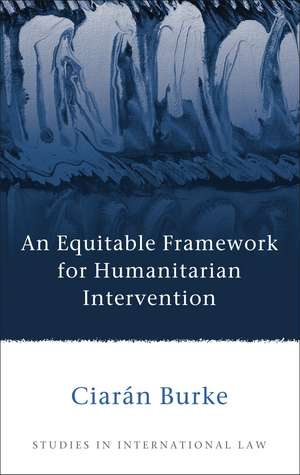
An Equitable Framework for Humanitarian Intervention: Studies in International Law
Autor Ciarán Burkeen Limba Engleză Hardback – 9 mai 2013
Din seria Studies in International Law
- nou
 Preț: 582.88 lei
 - 34%
 Preț: 1230.34 lei
 - 32%
 Preț: 618.33 lei
 - 32%
 Preț: 619.54 lei
 - 34%
 Preț: 741.30 lei
 - 32%
 Preț: 553.43 lei
 - 33%
 Preț: 1030.65 lei
 - 14%
 Preț: 904.69 lei
 - 32%
 Preț: 556.51 lei
 - 36%
 Preț: 616.15 lei
 - 29%
 Preț: 283.27 lei
 - 32%
 Preț: 620.89 lei
 - 33%
 Preț: 903.91 lei
 - 14%
 Preț: 616.15 lei
 - 33%
 Preț: 905.13 lei
 - 36%
 Preț: 552.10 lei
 - 32%
 Preț: 652.10 lei
 - 33%
 Preț: 582.43 lei
 - 14%
 Preț: 620.97 lei
 - 32%
 Preț: 619.82 lei
 - 34%
 Preț: 841.55 lei
 - 32%
 Preț: 587.11 lei
 - 33%
 Preț: 554.74 lei
 - 40%
 Preț: 615.96 lei
 - 32%
 Preț: 650.18 lei
 - 24%
 Preț: 290.93 lei
 - 32%
 Preț: 551.67 lei
 - 32%
 Preț: 971.47 lei
 - 32%
 Preț: 628.37 lei
 - 32%
 Preț: 777.62 lei
 - 32%
 Preț: 647.73 lei
 - 30%
 Preț: 536.47 lei
 - 15%
 Preț: 252.20 lei
 - 32%
 Preț: 841.99 lei
 - 32%
 Preț: 616.33 lei
 - 14%
 Preț: 801.86 lei
 - 34%
 Preț: 556.22 lei
 - 32%
 Preț: 841.99 lei
 - 32%
 Preț: 619.82 lei
 - 30%
 Preț: 540.33 lei
 - 32%
 Preț: 585.45 lei
 - 32%
 Preț: 583.77 lei
 - 37%
 Preț: 840.49 lei
 - 32%
 Preț: 847.85 lei
 - 24%
 Preț: 617.02 lei
 - 32%
 Preț: 615.55 lei
 - 34%
 Preț: 802.72 lei
 - 32%
 Preț: 555.64 lei
 - 33%
 Preț: 806.49 lei
Preț: 590.54 lei
Preț vechi: 886.17 lei
-33%
Puncte Express: 886
Carte tipărită la comandă
Livrare economică 14-28 noiembrie
Livrare prin curier în România Termenul estimat este afișat lângă disponibilitate.
Transport gratuit pentru acest produs Plată online sau ramburs, în funcție de opțiunile comenzii.
Retur gratuit în 14 zile Comandă securizată și suport în română.
Specificații
ISBN-13: 9781849464048
ISBN-10: 1849464049
Pagini: 398
Dimensiuni: 156 x 234 x 15 mm
Greutate: 0.77 kg
Ediția:New.
Editura: Bloomsbury Publishing
Colecția Hart Publishing
Seria Studies in International Law
Locul publicării:London, United Kingdom
ISBN-10: 1849464049
Pagini: 398
Dimensiuni: 156 x 234 x 15 mm
Greutate: 0.77 kg
Ediția:New.
Editura: Bloomsbury Publishing
Colecția Hart Publishing
Seria Studies in International Law
Locul publicării:London, United Kingdom
Descriere
This book aims to resolve the dilemma regarding whether armed intervention as a response to gross human rights violations is ever legally justified without Security Council authorisation. Thus far, international lawyers have been caught between giving a negative answer on the basis of the UN Charter's rules ('positivists'), and a 'turn to ethics', declaring intervention legitimate on moral grounds, while eschewing legal analysis ('moralists'). In this volume, a third solution is proposed. The idea is presented that many equitable principles may qualify as 'general principles of law recognised by civilised nations' - one of the three principal sources of international law (though a category that is often overlooked) - a conclusion based upon detailed research of both national legal systems and international law. These principles, having normative force in international law, are then used to craft an equitable framework for humanitarian intervention. It is argued that the dynamics of their operation allow them to interact with the Charter and customary law in order to fill gaps in the existing legal structure and soften the rigours of strict law in certain circumstances. It is posited that many of the moralists' arguments are justified, albeit based upon firm legal principles rather than ethical theory. The equitable framework proposed is designed to provide an answer to the question of how humanitarian intervention may be integrated into the legal realm. Certainly, this will not mean an end to controversies regarding concrete cases of humanitarian intervention. However, it will enable the framing of such controversies in legal terms, rather than as a choice between the law and morality.
'...has potential to become one of the most important books in public international law of the decade, or in a generation'.
Martin Scheinin, Professor of Public International Law, European University Institute, Florence
'...has potential to become one of the most important books in public international law of the decade, or in a generation'.
Martin Scheinin, Professor of Public International Law, European University Institute, Florence
Cuprins
Introduction
1 The Humanitarian Intervention Discourse: A Debate on the Edges of the Law
I. General Introduction
II. Historical Introduction
III. 'Kosovo' as an Illegal Operation
IV. 'A Thin Red Line' - The Argument of 'Near-Legality'
V. 'Contemporary Trends' and the Reform of Customary International Law
VI. Legal Inadequacy and 'Solidarist Intervention'
VII. 'A Custom More Honour'd in the Breach than in the Observance' - The Turn to Ethics
VIII. Illegal International Law Reform: Ethics in Action
IX. Necessity as the Mother of Invention
X. Taking Human Rights Seriously? From Just War to Neo-Imperialism
XI. Obscuring the Law
XII. The Responsibility to Protect
XIII. Conclusion
2 The Third Source of International Law
I. Introduction
II. Article 38(1) as the Wellspring of International Legal Sources
III. General Principles of Law in the World Court
IV. Conclusion
3 Equity as 'General Principles' in the Legal Systems of 'Civilised Nations'
I. Introduction: A Bayonet to Prick the Conscience
II. Legal Rigidity as the Crux of the Problem
III. Equity outside the English Common Law Model
IV. The Common Core of Equity
V. Conclusion: Equity as a Hallmark of 'Civilised' Legal Systems
4 Equity in International Legal Practice
I. Introduction
II. Equitable General Principles in the Judgments of the World Court
III. Equity by Analogy - The Third Category of the Third Source
IV. Conclusion
5 A Framework for Equitable Humanitarian Intervention
I. Introduction
II. The Relationship between Equity, General Principles and Other Sources of International Law
III. The Third Exception? International Equity and Humanitarian Intervention
IV. Conclusion
Conclusion
I. Libya 2011
II. Syria 2012
III. To Be or Not To Be?
1 The Humanitarian Intervention Discourse: A Debate on the Edges of the Law
I. General Introduction
II. Historical Introduction
III. 'Kosovo' as an Illegal Operation
IV. 'A Thin Red Line' - The Argument of 'Near-Legality'
V. 'Contemporary Trends' and the Reform of Customary International Law
VI. Legal Inadequacy and 'Solidarist Intervention'
VII. 'A Custom More Honour'd in the Breach than in the Observance' - The Turn to Ethics
VIII. Illegal International Law Reform: Ethics in Action
IX. Necessity as the Mother of Invention
X. Taking Human Rights Seriously? From Just War to Neo-Imperialism
XI. Obscuring the Law
XII. The Responsibility to Protect
XIII. Conclusion
2 The Third Source of International Law
I. Introduction
II. Article 38(1) as the Wellspring of International Legal Sources
III. General Principles of Law in the World Court
IV. Conclusion
3 Equity as 'General Principles' in the Legal Systems of 'Civilised Nations'
I. Introduction: A Bayonet to Prick the Conscience
II. Legal Rigidity as the Crux of the Problem
III. Equity outside the English Common Law Model
IV. The Common Core of Equity
V. Conclusion: Equity as a Hallmark of 'Civilised' Legal Systems
4 Equity in International Legal Practice
I. Introduction
II. Equitable General Principles in the Judgments of the World Court
III. Equity by Analogy - The Third Category of the Third Source
IV. Conclusion
5 A Framework for Equitable Humanitarian Intervention
I. Introduction
II. The Relationship between Equity, General Principles and Other Sources of International Law
III. The Third Exception? International Equity and Humanitarian Intervention
IV. Conclusion
Conclusion
I. Libya 2011
II. Syria 2012
III. To Be or Not To Be?
Recenzii
...the value of this book lies in its extensive analysis of the principles of equity in national and international law...It is certainly refreshing to find a book that puts so much law into a discussion on humanitarian intervention...