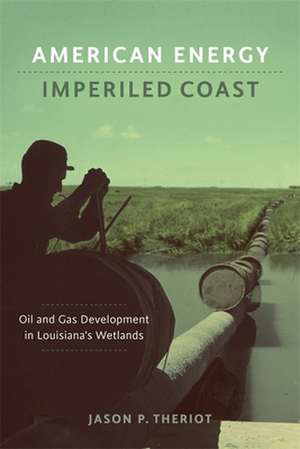
American Energy, Imperiled Coast
Autor Jason P Therioten Limba Engleză Hardback – 14 apr 2014
Analiza propusă de Jason P Theriot în American Energy, Imperiled Coast pornește de la examinarea tehnică a infrastructurii de transport: mii de mile de conducte și canale de dragaj care au transformat radical peisajul Louisianei. Autorul utilizează înregistrări de companie și fotografii de arhivă nepublicate anterior pentru a demonstra cum progresele ingineriei petroliere, deși impresionante economic, au devenit motorul principal al eroziunii costiere accelerate. Putem afirma că volumul depășește simpla cronică istorică, oferind o perspectivă critică asupra modului în care dezvoltarea industrială postbelică a creat dependențe economice naționale în detrimentul stabilității ecologice locale. Structura narativă urmărește cronologic tensiunile dintre profitul imediat și conservarea resurselor, culminând cu dezbaterea politică intensă din anii '80 și '90. American Energy, Imperiled Coast completează perspectiva oferită de Energy Production in the Mississippi River Delta, adăugând o dimensiune socială și politică profundă analizei tehnice a degradării sistemelor naturale. În timp ce alte lucrări se concentrează pe datele brute de mediu, Theriot explorează „coasta activă” ca pe un spațiu unde cultura locală și interesele corporațiilor energetice se ciocnesc inevitabil. Merită menționat modul în care autorul integrează lecțiile învățate după dezastrul BP/Deepwater Horizon în contextul necesității unei colaborări între sectorul public și cel privat. Volumul oferă un tablou complex al unei regiuni care furnizează o treime din petrolul SUA, dar care plătește prețul prin pierderea a 24 de mile pătrate de pământ anual. Este o resursă academică esențială pentru înțelegerea costurilor ascunse ale securității energetice.
Preț: 287.23 lei
Carte disponibilă
Livrare economică 03-17 noiembrie
Specificații
ISBN-10: 0807155179
Pagini: 328
Dimensiuni: 162 x 235 x 26 mm
Greutate: 0.58 kg
Editura: Lsu Press
V-ar putea interesa
-
 A Louisiana Coastal AtlasScott A Hemmerling-15%Preț: 499.97 lei588.20 lei
 -
 Preț: 311.41 lei
 -
 -11%Preț: 363.99 lei408.98 lei
 -
 Preț: 358.86 lei
 -
 -11%Preț: 362.81 lei407.66 lei
 -
 -11%Preț: 383.18 lei430.55 lei
 -
 Preț: 252.53 lei
 -
 Lixo, um problema nacionalJailson Sanguinete de OliveiraPreț: 254.09 lei
 -
 Aplicações Do Modelo Hidrológico Swat (Soil And Water Assessment Tool)Vinicius Alexandre Sikora de SouzaPreț: 345.74 lei
 -
 Climate Change and its ImpactsS Jeevananda Reddy-11%Preț: 398.60 lei447.86 lei
 -
 SOCIETY AND CLIMATEStehr NicoPreț: 412.03 lei
De ce să citești această carte
Această lucrare este esențială pentru studenții și profesioniștii din domeniul planificării costiere și al științelor mediului. Cititorul câștigă o înțelegere clară a mecanismelor prin care infrastructura industrială modifică geografia fizică. Este o recomandare solidă pentru cei interesați de istoria tehnologiei și de politicile de restaurare ecologică, oferind argumente documentate despre echilibrul fragil dintre economie și sustenabilitate.
Descriere scurtă
In American Energy, Imperiled Coast Jason P. Theriot explores the tension between oil and gas development and the land-loss crisis in Louisiana. His book offers an engaging analysis of both the impressive, albeit ecologically destructive, engineering feats that characterized industrial growth in the region and the mounting environmental problems that threaten south Louisiana's communities, culture, and "working" coast. As a historian and coastal Louisiana native, Theriot explains how pipeline technology enabled the expansion of oil and gas delivery -- examining previously unseen photographs and company records -- and traces the industry's far-reaching environmental footprint in the wetlands. Through detailed research presented in a lively and accessible narrative, Theriot pieces together decades of political, economic, social, and cultural undertakings that clashed in the 1980s and 1990s, when local citizens, scientists, politicians, environmental groups, and oil and gas interests began fighting over the causes and consequences of coastal land loss. The mission to restore coastal Louisiana ultimately collided with the perceived economic necessity of expanding offshore oil and gas development at the turn of the twenty-first century. Theriot's book bridges the gap between these competing objectives.
From the discovery of oil and gas below the marshes around coastal salt domes in the 1920s and 1930s to the emergence of environmental sciences and policy reforms in the 1970s to the vast repercussions of the BP/Deepwater Horizon oil spill in 2010, American Energy, Imperiled Coast ultimately reveals that the natural and man-made forces responsible for rapid environmental change in Louisiana's wetlands over the past century can only be harnessed through collaboration between public and private entities.