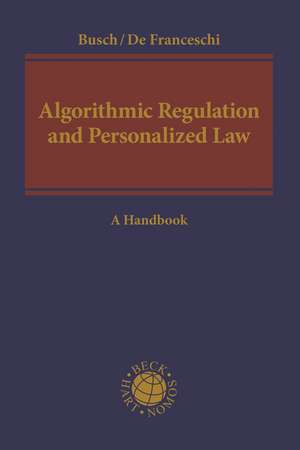
Algorithmic Regulation and Personalized Law: A Handbook
Editat de Christoph Busch, Alberto De Franceschien Limba Engleză Hardback – 24 dec 2020
Preț: 1119.82 lei
Preț vechi: 1576.51 lei
-29%
Puncte Express: 1680
Carte disponibilă
Livrare economică 11-25 noiembrie
Livrare prin curier în România Termenul estimat este afișat lângă disponibilitate.
Transport gratuit pentru acest produs Plată online sau ramburs, în funcție de opțiunile comenzii.
Retur gratuit în 14 zile Comandă securizată și suport în română.
Specificații
ISBN-13: 9781509931750
ISBN-10: 1509931759
Pagini: 300
Dimensiuni: 170 x 246 x 26 mm
Greutate: 0.76 kg
Editura: Bloomsbury Publishing
Colecția Beck/Hart
Locul publicării:London, United Kingdom
ISBN-10: 1509931759
Pagini: 300
Dimensiuni: 170 x 246 x 26 mm
Greutate: 0.76 kg
Editura: Bloomsbury Publishing
Colecția Beck/Hart
Locul publicării:London, United Kingdom
V-ar putea interesa
-
 Law and Religion in the Liberal StateMd Jahid Hossain Bhuiyan-36%Preț: 561.52 lei878.54 lei
 -
 A Judge's JourneyLord Dyson-28%Preț: 128.69 lei178.61 lei
 -
 Partnership LawMark Blackett-Ord-23%Preț: 2544.22 lei3323.98 lei
 -
 Costs in Family ProceedingsFrancis Wilkinson-28%Preț: 632.94 lei880.80 lei
 -
 -23%Preț: 461.07 lei601.46 lei
 -
 Cyber Risks and Insurance: The Legal PrinciplesDean Armstrong KC-26%Preț: 696.23 lei939.70 lei
 -
 -25%Preț: 1198.69 lei1605.58 lei
 -
 Handbook of Vascular BiometricsAndreas Uhl-20%Preț: 393.88 lei492.35 lei
 -
 Preț: 424.71 lei
 -
 Preț: 276.49 lei
Cuprins
Summary of Contents
Part 1
The Concept of Personalized Law
A. Personalizing Default Rules and Disclosure with Big Data (Porat/Strahilevitz)
I. Introduction
II. Theories of personalized default rules
III. The feasibility of personalized default rules
IV. Possible Objections and Limitations
V. Personalized disclosure
VI. Conclusion
B. Personalizing Negligence Law (Ben-Shahar/Porat)
I. Introduction
II. Personalized negligence under existing law
III. The efficiency of personalized standards
IV. Justice considerations
V. Broadening personalization
VI. Conclusion
C. The Death of Rules and Standards (Casey/Niblett)
I. Introduction
II. The emergence of microdirectives and the decline of rules and standards
III. Conclusion
Part 2
Critique and Theoretical Perspectives
D. The Law between Generality and Particularity. Chances and Limits of Personalized Law (Grigoleit/Bender)
I. Introduction
II. Distinctions and notional specifications
III. Evolutionary perspectives
IV. Revolutionary perspectives
V. Conclusions
E. Granular Norms and the Concept of Law: A Critique (Auer)
I. The Inevitability of Legal Typification
II. The Problem of Algorithmic Discrimination
III. The Scope of Granular Law and the Rise of Consumerism
IV. Regulation and the Rule of Law
V. Granularization and the Problem of Rule-Following
F. Logopoeia: Normative Typification and Granular Norm's Informational Differentiation (Femia)
I. More acts or more words: negotia, pragmata, activities
II. Two ways of grasping reality: taming the chaos with Emilio Betti and Tullio Ascarelli
III. End of the journey among the concepts' penumbra. From type to typification, and from typification to dissemination
IV. Big data: quantities make a qualitative shift in nomogenesis
V. Nomogenesis at the intersection point between normative technique and informational limit
VI. The loss of informational innocence
VII. Norms on the move
VIII. Les communications & les commerces
IX. Politics or Algorithmics
G. "Granularization" and Cross-Subsidies: Liberal, Neoliberal and Socialist Perspectives (Denozza/Maugeri)
I. Granularization: a consistent outcome of a neoliberal trend
II. The costs of granularization: the many shortcomings of algorithmic governmentality
III. Liberal general principles v. neoliberal "granularized" rules
IV. Is granularization efficient? Abstraction and totality in neoliberal thought
V. Granularization and cross subsidy
VI. What's wrong, if anything, with cross-subsidy
Part 3
Personalization in Contract, Consumer and Tort Law
H. 'Granular Legal Norms' in the Financial Services Trade (Sirena)
I. The advent of a digital law
II. The trend towards the personalization of private law: from the 'average consumer' to the 'images of the consumer'
III. The discourse on granular legal norms (particularly with regard to the duties of disclosure provided by European contract law
IV. The personalization of financial services
V. Some final remarks
I. De- or Re-typification through Big Data Analytics? The Case of Consumer Law (Micklitz)
I. Clarification and Argument
II. From Typification to Granularization prior to Big Data Analytics
III. From Granularization to Personalization through Big Data Analytics
IV. Big Data Analytics in Law Making and Law Enforcement
V. Prospects for big data analytics in consumer law
VI. Big Data Analytics and Re-typification
J. Personalization of the Law and Unfair Terms in Consumer Contracts (Patti)
I. Introduction
II. The setting within the European context
III. The role of personalized law
IV. The enforcement
V. Conclusion
K. Personalization of Tort Law? (von Bar)
Part 4
Technological and Behavioral Perspectives
L. Personalized Law and the Behavioral Sciences (Hacker)
I. A very short introduction to behavioral law and economics
II. The knowledge problem in behavioral law and economics
III. Examples of personalized behavioral law
IV. The limits of personalized behavioral law
1. The strength of empirical correlations
2. Algorithmic bias and discrimination
V. Good governance of personalized behavioral law
1. Privacy respecting metrics
2. Oversight and algorithmic auditing
VI. Conclusion
M. "Smart Contract", "Granular Norms" and Non-Discrimination(Zeno-Zencovich)
I. Only words
II. How "smart" can contracts be
III. Creditworthiness
IV. "Granular norms"
V. Non-discrimination in the age of big data
N. Algorithmic Regulation and (Im)Perfect Enforcement in the Personalized Economy (Busch)
I. Introduction
II. Big Data and the Crisis of Generalities
III. Making Laws for the Personalized Economy
IV. Governance of Algorithms for Personalized Law
V. Conclusion
Part 1
The Concept of Personalized Law
A. Personalizing Default Rules and Disclosure with Big Data (Porat/Strahilevitz)
I. Introduction
II. Theories of personalized default rules
III. The feasibility of personalized default rules
IV. Possible Objections and Limitations
V. Personalized disclosure
VI. Conclusion
B. Personalizing Negligence Law (Ben-Shahar/Porat)
I. Introduction
II. Personalized negligence under existing law
III. The efficiency of personalized standards
IV. Justice considerations
V. Broadening personalization
VI. Conclusion
C. The Death of Rules and Standards (Casey/Niblett)
I. Introduction
II. The emergence of microdirectives and the decline of rules and standards
III. Conclusion
Part 2
Critique and Theoretical Perspectives
D. The Law between Generality and Particularity. Chances and Limits of Personalized Law (Grigoleit/Bender)
I. Introduction
II. Distinctions and notional specifications
III. Evolutionary perspectives
IV. Revolutionary perspectives
V. Conclusions
E. Granular Norms and the Concept of Law: A Critique (Auer)
I. The Inevitability of Legal Typification
II. The Problem of Algorithmic Discrimination
III. The Scope of Granular Law and the Rise of Consumerism
IV. Regulation and the Rule of Law
V. Granularization and the Problem of Rule-Following
F. Logopoeia: Normative Typification and Granular Norm's Informational Differentiation (Femia)
I. More acts or more words: negotia, pragmata, activities
II. Two ways of grasping reality: taming the chaos with Emilio Betti and Tullio Ascarelli
III. End of the journey among the concepts' penumbra. From type to typification, and from typification to dissemination
IV. Big data: quantities make a qualitative shift in nomogenesis
V. Nomogenesis at the intersection point between normative technique and informational limit
VI. The loss of informational innocence
VII. Norms on the move
VIII. Les communications & les commerces
IX. Politics or Algorithmics
G. "Granularization" and Cross-Subsidies: Liberal, Neoliberal and Socialist Perspectives (Denozza/Maugeri)
I. Granularization: a consistent outcome of a neoliberal trend
II. The costs of granularization: the many shortcomings of algorithmic governmentality
III. Liberal general principles v. neoliberal "granularized" rules
IV. Is granularization efficient? Abstraction and totality in neoliberal thought
V. Granularization and cross subsidy
VI. What's wrong, if anything, with cross-subsidy
Part 3
Personalization in Contract, Consumer and Tort Law
H. 'Granular Legal Norms' in the Financial Services Trade (Sirena)
I. The advent of a digital law
II. The trend towards the personalization of private law: from the 'average consumer' to the 'images of the consumer'
III. The discourse on granular legal norms (particularly with regard to the duties of disclosure provided by European contract law
IV. The personalization of financial services
V. Some final remarks
I. De- or Re-typification through Big Data Analytics? The Case of Consumer Law (Micklitz)
I. Clarification and Argument
II. From Typification to Granularization prior to Big Data Analytics
III. From Granularization to Personalization through Big Data Analytics
IV. Big Data Analytics in Law Making and Law Enforcement
V. Prospects for big data analytics in consumer law
VI. Big Data Analytics and Re-typification
J. Personalization of the Law and Unfair Terms in Consumer Contracts (Patti)
I. Introduction
II. The setting within the European context
III. The role of personalized law
IV. The enforcement
V. Conclusion
K. Personalization of Tort Law? (von Bar)
Part 4
Technological and Behavioral Perspectives
L. Personalized Law and the Behavioral Sciences (Hacker)
I. A very short introduction to behavioral law and economics
II. The knowledge problem in behavioral law and economics
III. Examples of personalized behavioral law
IV. The limits of personalized behavioral law
1. The strength of empirical correlations
2. Algorithmic bias and discrimination
V. Good governance of personalized behavioral law
1. Privacy respecting metrics
2. Oversight and algorithmic auditing
VI. Conclusion
M. "Smart Contract", "Granular Norms" and Non-Discrimination(Zeno-Zencovich)
I. Only words
II. How "smart" can contracts be
III. Creditworthiness
IV. "Granular norms"
V. Non-discrimination in the age of big data
N. Algorithmic Regulation and (Im)Perfect Enforcement in the Personalized Economy (Busch)
I. Introduction
II. Big Data and the Crisis of Generalities
III. Making Laws for the Personalized Economy
IV. Governance of Algorithms for Personalized Law
V. Conclusion