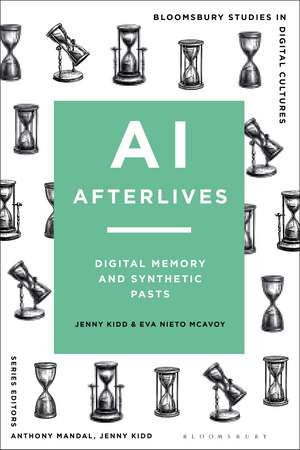
AI Afterlives: Digital Memory and Synthetic Pasts: Bloomsbury Studies in Digital Cultures
Autor Dr Jenny Kidd, Eva Nieto McAvoyen Limba Engleză Hardback – 6 aug 2026
Situated at the intersection of Digital Memory, New Media and Critical Algorithm Studies, the book speaks to a range of pressing concerns about what futures our uses of AI will facilitate, what ethical challenges these systems suggest in the present, and how our relationship to the past is oriented and experienced.
Din seria Bloomsbury Studies in Digital Cultures
- 19%
 Preț: 149.13 lei
 - 14%
 Preț: 159.85 lei
 - 36%
 Preț: 114.01 lei
 - nou
 Preț: 112.82 lei
 - 9%
 Preț: 150.33 lei
 - 15%
 Preț: 165.16 lei
 - 21%
 Preț: 184.49 lei
 - 17%
 Preț: 158.12 lei
 -
 Preț: 135.19 lei
 - 43%
 Preț: 175.72 lei
 - 42%
 Preț: 145.99 lei
 - 25%
 Preț: 210.16 lei
 - 25%
 Preț: 213.55 lei
 - 26%
 Preț: 208.04 lei
 - 26%
 Preț: 207.60 lei
 - nou
 Preț: 563.56 lei
 - 19%
 Preț: 700.29 lei
 - nou
 Preț: 550.36 lei
 - nou
 Preț: 596.11 lei
 - nou
 Preț: 550.36 lei
Preț: 565.15 lei
Preț vechi: 831.31 lei
-32% Nou
Puncte Express: 848
Carte disponibilă
Livrare economică 16-30 noiembrie
Livrare prin curier în România Termenul estimat este afișat lângă disponibilitate.
Transport gratuit pentru acest produs Plată online sau ramburs, în funcție de opțiunile comenzii.
Retur gratuit în 14 zile Comandă securizată și suport în română.
Specificații
ISBN-13: 9781350437524
ISBN-10: 1350437522
Pagini: 256
Ilustrații: 15 bw illus, 7 tables
Dimensiuni: 160 x 236 x 22 mm
Greutate: 0.54 kg
Editura: Bloomsbury Publishing
Colecția Bloomsbury Academic
Seria Bloomsbury Studies in Digital Cultures
Locul publicării:London, United Kingdom
ISBN-10: 1350437522
Pagini: 256
Ilustrații: 15 bw illus, 7 tables
Dimensiuni: 160 x 236 x 22 mm
Greutate: 0.54 kg
Editura: Bloomsbury Publishing
Colecția Bloomsbury Academic
Seria Bloomsbury Studies in Digital Cultures
Locul publicării:London, United Kingdom
Cuprins
List of figures
List of tables
1. Introduction: Deep learning technologies and the future past
2. Synthetic media | Synthetic pasts
3. Genealogy platforms and AI afterlives
4. Deathbots and the platformisation of remembering
5. Datafied bodies on stage and screen
6. AI afterlives in the museum
7. Conclusion
8. Data coda
Bibliography
List of tables
1. Introduction: Deep learning technologies and the future past
2. Synthetic media | Synthetic pasts
3. Genealogy platforms and AI afterlives
4. Deathbots and the platformisation of remembering
5. Datafied bodies on stage and screen
6. AI afterlives in the museum
7. Conclusion
8. Data coda
Bibliography
Recenzii
AI Afterlives is a highly engaging read. It offers important new vocabularies for thinking about how today's algorithmic systems shape the ways we remember, mourn, and reimagine personal and collective pasts. The book envisions synthetic pasts beyond data exploitation.
Kidd and Nieto McAvoy offer an urgent and compelling call for the recognition of the human amidst the risks to AI's distorting, flattening and erasing of the future of memory.
Kidd and Nieto McAvoy offer an urgent and compelling call for the recognition of the human amidst the risks to AI's distorting, flattening and erasing of the future of memory.