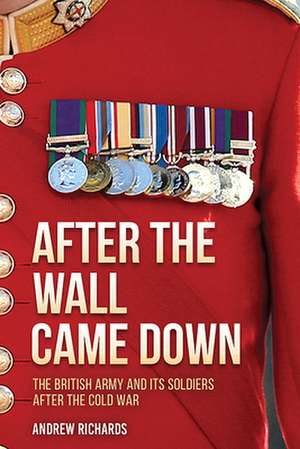
After the Wall Came Down
Autor Andrew Richardsen Limba Engleză Hardback – 15 mar 2021
Recomandăm această lucrare ca o resursă de referință profesională și de studiu la nivel de licență pentru studenții facultăților de istorie și științe politice. After the Wall Came Down de Andrew Richards oferă o analiză riguroasă a modului în care Armata Britanică s-a metamorfozat dintr-o instituție statică, ancorată în certitudinile Războiului Rece, într-o forță modernă, dar suprasolicitată. Subliniem perspectiva autorului asupra tensiunii dintre așteptările politice de stabilitate post-1989 și realitatea brutală a desfășurărilor continue peste hotare. Textul se distinge prin abordarea temelor sociale delicate, precum integrarea femeilor și schimbarea atitudinii față de minoritățile sexuale în cadrul militar, subiecte care au redefinit identitatea instituției. Volumul extinde cadrul propus de The British Army Since 2000 de James Tanner cu date noi din perioada de tranziție a anilor '90, oferind o privire mai amplă asupra schimbărilor de mentalitate, nu doar a celor tehnice sau de echipament. De asemenea, lucrarea completează viziunea din The Rise and Fall of the British Army, 1975–2025 de Ben Barry, concentrându-se pe experiența generației de soldați care s-au înrolat la sfârșitul anilor '80 și care se pensionează acum dintr-o armată de nerecunoscut față de cea în care au intrat. În contextul operei sale, Andrew Richards demonstrează o versatilitate tematică remarcabilă. Dacă în The Flag a explorat impactul spiritual și uman al Primului Război Mondial prin biografia unui capelan, în acest volum adoptă o metodologie de istorie socială și militară contemporană, menținând acea atenție pentru detaliul uman care transformă o cronică instituțională într-o narațiune despre adaptare și reziliență.
Preț: 145.12 lei
Carte disponibilă
Livrare economică 17 noiembrie-01 decembrie
Livrare express 31 octombrie-06 noiembrie pentru 37.05 lei
Specificații
ISBN-10: 1612008305
Pagini: 240
Dimensiuni: 238 x 160 x 23 mm
Greutate: 0.54 kg
Editura: Casemate Publishers
De ce să citești această carte
Această carte este esențială pentru cititorii interesați de istorie militară și sociologie organizațională. Veți înțelege cum s-a adaptat Armata Britanică la presiunile sociale și tehnologice ale secolului XXI, în ciuda reducerilor bugetare. Este o lectură utilă pentru a decoda complexitatea conflictelor moderne și pentru a vedea cum politicile de stat influențează direct viața și cultura soldatului de rând în perioade de tranziție geopolitică.
Descriere scurtă
The generation of young men and women who joined the British Army during the mid to late 1980s would serve their country during an unprecedented period of history. Unlike the two world war generations, they would never face total war - there was never any declaration of war and there was no one single country to defeat. In fact, it was supposed to have been the end of war, a time of peace and stability. Politicians started to use the term, Peace Dividend, with government officials even planning on how and where it should be spent.
But for those in the military, the two decades following the end of the Cold War would not be a time of peace. Government spending and the size of the military was reduced but the Army's commitments increased exponentially. Those serving not only faced continuous deployment in overseas operations, they would also be involved in immense upheavals that took place within the army. When the Berlin Wall came down, the British Army had not changed for decades.
The ending of the Cold War, combined with a technological revolution, a changing society at home, and new global threats mean that the Army of the second decade of the twentieth-first century - the army this generation of soldiers is now retiring from - is unrecognizable from the one they joined in the late 1980s. This is the story of the soldiers who served in the British Army in those tumultuous decades.