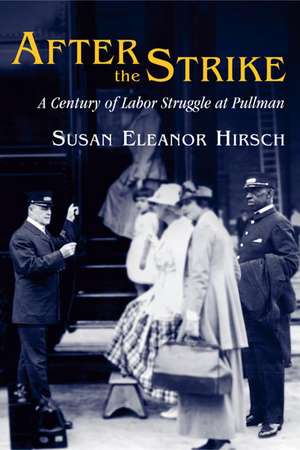
After the Strike: A Century of Labor Struggle at Pullman: Working Class in American History
Autor Susan Eleanor Hirschen Limba Engleză Hardback – 19 mar 2003
Înțelegerea dinamicii dintre capital și forța de muncă nu este doar un exercițiu istoric, ci o necesitate urgentă pentru a descifra inegalitățile structurale care persistă în mediul de business actual. After the Strike oferă o analiză autoritară a modului în care Pullman Company, un gigant industrial care domina transportul feroviar american, a devenit laboratorul experimentelor de segregare și organizare sindicală. Observăm cum autoarea Susan Eleanor Hirsch demontează mitul conform căruia eșecurile sindicale au fost pur economice, demonstrând că discriminarea rasială și de gen a fost folosită strategic atât de angajatori, cât și de organizațiile de muncitori.
Remarcăm o structură riguroasă care ghidează cititorul prin etapele critice ale luptei sindicale. De la formarea monopolului în primul capitol, trecând prin rezistența statului și până la impactul programului 'New Deal' și al celui de-al Doilea Război Mondial, volumul este organizat pentru a evidenția progresia de la controlul autoritar la negocieri complexe. Dacă The Pullman Strike de Almont Lindsey v-a oferit cadrul teoretic al evenimentului exploziv din 1894, această carte oferă instrumentele practice de analiză a consecințelor pe termen lung, arătând cum politicile de personal au modelat clasa muncitoare americană timp de un secol. Stilul este sobru, susținut de date statistice și fotografii de arhivă, oferind o perspectivă documentată asupra limitărilor viziunii sindicale americane. After the Strike se distinge prin capacitatea de a conecta micro-istoria atelierelor de reparații cu macro-economia unei națiuni în plină transformare industrială.
Din seria Working Class in American History
-
 Preț: 213.31 lei
 -
 Preț: 252.50 lei
 -
 Preț: 185.94 lei
 -
 Preț: 147.72 lei
 - 23%
 Preț: 601.90 lei
 -
 Preț: 385.54 lei
 -
 Preț: 193.28 lei
 - 23%
 Preț: 641.21 lei
 -
 Preț: 194.31 lei
 -
 Preț: 215.99 lei
 -
 Preț: 215.77 lei
 -
 Preț: 215.94 lei
 -
 Preț: 173.57 lei
 -
 Preț: 215.94 lei
 -
 Preț: 233.60 lei
 -
 Preț: 169.96 lei
 - 23%
 Preț: 732.10 lei
 -
 Preț: 347.21 lei
 -
 Preț: 186.66 lei
 -
 Preț: 127.81 lei
 -
 Preț: 218.09 lei
 -
 Preț: 216.13 lei
 -
 Preț: 255.54 lei
 -
 Preț: 617.72 lei
 - 23%
 Preț: 732.99 lei
 -
 Preț: 217.47 lei
 -
 Preț: 172.72 lei
 -
 Preț: 232.80 lei
 -
 Preț: 432.36 lei
 -
 Preț: 216.13 lei
 -
 Preț: 290.04 lei
 -
 Preț: 191.66 lei
 -
 Preț: 211.91 lei
 -
 Preț: 472.42 lei
 -
 Preț: 308.61 lei
 -
 Preț: 173.14 lei
 -
 Preț: 168.35 lei
 -
 Preț: 227.65 lei
 -
 Preț: 161.57 lei
 - 11%
 Preț: 695.83 lei
 - 11%
 Preț: 697.35 lei
 - nou
 Preț: 252.90 lei
 -
 Preț: 216.72 lei
 - 10%
 Preț: 700.44 lei
Preț: 410.80 lei
Carte disponibilă
Livrare economică 30 octombrie-13 noiembrie
Livrare express 16-22 octombrie pentru 40.81 lei
Specificații
ISBN-10: 0252027914
Pagini: 320
Ilustrații: 8 black & white photographs, 18 tables
Dimensiuni: 152 x 229 x 25 mm
Greutate: 0.51 kg
Ediția:New.
Editura: University of Illinois Press
Colecția University of Illinois Press
Seria Working Class in American History
V-ar putea interesa
-
 Hidden FiguresMargot Lee ShetterlyPreț: 92.15 lei
 -
 Texas RisingStephen L MoorePreț: 109.77 lei
 -
 KissingerNiall Ferguson-16%Preț: 118.02 lei141.07 lei
 -
 Ronald ReaganMichael Schaller-19%Preț: 79.66 lei98.75 lei
 -
 Preț: 106.98 lei
 -
 The N WordJabari AsimPreț: 107.13 lei
 -
 The Imperial PresidencyArthur Meier Jr. SchlesingerPreț: 186.59 lei
 -
 Preț: 363.89 lei
 -
 Preț: 258.24 lei
 -
 Preț: 446.59 lei
 -
 Black Hawk and the Warrior's PathRoger L NicholsPreț: 267.51 lei
 -
 All Our RelationsWinona LadukePreț: 111.87 lei
 -
 The Secret Societies of All Ages & Countries (Two Volumes in One)Charles William HeckethornPreț: 245.18 lei
 -
 Rio de JaneiroLuiz Eduardo SoaresPreț: 115.54 lei
De ce să citești această carte
Recomandăm această carte profesioniștilor din resurse umane, istoricilor economici și celor interesați de drepturile muncii. Veți câștiga o înțelegere profundă a modului în care structurile de segregare au fost instituționalizate în marile corporații. Este o lectură esențială pentru a vedea cum deciziile manageriale de acum un secol influențează și astăzi echitatea la locul de muncă și strategiile de organizare colectivă.
Despre autor
Susan Eleanor Hirsch este o cercetătoare recunoscută în domeniul istoriei sociale și a muncii, fiind profesor emerit la Universitatea Loyola din Chicago. Expertiza sa se concentrează pe intersecția dintre clasă, rasă și gen în contextul industrial american. Prin lucrarea de față, publicată în prestigioasa serie Working Class in American History a editurii University of Illinois Press, Hirsch valorifică cercetări de arhivă meticuloase și baze de date inedite pentru a aduce o perspectivă nouă asupra istoriei sindicale, consolidându-și reputația de specialist în evoluția relațiilor industriale din Statele Unite.
Descriere scurtă
Hirsch illuminates the relationship between labor organizing and the racial and sexual discrimination practiced by both employers and unions. Because the Pullman Company ran the sleeping-car service for American railroads and was a major manufacturer of railcars, its workers were involved in virtually every wave of union organizing from the 1890s to the 1940s.
In exploring the years of struggle by the men and women of the Pullman Company, After the Strike reveals the factors that determined the limited success and narrow vision of most American unions.
Recenzii
"Hirsch's close analysis of payroll and employee service records. . .provides concrete evidence often missing from larger-scale studies of how management carefully manipulated the social division of labor in its quest to control the workplace."--Enterprise & Society
"Hirsch covers broad topics so thoroughly, weaves them together with such skill, and supports her conclusions with such exhaustive research in primary and secondary sources, that the book stands as a remarkable achievement."--Maryland Historical Magazine
"A solid case study that deserves readership."--Business History Review
"Examining the developments within the Pullman Company before and especially after the events of 1894, this book constitutes an important case study in changing industrial relations in the United States."--David Montgomery, author of The Fall of the House of Labor
Notă biografică
Cuprins
Introduction 1
1. Working for a Monopoly in Formation 7
2. Two Roads to the Open Shop 42
3. The State and Pullman Workers 70
4. Restoring the Open Shop 100
5. A New Deal for Pullman Workers! 128
6. The War at Home 156
7. The Last Pullman Workers 186
Conclusion 207
Appendix: The Pullman Repair Shop Databases 213
Notes 221
Index 287
Illustrations follow page 112