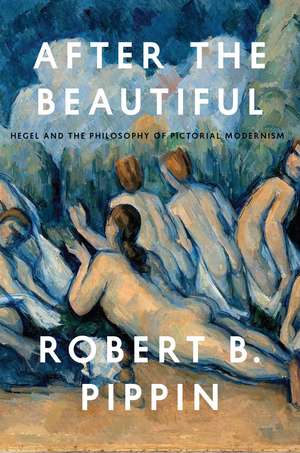
After the Beautiful: Hegel and the Philosophy of Pictorial Modernism
Autor Robert B. Pippinen Limba Engleză Paperback – 21 oct 2015
În lucrarea After the Beautiful, descoperim o deschidere interdisciplinară rară, situată la intersecția dintre filozofia idealistă germană și istoria artei moderne. Recomandăm acest studiu pentru modul curajos în care Robert B. Pippin utilizează aparatul conceptual al lui Hegel pentru a interpreta un fenomen pe care filozoful nu l-a putut trăi: revoluția modernismului pictural. Deși Hegel a declarat faimos că arta și-a pierdut caracterul de necesitate absolută în modernitate, Pippin demonstrează că, în fața eșecului instituțiilor sociale de a asigura o recunoaștere reciprocă veritabilă, arta capătă un rol nou, critic și indispensabil.
Notăm cu interes structura riguroasă a volumului, care ghidează cititorul de la fundamentele filosofiei picturii (analizându-l pe Manet, „bunicul modernismului”) către dezbateri ontologice complexe ce implică viziunile lui T. J. Clark și Michael Fried. Finalul cărții, dedicat lui Cézanne, oferă o perspectivă comparativă între Hegel și Heidegger, explorând tensiunea dintre artă și adevăr. Textul este comparabil cu Hegel on the Modern Arts de Benjamin Rutter în rigurozitatea analizei mediului artistic, dar este actualizat pentru a răspunde specific provocărilor pe care pictura modernistă le ridică în fața teoriei estetice clasice.
Această lucrare se poziționează ca o continuare firească a preocupărilor autorului din Philosophy by Other Means, unde Pippin a explorat capacitatea obiectelor estetice de a purta semnificații filosofice intrinseci. Spre deosebire de analizele sale anterioare din Hegel's Idealism, care se concentrau pe fundamentele teoretice, After the Beautiful aplică aceste concepte pe materialul concret al pânzelor lui Manet și Cézanne, oferind o demonstrație magistrală a modului în care arta rămâne un instrument vital de înțelegere a condiției umane în epoca noastră tumultuoasă.
Preț: 182.89 lei
Carte disponibilă
Livrare economică 11-25 noiembrie
Livrare express 27-31 octombrie pentru 20.87 lei
Specificații
ISBN-10: 022632558X
Pagini: 176
Ilustrații: 7 color plates, 36 halftones
Dimensiuni: 152 x 229 x 15 mm
Greutate: 0.25 kg
Editura: University of Chicago Press
Colecția University of Chicago Press
De ce să citești această carte
Această carte este esențială pentru studenții și cercetătorii din domeniile filozofiei și istoriei artei care doresc să înțeleagă supraviețuirea esteticii hegeliene în modernitate. Cititorul câștigă o metodă nouă de a „citi” pictura modernistă, nu doar ca formă, ci ca realizare filozofică. Este un argument convingător împotriva ideii că arta și-a pierdut relevanța în lumea contemporană, oferind instrumente critice pentru a descifra moștenirea lui Manet și Cézanne.
Despre autor
Robert B. Pippin este profesor distins la Universitatea din Chicago, activând în cadrul Comitetului pentru Gândire Socială și al Departamentului de Filozofie. Recunoscut la nivel internațional ca unul dintre cei mai importanți interpreți ai idealismului german, Pippin a redefinit înțelegerea modernă a lui Hegel și Kant. Opera sa vastă, care include titluri precum Hegel's Practical Philosophy și The Culmination, investighează constant relația dintre libertate, subiectivitate și expresie artistică. Prin scrierile sale despre film și literatură, el a demonstrat că arta este un teren fertil pentru reflecția filosofică profundă.
Descriere scurtă
While Hegel could never engage modernist painting, he did have an understanding of modernity, and in it, art—he famously asserted—was “a thing of the past,” no longer an important vehicle of self-understanding and no longer an indispensable expression of human meaning. Pippin offers a sophisticated exploration of Hegel’s position and its implications. He also shows that had Hegel known how the social institutions of his day would ultimately fail to achieve his own version of genuine equality, a mutuality of recognition, he would have had to explore a different, new role for art in modernity. After laying this groundwork, Pippin goes on to illuminate the dimensions of Hegel’s aesthetic approach in the path-breaking works of Manet, the “grandfather of modernism,” drawing on art historians T. J. Clark and Michael Fried to do so. He concludes with a look at Cézanne, the “father of modernism,” this time as his works illuminate the relationship between Hegel and the philosopher who would challenge Hegel’s account of both modernity and art—Martin Heidegger.
Elegantly inter-weaving philosophy and art history, After the Beautiful is a stunning reassessment of the modernist project. It gets at the core of the significance of modernism itself and what it means in general for art to have a history. Ultimately, it is a testament, via Hegel, to the distinctive philosophical achievements of modernist art in the unsettled, tumultuous era we have inherited.