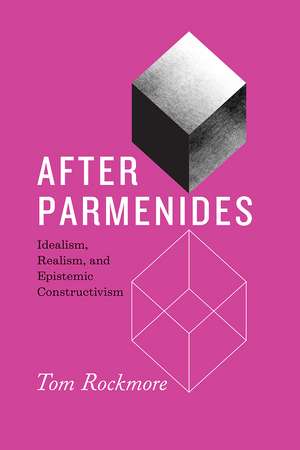
After Parmenides: Idealism, Realism, and Epistemic Constructivism
Autor Tom Rockmoreen Limba Engleză Hardback – 7 oct 2021
În volumul After Parmenides, Tom Rockmore propune o reevaluare ambițioasă a modului în care înțelegem relația dintre ontologie și epistemologie. Abordarea sa este profund interdisciplinară, intersectând istoria filosofiei, teoria cunoașterii și metafizica pentru a demonta ceea ce el numește „abordarea standard” a filosofiei occidentale. Punctul de plecare este paradoxul lui Parmenide, a cărui afirmație privind unitatea gândirii cu ființa a generat o fractură istorică între entitățile pe care mintea le construiește și realitatea independentă de observator.
Apreciem rigoarea cu care Tom Rockmore trasează evoluția acestui conflict prin marile sisteme de gândire ale lui Descartes, Kant, Fichte sau Schopenhauer. Autorul nu se limitează la o simplă trecere în revistă, ci susține o teză radicală: necesitatea de a renunța la pretenția cunoașterii lumii așa cum este ea „în sine”. Cititorii familiarizați cu Thinking Being: Introduction to Metaphysics in the Classical Tradition de Eric Perl vor aprecia modul în care volumul de față aduce o perspectivă critică asupra aceleiași tradiții clasice, înlocuind continuitatea metafizică cu o pledoarie pentru constructivismul epistemic.
Această lucrare reprezintă o rafinare a temelor explorate anterior de autor în Kant and Idealism și Fichte and the Phenomenological Tradition. Dacă în lucrările precedente Rockmore se concentra pe perioade specifice ale idealismului german, în After Parmenides el oferă o sinteză matură, recalibrând întreaga istorie a filosofiei prin prisma capacității minții umane de a constitui obiectele cunoașterii. Este un text dens, adresat mediului academic, care reușește să facă legături inedite între materialismul lui Marx și fenomenologia lui Husserl.
Preț: 372.89 lei
Carte disponibilă
Livrare economică 06-20 noiembrie
Livrare express 23-29 octombrie pentru 38.02 lei
Specificații
ISBN-10: 022679542X
Pagini: 208
Dimensiuni: 152 x 229 x 23 mm
Greutate: 0.46 kg
Ediția:First Edition
Editura: University of Chicago Press
Colecția University of Chicago Press
De ce să citești această carte
Recomandăm această carte cercetătorilor și studenților la filosofie care doresc să înțeleagă fundamentele constructivismului modern. Cititorul câștigă o perspectivă critică asupra limitelor realismului și o metodă nouă de a citi marii clasici, de la Platon la Hegel. Este o lectură esențială pentru oricine este interesat de dezbaterea dintre idealism și realism și de modul în care structura minții noastre ne definește accesul la realitate.
Despre autor
Tom Rockmore este un distins profesor de filosofie, deținând catedra de Științe Umaniste la Universitatea din Peking și fiind anterior McAnulty College Distinguished Professor la Universitatea Duquesne. Cu o carieră dedicată studiului idealismului german și al teoriei cunoașterii, Rockmore este recunoscut la nivel internațional pentru lucrările sale despre Kant, Hegel și Fichte. Expertiza sa în fenomenologie și epistemologie constructivistă îl poziționează ca una dintre vocile autoritare în reinterpretarea modernă a tradiției filosofice europene, publicând numeroase volume la edituri universitare de prestigiu.
Descriere scurtă
In After Parmenides, Tom Rockmore takes us all the way back to the beginning of Western philosophy, when Parmenides asserted that thought and being are the same. This idea created a division between what the mind constructs as knowable entities and the idea that there is also a mind-independent real, which we can know or fail to know. Rockmore argues that we need to give up on the idea of knowing the real as it is, and instead focus on the objects of cognition that our mind constructs. Though we cannot know mind-independent objects as they “really” are, we can and do know objects as they appear to us.
After Parmenides charts the continual engagement with these ideas of the real and the knowable throughout philosophical history from Plato and Aristotle to Descartes, Kant, Fichte, Hegel, Schopenhauer, Marx, and others. This ambitious book shows how new connections can be made in the history of philosophy when it is reread through a new lens.