
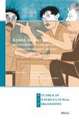
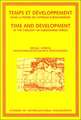
African Ethics: Gĩkũyũ Traditional Morality: Studien zur interkulturellen Philosophie / Studies in Intercultural Philosophy / Études de philosophie interculturelle, cartea 19
Autor Hannah Wangeci Kinotien Limba Engleză Paperback – 31 dec 2009
The results of this study should appeal to researchers and teachers of African traditions, culture, religion and ethics. Equally, students of comparative ethics should find this a valuable source of information on traditional ways of maintaining behaviour that made for harmony in society. Young Africans wishing to get a deeper understanding of their roots should also find this work of great interest.



Preț: 688.84 lei
Preț vechi: 773.98 lei
-11%
Puncte Express: 1033
Carte tipărită la comandă
Livrare economică 07-21 decembrie
Livrare prin curier în România Termenul estimat este afișat lângă disponibilitate.
Transport gratuit pentru acest produs Plată online sau ramburs, în funcție de opțiunile comenzii.
Retur gratuit în 14 zile Comandă securizată și suport în română.
Specificații
ISBN-13: 9789042030886
ISBN-10: 9042030887
Pagini: 286
Dimensiuni: 155 x 235 x 17 mm
Greutate: 0.4 kg
Editura: Brill
Colecția Brill
Seria Studien zur interkulturellen Philosophie / Studies in Intercultural Philosophy / Études de philosophie interculturelle
ISBN-10: 9042030887
Pagini: 286
Dimensiuni: 155 x 235 x 17 mm
Greutate: 0.4 kg
Editura: Brill
Colecția Brill
Seria Studien zur interkulturellen Philosophie / Studies in Intercultural Philosophy / Études de philosophie interculturelle
V-ar putea interesa
-
 Darwinizing Culture: The Status of Memetics as a ScienceRobert Aunger-30%Preț: 717.62 lei1025.25 lei
 -
 Problems of Knowledge: A Critical Introduction to EpistemologyMichael Williams-13%Preț: 356.08 lei407.09 lei
 -
 -18%Preț: 345.07 lei420.92 lei
 -
 Being KnownChristopher Peacocke-18%Preț: 390.15 lei473.76 lei
 -
 Socrates on TrialThomas C. Brickhouse-28%Preț: 354.07 lei492.51 lei
 -
 Past, Present and FutureArthur Prior-32%Preț: 747.34 lei1094.73 lei
 -
 Objects of ThoughtA. N. Prior-32%Preț: 746.24 lei1094.06 lei
 -
 MeaningStephen Schiffer-20%Preț: 286.71 lei358.54 lei
 -
 SimplicityElliott Sober-33%Preț: 974.72 lei1454.01 lei
 -
 -20%Preț: 309.18 lei385.31 lei
 -
 Sense and Content: Experience, Thought and their RelationsChristopher Peacocke-20%Preț: 302.62 lei376.42 lei
 -
 Metaphor and Religious LanguageJanet Martin Soskice-29%Preț: 462.06 lei648.07 lei
 -
 Explaining and Understanding International RelationsMartin Hollis-21%Preț: 412.09 lei522.87 lei
 -
 Knowledge and its Place in NatureHilary Kornblith-22%Preț: 346.63 lei446.97 lei
 -
 Epistemology of LanguageAlex Barber-27%Preț: 447.05 lei608.77 lei
 -
 Knowledge and its LimitsTimothy Williamson-15%Preț: 223.24 lei263.44 lei
 -
 -28%Preț: 485.03 lei669.34 lei
 -
 The Reason of Things: Living with PhilosophyProf A.C. Grayling-26%Preț: 69.06 lei93.13 lei
 -
 Autobiographical NotesAlbert EinsteinPreț: 82.98 lei
Cuprins
Preface
Foreword
Acknowledgements
Introduction
Rationale for the study
Description of the literature
The various groups interviewed
Chapter 1: The Cultural Setting
Gĩkũyũ society in the pre-colonial period
Changes that have occurred in Gĩkũyũ society since the 1880s
Chapter 2: Honesty (Wĩhokeku)
Views of early writers
What is honesty?
Honesty in modern times
Conclusion
Chapter 3: Generosity (Ũtaana)
Views of early writers
What is generosity? (ũtuuna)
The ideal practice of generosity
Why generosity is valued
Traditional ways of enforcing generosity
Generosity in modern times
Conclusion
Chapter 4: Justice (Kĩhooto)
Views of early writers
What is justice?
Reward and punishment
Forgiveness, atonement and restoration
Younger generations’ understanding of justice
Justice in modern times
Conclusion
Chapter 5: Courage (Ũcamba)
Views of early writers
Who is a courageous person?
Incentives to courage
Conclusion
Chapter 6: Temperance (Wĩkindĩria)
Views of early writers
Temperance as abstention (kwĩhinga)
Temperance as self-control (gwĩthima)
Temperance as caution (wĩmenyereri)
Temperance as steadfastness (ũkirĩrĩria)
Temperance in modern times
Factors influencing ideas about temperance
Conclusion
General Conclusion
Notes and references
Bibliography
Archival material
Index
About the author
Foreword
Acknowledgements
Introduction
Rationale for the study
Description of the literature
The various groups interviewed
Chapter 1: The Cultural Setting
Gĩkũyũ society in the pre-colonial period
Changes that have occurred in Gĩkũyũ society since the 1880s
Chapter 2: Honesty (Wĩhokeku)
Views of early writers
What is honesty?
Honesty in modern times
Conclusion
Chapter 3: Generosity (Ũtaana)
Views of early writers
What is generosity? (ũtuuna)
The ideal practice of generosity
Why generosity is valued
Traditional ways of enforcing generosity
Generosity in modern times
Conclusion
Chapter 4: Justice (Kĩhooto)
Views of early writers
What is justice?
Reward and punishment
Forgiveness, atonement and restoration
Younger generations’ understanding of justice
Justice in modern times
Conclusion
Chapter 5: Courage (Ũcamba)
Views of early writers
Who is a courageous person?
Incentives to courage
Conclusion
Chapter 6: Temperance (Wĩkindĩria)
Views of early writers
Temperance as abstention (kwĩhinga)
Temperance as self-control (gwĩthima)
Temperance as caution (wĩmenyereri)
Temperance as steadfastness (ũkirĩrĩria)
Temperance in modern times
Factors influencing ideas about temperance
Conclusion
General Conclusion
Notes and references
Bibliography
Archival material
Index
About the author
Notă biografică
Hannah Wangeci Kinoti was born in the middle of the Second World War, the last of the six children of Ruben and Ruth Gathii. Her parents were among the first converts to Christianity in central Kenya. She imbibed from them Gĩkũyũ cultural and moral values; at the same time she learned the Christian faith from them and from their Scottish Presbyterian Church. At Kahuhia Primary School and Alliance Girls High School she learned western culture from her teachers, most of whom were European missionaries. At Makerere University College (then a constituent college of the University of East Africa) she read English and Religious Studies, learning African religion under the distinguished scholar, Professor John Mbiti. For her doctoral thesis she decided to do research into Gĩkũyũ traditional morality, which is the subject of this book. Hannah Kinoti’s research and teaching interests took her to many foreign institutions, such as Regent College, Vancouver, Canada and the Department of Social Medicine, Harvard Medical School, Boston, USA. She wrote and spoke widely on ethics and religion, always concerned about the spiritual, moral and social well being of the African people. She herself was, as a friend once observed, an authentic African Christian woman. She was an Associate Professor in the Department of Philosophy and Religious Studies, University of Nairobi when she died suddenly in 2001. Hannah and her husband, Professor George Kinoti, had five children.