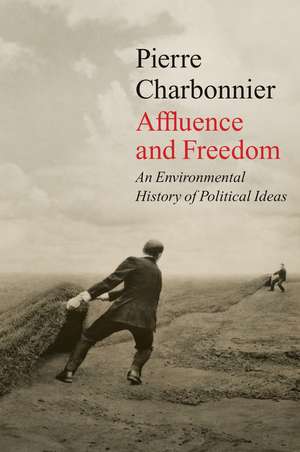
Affluence and Freedom - An Environmental History of Political Ideas
Autor Pierre Charbonnier Traducere de Andrew Brownen Limba Engleză Paperback – 2 iul 2021
Ne-a atras atenția modul în care Affluence and Freedom debutează prin analiza critică a „rațiunii ecologice”, punând sub semnul întrebării însăși structura libertății moderne. Suntem de părere că forța acestui volum rezidă în exercițiul intelectual de a reciti istoria ideilor politice nu ca pe o succesiune de teorii abstracte, ci ca pe o serie de răspunsuri la modul în care societățile subzistă, locuiesc și cunosc mediul înconjurător. Pierre Charbonnier demonstrează că pactul dintre democrație și creștere economică, fundamentat pe o victorie decisivă asupra naturii, este astăzi invalidat de criza climatică. Cartea este organizată cronologic și tematic, pornind de la conceptele de suveranitate și proprietate la Grotius și Locke, trecând prin ordinea comercială a fiziocraților și ajungând la paradoxurile abundenței analizate de Jevons sau Tocqueville. Această progresie indică o acoperire exhaustivă a modului în care extracția resurselor a devenit condiția sine qua non a autonomiei politice. Lucrarea extinde cadrul propus de Liberty and the Ecological Crisis de Katie Kish, aducând date noi din istoria filosofiei politice franceze și britanice pentru a explica cum s-a format „regimul ecologic” în care trăim. În contextul operei sale, Affluence and Freedom (publicată inițial sub titlul Überfluss und Freiheit) reprezintă o rafinare a temelor din Comparative Metaphysics, mutând accentul de pe pluralismul ontologic spre o ecologie politică aplicată. Credem că această lucrare reinterpretează imperativul protecției sociale prin prisma solidarității grupurilor într-o lume transformată, oferind o alternativă teoretică solidă la materialismul istoric clasic.
Preț: 201.07 lei
Carte disponibilă
Livrare economică 01-15 octombrie
Livrare express 16-22 septembrie pentru 34.23 lei
Specificații
ISBN-10: 1509543724
Pagini: 328
Dimensiuni: 154 x 228 x 30 mm
Greutate: 0.53 kg
Editura: Polity Press
Locul publicării:Chichester, United Kingdom
De ce să citești această carte
Recomandăm această carte cercetătorilor și studenților din domeniile științelor politice și sociologiei care doresc să înțeleagă rădăcinile filosofice ale crizei ecologice actuale. Cititorul câștigă o perspectivă inedită asupra modului în care libertățile noastre democratice au fost clădite pe promisiunea creșterii industriale. Este un instrument esențial pentru a regândi conceptul de emancipare într-o eră a limitelor planetare, oferind o bază teoretică pentru noi forme de solidaritate socială.
Despre autor
Pierre Charbonnier este un reputat cercetător în filosofie în cadrul Centrului Național de Cercetări Științifice (CNRS) și la École des Hautes Études en Sciences Sociales (EHESS) din Paris. Specializat în intersecția dintre istoria ideilor politice și problemele de mediu, Charbonnier este considerat una dintre cele mai influente voci ale noii ecologii politice franceze. Lucrările sale, precum Comparative Metaphysics, explorează modul în care ontologia occidentală modernă se redefinește în fața provocărilor antropocenului, adaptând instrumentele filosofiei clasice la realitățile climatice contemporane.