Cantitate/Preț
Produs

Aesthetic Science: Representing Nature in the Royal Society of London, 1650-1720

Autor Alexander Wragge-Morley
en Limba Engleză Paperback – 20 apr 2020

Această monografie de istoria științei, publicată de University of Chicago Press, propune o reevaluare fundamentală a modului în care primii membri ai Royal Society din Londra au conceptualizat reprezentarea naturii. Suntem de părere că lucrarea lui Alexander Wragge-Morley reușește să demonteze mitul conform căruia acești pionieri ai empirismului modern căutau exclusiv o redare neutră și mecanică a lumii. Dimpotrivă, autorul demonstrează că studiul naturii era, pentru aceștia, un proiect profund estetic.

Structura volumului ghidează cititorul de la fundamentele teologiei fizice și ale experienței senzoriale, în primele capitole, către aspecte mai nuanțate, precum căutarea „designului pierdut” sau utilizarea descrierilor verbale ca imagini. Apreciem modul în care capitolul final, despre cultivarea gustului, leagă rigoarea filosofiei naturale de sensibilitatea artistică, oferind o perspectivă inedită asupra modului în care cunoașterea era „produsă” prin simțuri. Cititorii familiarizați cu Wicked Intelligence de Matthew C. Hunter vor aprecia modul în care Aesthetic Science extinde discuția despre cultura vizuală a secolului al XVII-lea, trecând de la producția de imagini la experiența subiectivă a observatorului. În timp ce The Aesthetics of Scientific Experiments se concentrează pe frumusețea teoriilor, Wragge-Morley ancorează estetica în practica medicală și naturalistă concretă a unor figuri precum Robert Hooke sau Thomas Willis.

Tonul este unul academic, precis, adresându-se specialiștilor care doresc să înțeleagă rădăcinile retorice și senzoriale ale științei moderne. Cartea nu este doar o cronică istorică, ci o analiză a modului în care limbajul și percepția au fost modelate pentru a comunica „adevărul” despre lumea naturală într-o perioadă de transformări radicale.

Citește tot Restrânge

Preț: 29509 lei

Puncte Express: 443

Carte disponibilă

Livrare economică 09-23 mai
Livrare express 25 aprilie-01 mai pentru 2971 lei


Specificații

ISBN-13: 9780226680866
ISBN-10: 022668086X
Pagini: 272
Ilustrații: 11 halftones
Dimensiuni: 152 x 229 x 20 mm
Greutate: 0.34 kg
Ediția:First Edition
Editura: University of Chicago Press
Colecția University of Chicago Press

De ce să citești această carte

Recomandăm această carte cercetătorilor și studenților interesați de istoria ideilor și de filosofia științei. Aesthetic Science oferă o perspectivă nouă asupra modului în care subiectivitatea și plăcerea estetică au stat la baza metodei empirice. Cititorul va câștiga o înțelegere profundă a legăturii dintre teologie, artă și primele experimente științifice ale Royal Society, descoperind că rigoarea științifică nu a fost niciodată separată de aprecierea frumosului natural.


Despre autor

Alexander Wragge-Morley este un istoric al științei specializat în perioada modernă timpurie, cu un interes distinct pentru intersecția dintre estetică, religie și filosofie naturală. Cercetările sale se concentrează pe modul în care experiența senzorială și judecata estetică au influențat producția de cunoaștere în cadrul instituțiilor științifice de pionierat, precum Royal Society of London. Prin lucrarea de față, el aduce o contribuție semnificativă la istoriografia științei, reinterpretând lucrările unor naturaliști și anatomiști celebri prin prisma esteticii întrupate.


Descriere scurtă

The scientists affiliated with the early Royal Society of London have long been regarded as forerunners of modern empiricism, rejecting the symbolic and moral goals of Renaissance natural history in favor of plainly representing the world as it really was. In Aesthetic Science, Alexander Wragge-Morley challenges this interpretation by arguing that key figures such as John Ray, Robert Boyle, Nehemiah Grew, Robert Hooke, and Thomas Willis saw the study of nature as an aesthetic project.

To show how early modern naturalists conceived of the interplay between sensory experience and the production of knowledge, Aesthetic Science explores natural-historical and anatomical works of the Royal Society through the lens of the aesthetic. By underscoring the importance of subjective experience to the communication of knowledge about nature, Wragge-Morley offers a groundbreaking reconsideration of scientific representation in the early modern period and brings to light the hitherto overlooked role of aesthetic experience in the history of the empirical sciences.

Notă biografică

Alexander Wragge-Morley is a lecturer in the history of science and medicine at Lancaster University.

Cuprins

Introduction

1 Physico-Theology, Natural Philosophy, and Sensory Experience
2 An Empiricism of Imperceptible Entities
3 In Search of Lost Designs
4 Verbal Picturing
5 Natural Philosophy and the Cultivation of Taste

Conclusion: Embodied Aesthetics

Acknowledgments
Notes
Bibliography
Index
 

Recenzii

“In sum, this is a beautiful, concise study that will be of interest to historians of science, aesthetics, and communication. The central argument . . .  is striking in its weaving of different sources and fields into a coherent vision.”
 

“Alexander Wragge-Morley's enjoyable volume provides a compelling interpretation of how members of the Royal Society of London represented nature in their works through aesthetic thinking in the seventeenth century.”

"Wragge-Morley successfully melds a readable narrative of the Scientific Revolution in England with an original historical interpretation of the foundations and methods of empirical science underlying the work of its key figures. . . . Despite explicating the subtle interactions of 17th-century empirical discoveries and emerging empirical methods, philosophy, and theology, the work is remarkably free of unnecessary jargon or pedantic argument. It should be in every library with strengths in intellectual history, European history, or the history and philosophy of science. . . . Essential."

"[A] critical intervention. Although historians of science have long recognized the importance of rhetoric to the early Royal Society, they have tended to view its theological, aesthetic and affective element at odds with the development of empiricism. Aesthetic Science demonstrates instead the centrality of aesthetic experience to the construction of natural historical texts and images. . . . In each chapter, the book’s unfurling argument is led by a number of questions and problems, followed by explanations of how the physico-theologians approached them, and observations on the implications of these strategies. The pleasing logic of this structure (and the careful taking stock at each stage of the argument) creates a sense of thoroughness, lending extra credibility to the book’s insightful claims. The book feels little need to assert its argument, instead proceeding from fastidious and original analysis of often familiar source material to offer conclusions that, when they arrive, seem almost self-evident. Aesthetic Science asks us to re-entangle notions of belief, beauty and knowledge in ways that should have a profound impact on how we approach the study of early modern science."

"With this engaging book, Alexander Wragge-Morley joins a body of new scholarship that draws attention to the nuanced history of the early Royal Society, addressing practices and discursive activities that have fallen outside of the scope of a more traditional history of institutions. Arguing against the classical reading of the early Royal Society as exemplifying a new dispassionate and objective study of nature in the late seventeenth and early eighteenth centuries, Wragge-Morley instead demonstrates the importance of subjective and affective states in shaping the epistemological framework of the Society's activities. . . . [The] ambitious book covers a wide range of topics that have been broadly overlooked in the history of the early Royal Society, from the formative influence of physico-theology to the role of rhetoric and experiences of pleasure in the creation and transmission of knowledge. . . . Wragge-Morley successfully offers the reader a history that captures the clear interplay between theology, rhetoric, natural history and even briefly archaeology and architecture. As a contribution to the history of science, this work powerfully demonstrates the continuity of knowledge practices across disciplines whose boundaries have often remained too fixed, adding further nuance and interest to this active field of contemporary scholarship."

"Thought-provoking, useful, and ambitious... An engaging piece of scholarship, thanks to Wragge-Morley's fluid prose, many concrete examples, and careful selection of evidence... Aesthetic Science is going to become a staple for history of science postgraduates and specialists alike."

"An ambitious and provocative argument for the interrelation of empirical science and aesthetic taste. . . . Aesthetic Science advances a necessary intervention, compelling us to grapple with the inextricably theological, affective, and yet universalizing grounds of natural philosophy. Wragge-Morley's argument for the conjoined origins of empirical science and aesthetic taste advances a revelatory corrective to anybody who continues to take Kant at his word."

“Splendid. . . . In this thoughtful study, Wragge-Morley investigates the role of subjective experiences in the search for rational knowledge; building on recent secondary literature, he recommends recruiting the aesthetic as a powerful analytical tool for exploring the understandings of early modern thinkers across a wide range of disciplines.”

“A thought-provoking book that is highly recommended and that will generate much scholarship on the role of emotions, aesthetics, and sensibility in early modern natural philosophy.”

"Wragge-Morley boldly challenges a long-standing orthodoxy about the Royal Society's attachment to plain language in scientific description. The work is original, moves across the disciplines, and is an important contribution to the poetics of early modern science and to the debate about objectivity."

"This is an important and exciting book. Aesthetic Science shows how members of the early Royal Society engaged with the problem of representation while supporting an ideology of empirical science. Historians have spilled much ink on documenting the emergence of empiricism in the early modern period, yet they have failed to note that empiricist natural philosophers were acutely aware of the limits of representation. Wragge-Morley surveys an impressive cast of characters, and what emerges is a new interpretation of what the early Royal Society was up to. The story told is rich, complex, and thoroughly convincing."

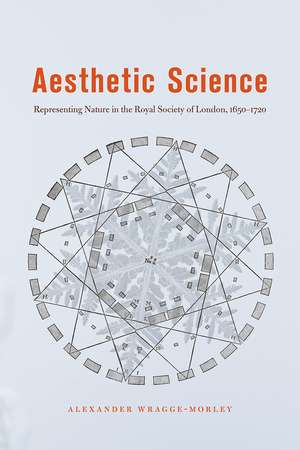
"Riveting and consequential. This is a book that transforms our understanding of Royal Society science while providing an alternative genealogy of modern aesthetics. Wragge-Morley reveals how physico-theology, long treated as a merely apologetic discourse, shaped contexts of discovery. As he brilliantly demonstrates, physico-theological assumptions effectively required natural phenomena like snowflakes to be analyzed as ruins, vestiges of an originally perfect design. Making new sense of the diversity of Royal Society projects, Wragge-Morley recovers a still-vital tradition of aesthetic thinking governed by physico-theological rather than Kantian assumptions. His aesthetic approach to his materials makes the most compelling argument of all: a demonstration that the imbrication of metaphysics, theology, and early modern scientific practice can only be revealed through a history of experience."