Cantitate/Preț
Produs

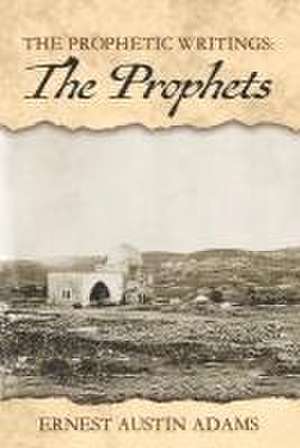
Adams, E: Prophets

Autor Adams, Ernest Austin
en Limba Engleză Paperback – 23 feb 2023

Recomandăm volumul Adams, E: Prophets studenților la teologie, cercetătorilor biblici și practicienilor interesați de hermeneutică, oferindu-le un instrument analitic riguros pentru a distinge între mesajul divin și intervențiile editoriale istorice. Ernest Austin Adams propune o deconstrucție a textului din Tanakh, bazată pe o cercetare aprofundată a contextului politic în care au fost redactate scrierile sacre. Structura cărții este una critică și sistematică, împărțind materialul profetic în patru categorii funcționale, de la profețiile împlinite care anunță venirea lui Mesia, până la cele adăugate „ex post facto” în timpul captivității babiloniene.

Autorul demonstrează cum preoții evrei, confruntați cu amenințarea pierderii identității naționale între 597 și 538 î.Hr., au adaptat textele pentru a securiza posesia pământului Canaan. Această perspectivă istorică oferă o claritate rară asupra pasajelor problematice, cum sunt blestemele neîmplinite împotriva cetăților Damasc sau Tir. Volumul reprezintă o alternativă academică la Demystifying the Prophetic pentru cursurile de exegeză a Vechiului Testament, cu avantajul că înlocuiește interpretările carismatice sau subiective cu o analiză factuală a mecanismelor de scriere și rescriere a canonului. În timp ce titluri precum Hitchhiking with Prophets oferă o trecere în revistă narativă a Bibliei, Adams, E: Prophets se concentrează pe dovezile concrete ale inserțiilor editoriale și pe modul în care apocalipticismul speculativ a fost modelat de eșecul unor așteptări istorice imediate. Apreciem în mod deosebit modul în care autorul reușește să mențină relevanța planului de mântuire, oferind în același timp o explicație rațională pentru discrepanțele textuale.

Citește tot Restrânge

Preț: 27711 lei

Puncte Express: 416

Carte disponibilă

Livrare economică 23 noiembrie-07 decembrie

Livrare prin curier în România Termenul estimat este afișat lângă disponibilitate.
Transport gratuit de la 40000 lei Plată online sau ramburs, în funcție de opțiunile comenzii.
Retur gratuit în 14 zile Comandă securizată și suport în română.

Specificații

ISBN-13: 9781667870298
ISBN-10: 1667870297
Pagini: 372
Dimensiuni: 157 x 218 x 38 mm
Greutate: 0.61 kg
Editura: BOOKBABY

De ce să citești această carte

Această lucrare este esențială pentru cei care doresc să înțeleagă formarea istorică a Bibliei dincolo de interpretările literale. Cititorul va câștiga o perspectivă clară asupra modului în care contextul politic al exilului babilonian a influențat scrierile profetice. Este o lectură necesară pentru oricine caută să reconcilieze profețiile mesianice autentice cu pasajele care par să servească agende naționaliste antice.


Descriere

In depth research has revealed startling information regarding the different types of 'prophecy' contained in the Tanakh. Bona Fide prophecy. This is prophecy which has generally been fulfilled. It is found mainly to be God revealing His love towards humanity, and His plan of salvation for them. God revealed to Abraham, c., 1,800 BC, His intended provision of the Messiah as a sacrificial offering (Genesis 22:12-18). Moses c., 1400 BC, conveys God's desire for His people to be a kingdom of priests to the world (Exodus 19:5-6), and that He would send a prophet into the world, who the people were to 'listen to' (Deuteronomy 18:15-19). David c., 1000 BC, depicts Messiah's sacrificial death on the cross (Psalm 22:1-31). Isaiahan prophets speak of Messiah as the suffering servant (Isaiah 53), and show Him to be the Son of David (Isaiah 53:2). The Passover Feast (Exodus 12:3-10), which originated during the Babylonian captivity (Adams E.A., The Beginnings), speaks of the sacrificial offering made by Messiah on the Passover. Many more prophetic fulfillments are covered in the book. We show that Messiah's sacrificial offering avails for all people 'born from above', whether they knew, or know of Messiah, or not. Ex Post Facto Prophecy. This is prophecy added back after the fact, to suit an agenda. We show in 'The Beginnings', that the main factor resulting in the format of the Tanakh that we have today, arose during the Babylonian captivity, c., 597-538 BC, when Ezra claimed that the Torah had been burned with the destruction of Jerusalem, and saw the need to rewrite their foundation documents to show all that God purportedly did from the beginning (2 Esdras 14:19-22). We show that Jewish priests were in a desperate situation, facing the threat of losing their national identity, decided to rewrite their foundation documents with a survivalist agenda, in an endeavor to secure the land of Canaan as an everlasting possession. In order to back this up, they wrote scores of ex post facto prophecy into their rewritten foundation documents to support their strategy. In the book convincing proofs are shown that these were ex post facto inserts. Speculative Jewish Apocalypticism. Research has clearly revealed that Amos coupled a bona fide prophecy concerning Messiah's crucifixion (Amos 8:7-10), with his expectations regarding the anticipated Assyrian attack, c., 722 BC. He wrote of God purportedly returning to earth with fire to destroy the idolatrous Israelites and to judge their enemies. It would be a catastrophic day, with their sanctuaries and houses being destroyed and coupled this with circumstances, which eventuated during Messiah's crucifixion, i.e., that the ground would quake, it would be dark day from noon, and they would mourn for an only son. That all these signs did not occur with the Assyrian attack, nor subsequent attacks by the Babylonians, c., 597 BC, Antiochus iv Epiphanies, 167 BC, and the Roman desecration of the Temple 70 AD, these expectations were all pushed out to a future time. We show how subsequent apocalypticists added to Amos' model and looked to an end time consummation The alleged 'prophetic' curses of God. We have shown that it was regarded to be the duty of prophets to curse the enemies of the Israelites. Many of these curses did not come to pass, showing these pronouncements not to be from God. Some examples are that Damascus would cease from being a city (Isaiah 17:1-3), Egypt was cursed stating that the Nile would dry up (Isaiah 19:5-8), Tyre was cursed with destruction (Ezekiel 26:7-14), which at present is the fourth-largest city of the Lebanon, and is thriving. We also show that the curses against Cain, Ham, and Canaan (all of whom did not exist), were a personal vendetta against Egypt and the Canaanites, and did not originate in God (Adams E.A., The Beginnings).