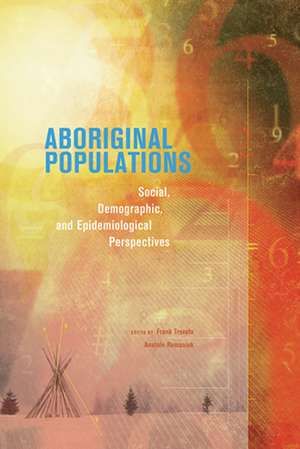
Aboriginal Populations: Social, Demographic, and Epidemiological Perspectives
Editat de Frank Trovato, Anatole Romaniuken Limba Engleză Paperback – 22 mai 2014
Preț: 339.79 lei
Preț vechi: 432.36 lei
-21%
Puncte Express: 510
Carte disponibilă
Livrare economică 06-20 mai
Specificații
ISBN-13: 9780888646255
ISBN-10: 0888646259
Pagini: 600
Ilustrații: tables
Dimensiuni: 152 x 229 x 37 mm
Greutate: 0.82 kg
Editura: University of Alberta Press
Colecția University of Alberta Press
Locul publicării:Edmonton, Canada
ISBN-10: 0888646259
Pagini: 600
Ilustrații: tables
Dimensiuni: 152 x 229 x 37 mm
Greutate: 0.82 kg
Editura: University of Alberta Press
Colecția University of Alberta Press
Locul publicării:Edmonton, Canada
V-ar putea interesa
-
 HyperborealJoan Naviyuk KanePreț: 96.37 lei
 -
 Going NativeTom HarmerPreț: 195.57 lei
 -
 Preț: 133.97 lei
 -
 The Settler Colonial PresentL. Veracini-15%Preț: 605.92 lei712.84 lei
 -
 Preț: 108.92 lei
 -
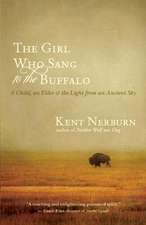 The Girl Who Sang to the BuffaloKent NerburnPreț: 112.10 lei
 -
 Literary Land ClaimsMargery FeePreț: 190.45 lei
 -
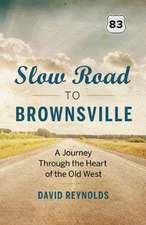 Slow Road to BrownsvilleDavid ReynoldsPreț: 84.23 lei
 -
 -28%Preț: 63.94 lei88.72 lei
 -
 Our Greatest Challenge: Aboriginal Children & Human RightsHannah McGlade-17%Preț: 173.94 lei209.87 lei
 -
 Liberating Aboriginal People from ViolenceStephanie JarrettPreț: 229.34 lei
Recenzii
"The overarching theme of this volume is that Canada's Aboriginal population has reached a critical stage of transition, from a situation in the past characterized by delayed modernization, extreme socio-economic deficit, and minimal control over their demography, to a point of social, political, economic, and demographic ascendancy." - from the Preface Experts from around the world review and extend the research on Aboriginal peoples in Canada, Australia, New Zealand, and the circumpolar North, mapping recent changes in their demography, health, and sociology and comparing their conditions with that of Aboriginal peoples in other countries. Contributors point to policies and research needed to meet the challenges Aboriginal peoples are likely to face in the twenty-first century. This substantial volume will prove indispensable and timely to researchers, policy analysts, students, and teachers of social demography and Native Studies. Contributors: Chris Andersen, Nicholas Biddle, Michael J. Chandler, Stewart Clatworthy, Senada Delic, James Frideres, Gustave J. Goldmann, Eric Guimond, Malcolm King, Brenda Kobayashi, Tahu H. Kukutai, Ron F. Laliberté, Roger C.A. Maaka, Mary Jane Norris, Evelyn J. Peters, Andrey N. Petrov, Ian Pool, Sarah Prout, Norbert Robitaille, Anatole Romaniuk, Sacha Senécal, C. Matthew Snipp, John Taylor, Frank Trovato, Ravi B.P. Verma, Cora J. Voyageur, Paul C. Whitehead, Mandy L.M. Yap, and T. Kue Young. Frank Trovato is Professor of Demography and Population Studies and a past director of the Population Research Laboratory at the University of Alberta in Edmonton. His research intersects the disciplines of demography, sociology, and social epidemiology in a variety of subject areas. He is editor-in-chief of Canadian Studies in Population, the official journal of the Canadian Population Society. Anatole Romaniuk is an Adjunct Professor at the Department of Sociology, University of Alberta, and is past president of the Canadian Federation of Demographers. He has written extensively in the areas of substantive, methodological, and theoretical demography. He received the Canadian Population Society Award for his contribution to Canadian demography and the discipline of Population Studies. He lives in Ottawa.
"Aboriginal Populations examines the striking demographics of First Nations, Inuit and Métis. Its scope is encyclopedic and compelling; its findings are often surprising; its commentaries are eloquent. Editors Frank Trovato and Anatole Romaniuk capture a community in transition after centuries of despair..." [Full review at http://bit.ly/1viEFAl]
“… [The editors] have brought forward a collection of papers of very high quality, many of which engage the reader in terms of some of the most difficult conceptual and methodological issues to characterize research of this nature. “
"Aboriginal Populations examines the striking demographics of First Nations, Inuit and Métis. Its scope is encyclopedic and compelling; its findings are often surprising; its commentaries are eloquent. Editors Frank Trovato and Anatole Romaniuk capture a community in transition after centuries of despair..." [Full review at http://bit.ly/1viEFAl]
“… [The editors] have brought forward a collection of papers of very high quality, many of which engage the reader in terms of some of the most difficult conceptual and methodological issues to characterize research of this nature. “