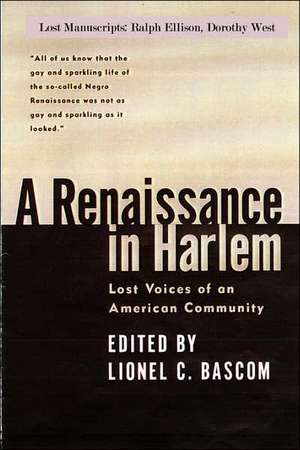
A Renaissance in Harlem
Autor Lionel Bascomen Limba Engleză Paperback – 27 iun 2007
Preț: 181.24 lei
Puncte Express: 272
Carte tipărită la comandă
Livrare economică 03-17 decembrie
Livrare prin curier în România Termenul estimat este afișat lângă disponibilitate.
Transport gratuit de la 400.00 lei Plată online sau ramburs, în funcție de opțiunile comenzii.
Retur gratuit în 14 zile Comandă securizată și suport în română.
Specificații
ISBN-13: 9781430321835
ISBN-10: 1430321830
Pagini: 300
Dimensiuni: 152 x 229 x 18 mm
Greutate: 0.49 kg
Editura: Lulu.Com
Locul publicării:United States
ISBN-10: 1430321830
Pagini: 300
Dimensiuni: 152 x 229 x 18 mm
Greutate: 0.49 kg
Editura: Lulu.Com
Locul publicării:United States
Recenzii
"To say Bascom has unearthed a buried treasure would be a cliche, but also correct."-- The Advocate, Stamford, CT"The precisely rendered testimony [in this book] . . . is by turns heartrending, enraging, strange, and hilarious."--The New Yorker"These are the ordinary folks of Harlem telling their storise in their voices . . . In short, this collection of long-lost work adds contrast, texture and realism to what undoubtedly remains the most creative time in black history."--St. Petersburg Times"Lionel Bascom has done yeoman service by uncovering these lost stories. [He] brings the truth of ordinary folk back into the spotlight."--Nikki Giovanni"A delightfully engaging and diverse portrait of an almost legendary black urban community."--Publisher's Weekly
Textul de pe ultima copertă
Lost for generations in the vaults of The Library of Congress, these remarkable essays by some of the era's finest writers, including Dorothy West and Ralph Ellison, vividly evoke daily life during the Harlem Renaissance.
The Lindy-Hoppers at the Savoy began to practice acrobatic routines, and to do absurd things for the entertainment of the whites, that probably never would have entered into their heads to attempt merely for their own effortless amusement. Some critics say that this is what happened to certain Negro writers, too -- that they ceased to write to amuse themselves and began to write to amuse and entertain white people, and in doing so distorted and over colored their material, and left out a great many things they thought would offend their American brothers of a lighter complexion. All of us know that the gay and sparkling life of the so-called Negro Renaissance of the '20s was not so gay and sparkling beneath the surface as it looked.