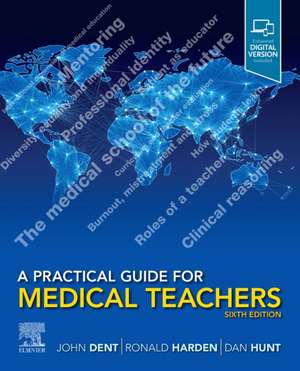
A Practical Guide for Medical Teachers
Editat de John Dent, Ronald M. Harden, Dan Hunten Limba Engleză Paperback – 24 mai 2021
Preț: 548.18 lei
Preț vechi: 577.03 lei
-5%
Puncte Express: 822
Carte disponibilă
Livrare economică 03-17 noiembrie
Livrare express 17-23 octombrie pentru 64.67 lei
Livrare prin curier în România Termenul estimat este afișat lângă disponibilitate.
Transport gratuit pentru acest produs Plată online sau ramburs, în funcție de opțiunile comenzii.
Retur gratuit în 14 zile Comandă securizată și suport în română.
Specificații
ISBN-13: 9780702081705
ISBN-10: 0702081701
Pagini: 496
Ilustrații: 70 illustrations (70 in full color)
Dimensiuni: 191 x 235 x 22 mm
Greutate: 1.04 kg
Ediția:6
Editura: Elsevier
ISBN-10: 0702081701
Pagini: 496
Ilustrații: 70 illustrations (70 in full color)
Dimensiuni: 191 x 235 x 22 mm
Greutate: 1.04 kg
Ediția:6
Editura: Elsevier
V-ar putea interesa
-
 The Changing Role of Medical StudentsJeni Harden-29%Preț: 236.21 lei334.48 lei
 -
 Routledge International Handbook of Medical EducationKhalid Abdulrahman-5%Preț: 2570.55 lei2705.85 lei
 -
 -31%Preț: 255.29 lei371.35 lei
 -
 -30%Preț: 250.34 lei360.17 lei
 -
 -29%Preț: 248.90 lei350.35 lei
 -
 You Are Infected and You Don't Even Know ItMatthew Horne-5%Preț: 93.16 lei98.07 lei
 -
 The Wonder of WaterDan HuntPreț: 87.52 lei
 -
 Did You Bomb London?John DentPreț: 132.52 lei
 -
 -5%Preț: 256.17 lei269.65 lei
 -
 -5%Preț: 560.37 lei589.87 lei
 -
 Übungen für Knie und HüfteJoachim Merk-5%Preț: 362.07 lei381.13 lei
 -
 Unterwegs auf vier FüßenChristiane SeilerPreț: 156.12 lei
 -
 Krankenhausbau - StudienausgabeHermann Stockhorst-5%Preț: 696.34 lei732.99 lei
Public țintă
- Teachers and trainers in medicine, whether engaged in undergraduate, postgraduate or continuing education.
- Students of postgraduate / masters programmes in medical education.
- Medical curriculum developers, student advisors or education researchers.
Cuprins
SECTION 1 CURRICULUM DEVELOPMENT
1. The Medical School of the Future
2. Curriculum Planning and Development
3. The Undergraduate Curriculum
4. Postgraduate Medical Education: A ‘Pipeline’ to Competence
5. Continuing Professional Development
6. The Hidden Curriculum,
7. The International Dimension of Medical Education
SECTION 2 LEARNING SITUATIONS
8. How Students Learn
9. Lectures
10. Learning in Small Groups
11. Clinical Teaching
12. Learning in Urban and Rural Communities
13. Learning in Longitudinal Integrated Clerkships
14. Learning in a Simulated Environment
15. Independent Learning and Distance Education
SECTION 3 EDUCATIONAL STRATEGIES AND TECHNOLOGIES
16. Outcome-based Education
17. Integrated Learning
18. Interprofessional Education
19. Problem-Based Learning, 155
20. Team-Based Learning
21. Digital Technologies in Medical Education
SECTION 4 CURRICULUM THEMES, 179
22. Relevance of Foundational Sciences to the Curriculum
23. Social and Behavioural Sciences in Medical School Curricula
24. Clinical Communication Skills
25. Ethics, Empathy and Attitudes
26. Professionalism
27. Medical Research (in General) and Evidence-Based Medicine
28. Patient Safety and Quality of Care
29. Medical Humanities
30. Integrative Medicine in the Training of Physicians
31. Clinical Reasoning
32. Medical Education in an Era of Ubiquitous Information
SECTION 5 ASSESSMENT, 269
33. Concepts in Assessment Including Standard Setting
34. Written Assessments
35. Performance and Workplace Assessment
36. Portfolios, Projects and Theses
37. Feedback, Reflection and Coaching: Tools for Continuous Learning
38. The Assessment of Attitudes and Professionalism
39. Programmatic Assessment
SECTION 6 STAFF
40. The Roles of the Medical Teacher
41. The Teacher as a Scholar
42. Staff Development
43. Mentoring
44. Burnout, Mistreatment and Stress
45. The Patient as Educator
SECTION 7 STUDENTS & TRAINEES
46. Selection of Students and Trainees
47. Students and Trainees in Need of Additional Support
48. Student Engagement in the Educational Programme
49. Professional Identity and Career Choice,
SECTION 8 MEDICAL SCHOOL
50. Curriculum and Teacher Evaluation
51. Medical Education Leadership
52. The Medical Teacher and Social Accountability
53. The Educational Environment
54. Medical Education Research
55. Diversity, Equality and Individuality
1. The Medical School of the Future
2. Curriculum Planning and Development
3. The Undergraduate Curriculum
4. Postgraduate Medical Education: A ‘Pipeline’ to Competence
5. Continuing Professional Development
6. The Hidden Curriculum,
7. The International Dimension of Medical Education
SECTION 2 LEARNING SITUATIONS
8. How Students Learn
9. Lectures
10. Learning in Small Groups
11. Clinical Teaching
12. Learning in Urban and Rural Communities
13. Learning in Longitudinal Integrated Clerkships
14. Learning in a Simulated Environment
15. Independent Learning and Distance Education
SECTION 3 EDUCATIONAL STRATEGIES AND TECHNOLOGIES
16. Outcome-based Education
17. Integrated Learning
18. Interprofessional Education
19. Problem-Based Learning, 155
20. Team-Based Learning
21. Digital Technologies in Medical Education
SECTION 4 CURRICULUM THEMES, 179
22. Relevance of Foundational Sciences to the Curriculum
23. Social and Behavioural Sciences in Medical School Curricula
24. Clinical Communication Skills
25. Ethics, Empathy and Attitudes
26. Professionalism
27. Medical Research (in General) and Evidence-Based Medicine
28. Patient Safety and Quality of Care
29. Medical Humanities
30. Integrative Medicine in the Training of Physicians
31. Clinical Reasoning
32. Medical Education in an Era of Ubiquitous Information
SECTION 5 ASSESSMENT, 269
33. Concepts in Assessment Including Standard Setting
34. Written Assessments
35. Performance and Workplace Assessment
36. Portfolios, Projects and Theses
37. Feedback, Reflection and Coaching: Tools for Continuous Learning
38. The Assessment of Attitudes and Professionalism
39. Programmatic Assessment
SECTION 6 STAFF
40. The Roles of the Medical Teacher
41. The Teacher as a Scholar
42. Staff Development
43. Mentoring
44. Burnout, Mistreatment and Stress
45. The Patient as Educator
SECTION 7 STUDENTS & TRAINEES
46. Selection of Students and Trainees
47. Students and Trainees in Need of Additional Support
48. Student Engagement in the Educational Programme
49. Professional Identity and Career Choice,
SECTION 8 MEDICAL SCHOOL
50. Curriculum and Teacher Evaluation
51. Medical Education Leadership
52. The Medical Teacher and Social Accountability
53. The Educational Environment
54. Medical Education Research
55. Diversity, Equality and Individuality