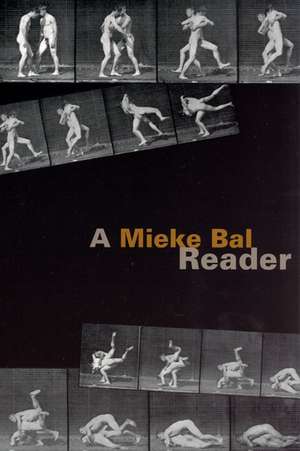
A Mieke Bal Reader
Autor Mieke Balen Limba Engleză Paperback – 15 mai 2006
Remarcăm în A Mieke Bal Reader o incursiune densă în vocabularul critic al analizei culturale, volumul acoperind concepte fundamentale precum „focalizarea”, „interdisciplinaritatea” și „semiotica vizuală” în contexte ce variază de la textele biblice la proza lui Marcel Proust. Această antologie nu este doar o simplă colecție de eseuri, ci o hartă a evoluției intelectuale a unei figuri centrale în disciplinele umaniste contemporane. Structura cărții, organizată în patru secțiuni distincte, ghidează cititorul de la analiza riguroasă a literaturii către o metodologie care sfidează granițele academice tradiționale.
Spre deosebire de Narratology, unde autoarea se concentrează pe instrumentarul tehnic al teoriei narative, acest „Reader” adoptă o perspectivă mult mai largă, integrând estetica, teologia și critica feministă. Dacă în Travelling Concepts in the Humanities Mieke Bal pleda pentru o abordare bazată pe concepte mobile, aici vedem aplicarea practică a acestor idei în analize concrete asupra unor autori precum Flaubert sau Zola. Reținem că progresia textului urmărește o traiectorie de la micro-analiza narativă („Narration and Focalization”) spre macro-interogații despre identitate și memorie culturală.
Experiența lecturii este una provocatoare, tonul variind între rigoarea academică și reflecția personală, așa cum subliniază și criticile de specialitate care descriu volumul ca pe o formă de „biografie intelectuală”. Cele 40 de ilustrații incluse nu sunt simple anexe, ci elemente esențiale pentru înțelegerea conceptului de „lectură a imaginii”, transformând volumul într-un instrument de lucru indispensabil pentru nivelul academic avansat și cercetare.
Preț: 380.64 lei
Carte tipărită la comandă
Livrare economică 27 noiembrie-11 decembrie
Specificații
ISBN-10: 0226035859
Pagini: 408
Ilustrații: 40 halftones, 2 tables
Dimensiuni: 152 x 229 x 33 mm
Greutate: 0.68 kg
Ediția:New ed.
Editura: University of Chicago Press
Colecția University of Chicago Press
V-ar putea interesa
-
 Coming HomeJohn BetjemanPreț: 133.21 lei
 -
 Inner WorkingsJ. M. CoetzeePreț: 115.81 lei
 -
 The FighterTim Parks-19%Preț: 57.48 lei70.88 lei
 -
 Electra and Other PlaysSophocles-30%Preț: 66.13 lei94.06 lei
 -
 Days of ReadingMarcel ProustPreț: 55.61 lei
 -
 An Apology for IdlersRobert Louis Stevenson-21%Preț: 44.19 lei55.69 lei
 -
 Against Interpretation and Other EssaysSusan Sontag-24%Preț: 70.57 lei93.46 lei
 -
 Species of Spaces and Other PiecesGeorges Perec-31%Preț: 63.34 lei92.00 lei
 -
 Major WorksJonathan Swift-16%Preț: 81.76 lei96.90 lei
 -
 Orestes and Other PlaysEuripidesPreț: 68.42 lei
 -
 Preț: 115.66 lei
 -
 The Iliad of HomerHomerPreț: 131.30 lei
 -
 ColorKenneth A. McClanePreț: 182.14 lei
 -
 -35%Preț: 60.10 lei92.40 lei
 -
 Preț: 108.32 lei
 -
 -29%Preț: 100.46 lei141.41 lei
 -
 Travelling Concepts in the HumanitiesMieke BalPreț: 335.00 lei
 -
 -23%Preț: 73.04 lei95.26 lei
De ce să citești această carte
Această antologie este esențială pentru cercetătorii și studenții care doresc să stăpânească instrumentele analizei culturale moderne. Cititorul câștigă o perspectivă integrată asupra modului în care teoria literară poate fi aplicată în arte vizuale și teologie, beneficiind de expertiza unei autoare care a redefinit conceptul de interdisciplinaritate. Este resursa ideală pentru a înțelege cum funcționează mecanismele narative dincolo de paginile unei cărți.
Despre autor
Mieke Bal este profesor emerit la Academia Regală de Arte și Științe a Țărilor de Jos și cofondatoare a Școlii de Analiză Culturală din Amsterdam (ASCA). Cariera sa impresionantă este marcată de o versatilitate rară, influențând domenii diverse, de la studiile Vechiului Testament la semiotica vizuală. Printre lucrările sale de referință se numără Loving Yusuf și The Practice of Cultural Analysis, ambele publicate tot de University of Chicago Press. Opera sa este definită de un angajament constant față de gândirea critică și de explorarea modului în care conceptele „călătoresc” între diferite discipline umaniste.
Descriere scurtă
This Reader is organized into four parts, reflecting the fields that Bal has most profoundly influenced: literary study, interdisciplinary methodology, visual analysis, and postmodern theology. The essays include some of Bal’s most characteristic and provocative work, capturing her at the top of her form. “Narration and Focalization,” for example, provides the groundwork for Bal’s ideas on narrative, while “Reading Art?” clearly outlines her concept of reading images. “Religious Canon and Literary Identity” reenvisions Bal’s own work at the intersection of theology and cultural analysis, while “Enfolding Feminism” argues for a new feminist rallying cry that is not a position but a metaphor. More than a dozen other essays round out the four sections, each of which is interdisciplinary in its own right: the section devoted to literature, for instance, ranges widely over psychoanalysis, theology, photography, and even autobiography.
A Mieke Bal Reader is the product of a capacious intellect and a sustained commitment to critical thinking. It will prove to be instructive, maddening, and groundbreaking—in short, all the hallmarks of intellectual inquiry at its best.
Notă biografică
Cuprins
Preface
Part 1 - Analyzing Literature in Culture
1. Narration and Focalization
Introduction
Analysis
Commentary
Agents
Reader
Illustrations
Interpretations
Conclusion
Notes
References
2. The Story of W
The Practice of Theory
Rape, Suicide, Signs, and Show
Contagious Logorrhea: Between Men
Vision Vying Violence: Between Women
Expository Writing
Notes
References
3. All in the Family: Familiarity and Estrangement According to Marcel Proust
Introduction
Desire and the Ontology of the Snapshot
Primal Scenes: Against the Familial Gaze
Ethnography as Voyeurism
The Narration of Relation
Notes
References
4. Over-Writing as Un-Writing: Descriptions, World-Making, and Novelistic Time
Introduction
Robin (the frame)
Nana (the decomposition)
Emma (the end)
Notes
References
Part 2 - Interdisciplinary Methodology
5. Scared to Death
Scared to Death of Theory
Metaphors as Narratives
The Concept of "Metaphor" and the Metaphor "Concept"
Theory as Practice
Notes
References
6. Telling, Showing, Showing Off
Setting as Image, Nature as Sign
Who Is Speaking?
Asian Mammals: The Politics of Transition
The Contest between Time and Space: Evolution and Taxonomy
Circular Epistemology
In the Beginning Was the Word
Picking Up Crumbs
Notes
References
7. Enfolding Feminism
Figuring It Out
Beyond Representation
From House-Wife to House-Woman
Actualizing Attention
De-allegorizing Feminism
Notes
References
8. Intention
A Concept We Hate to Love
Forms of Abandon
Productive Opposition
The Logic of Intentionalism
The Performance of Thought
Narrative Abandon
Abandoning Authority
Notes
References
Part 3 - Visual Analysis
9. Telling Objects: A Narrative Perspective on Collecting
Narrative Introduction
Collecting as a Narrative
Beginnings: Many
Beginnings: One
Middle
Endings
Notes
References
10. Reading Art?
Appropriation
Neither Speech nor Icon
The Need to Read
Reading Through, Skin-Deep
Reading History
Notes
References
11. Reading Bathsheba: From Mastercodes to Misfits
Introduction
Genres as Mastercodes
Denaturalizing Mastercodes
Reading (for the) Text
The Telling Detail
The Line of Sight
Return to Sender: The Letter Writes Back
Reading Distortion
Conclusion
Notes
References
Part 4: Postmodern Theology
12. The Rape of Narrative and the Narrative of Rape: Speech Acts and Body Language in Judges
Speech Acts: The Word Become Flesh
Samson's Riddle: The Word Become Woman
The Riddle as Vow and the Vow as Riddle
The Daughter's Body Language as a Challenge to Fatherhood
The Mouth of the S/word
Notes
References
13. Lots of Writing
Introduction
Self-Reflection
Esther Writing Esther's Writing
The Subject of Writing
Conclusion
Notes
References
14. Postmodern Theology as Cultural Analysis
Points of Departure
Caravaggio Today
Reframing Judith
Notes
References
15. Religious Canon and Literary Identity
Literary Canon and Religious Identity
Religious Canon and Literary Identity
Ethical Non-Indifference and Artistic Merit
The Cutting Edge of Literary Identity
Double Binding: Literary Identity and Its Religious Effects
History, Identity, and Religious Canon
Notes
References
Part 5 - Cultural Analysis in an Expanded Field
16. Meanwhile: Literature in an Expanded Field
Notes
References
Index of Proper Nouns and Titles
Index of Terms and Concepts