
A Light in the Dark
Autor David Thomsonen Limba Engleză Hardback – 23 mar 2021
Directors operate behind the scenes, managing actors, establishing a cohesive creative vision, at times literally guiding our eyes with the eye of the camera. But we are often so dazzled by the visions on-screen that it is easy to forget the individual who is off-screen orchestrating the entire production--to say nothing of their having marshaled a script, a studio, and other people's money. David Thomson, in his usual brilliantly insightful way, shines a light on the visionary directors who have shaped modern cinema and, through their work, studies the very nature of film direction. With his customary candor about his own delights and disappointments, Thomson analyzes both landmark works and forgotten films from classic directors such as Orson Welles, Alfred Hitchcock, Jean Renoir, and Jean-Luc Godard, as well as contemporary powerhouses such as Jane Campion, Spike Lee, and Quentin Tarantino. He shrewdly interrogates their professional legacies and influence in the industry, while simultaneously assessing the critical impact of an artist's personal life on his or her work. He explores the male directors' dominance of the past, and describes how diversity can change the landscape. Judicious, vivid, and witty, A Light in the Dark is yet another required Thomson text for every movie lover's shelf.
Preț: 192.30 lei
Puncte Express: 288
Carte indisponibilă temporar
Doresc să fiu notificat când acest titlu va fi disponibil:
Se trimite...
Specificații
ISBN-13: 9780593318157
ISBN-10: 0593318153
Pagini: 304
Dimensiuni: 149 x 216 x 35 mm
Greutate: 0.47 kg
Editura: Knopf Doubleday Publishing Group
ISBN-10: 0593318153
Pagini: 304
Dimensiuni: 149 x 216 x 35 mm
Greutate: 0.47 kg
Editura: Knopf Doubleday Publishing Group
V-ar putea interesa
-
 Something Like an AutobiographyAkira KurosawaPreț: 86.14 lei
 -
 Painting with Light 2eJohn AltonPreț: 258.21 lei
 -
 Everything is CinemaRichard BrodyPreț: 196.87 lei
 -
 Steven SpielbergIan Nathan-21%Preț: 176.85 lei223.15 lei
 -
 Easy Riders, Raging BullsPeter Biskind-34%Preț: 81.65 lei123.18 lei
 -
 -22%Preț: 127.42 lei162.87 lei
 -
 DirectingVirginia Wright WexmanPreț: 266.99 lei
 -
 -24%Preț: 95.52 lei125.42 lei
 -
 -18%Preț: 309.91 lei375.95 lei
 -
 -26%Preț: 116.75 lei157.33 lei
 -
 -25%Preț: 82.46 lei109.79 lei
 -
 -24%Preț: 83.03 lei109.92 lei
 -
 Christopher NolanDan Jolin-24%Preț: 83.97 lei110.49 lei
 -
 Sofia Coppola: The Complete Unofficial GuideChristina Newland-25%Preț: 82.85 lei110.02 lei
 -
 The Director's Voice, Volume 2Jason LoewithPreț: 137.74 lei
 -
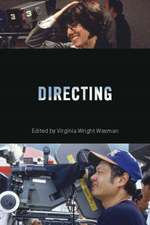 Directing: Behind the Silver Screen: A Modern History of FilmmakingVirginia Wright Wexman-26%Preț: 178.11 lei240.87 lei
 -
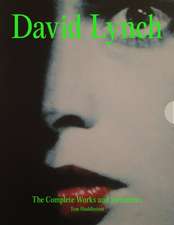 David LynchTom Huddleston-17%Preț: 238.32 lei285.98 lei
 -
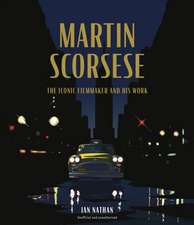 Martin ScorseseIan Nathan-21%Preț: 175.91 lei222.57 lei
 -
 Contemporary Directors’ CinemaJacob Leigh-26%Preț: 210.86 lei283.05 lei
 -
 Catching the LightHarold Becker-23%Preț: 130.13 lei169.72 lei
Notă biografică
DAVID THOMSON is the author of more than twenty-five books, including The Biographical Dictionary of Film, biographies of Orson Welles and David O. Selznick, and the pioneering novel Suspects, which was peopled with characters from film.
Cuprins
Introduction: Darkness Visible
1 Waiting for the Monolith
2 To Be a Master: Fritz Lang
3 Everyone’s Friend: Jean Renoir
4 In Dreams: Luis Buñuel
5 A Natural Liar: Howard Hawk
6 The Man Who Watched Too Much: Alfred Hitchcock
7 God? Orson Welles
8 Godardian
9 The Ghost of Nick Ray
10 A Very English Professional: Stephen Frears
11 The American Auteur
12 A Female Gaze
13 Alone: The Nature of a Minority
14 The Kid from The Video Store: Quentin Tarantino
15 The Last Irishman
Sources and Resources
Acknowledgments
Index
1 Waiting for the Monolith
2 To Be a Master: Fritz Lang
3 Everyone’s Friend: Jean Renoir
4 In Dreams: Luis Buñuel
5 A Natural Liar: Howard Hawk
6 The Man Who Watched Too Much: Alfred Hitchcock
7 God? Orson Welles
8 Godardian
9 The Ghost of Nick Ray
10 A Very English Professional: Stephen Frears
11 The American Auteur
12 A Female Gaze
13 Alone: The Nature of a Minority
14 The Kid from The Video Store: Quentin Tarantino
15 The Last Irishman
Sources and Resources
Acknowledgments
Index
Descriere
Descriere de la o altă ediție sau format:
In little more than a century of cinema - Birth of a Nation was one hundred years old in 2015 - our sense of what a film director is, or should be, has shifted in fascinating ways. A director was once a functionary; then an important but not decisive part of an industrial process; then accepted as the person who was and should be in charge, because he was an artist and a hero. But the world has changed. In a nutshell, the change takes the form of a question: Who directed The Sopranos or Homeland? Hardly anyone knows, because we don't tend to read TV credits and the director has returned to a more subservient and anonymous role. Directors now try to be efficient, the deliverers of profitable films, and are often involved as producers, like Steven Spielberg.
David Thomson's brilliant A Light in the Dark personalises each chapter through an individual: Jean Renoir, Howard Hawks, Jean-Luc Godard, Alfred Hitchcock, Luis Bunuel, Orson Welles, Fritz Lang, Jane Campion, Stephen Frears and Quentin Tarantino. Through these characters (and other directors not mentioned here), David Thomson relates an imaginative new history of a medium that has changed the world.
In little more than a century of cinema - Birth of a Nation was one hundred years old in 2015 - our sense of what a film director is, or should be, has shifted in fascinating ways. A director was once a functionary; then an important but not decisive part of an industrial process; then accepted as the person who was and should be in charge, because he was an artist and a hero. But the world has changed. In a nutshell, the change takes the form of a question: Who directed The Sopranos or Homeland? Hardly anyone knows, because we don't tend to read TV credits and the director has returned to a more subservient and anonymous role. Directors now try to be efficient, the deliverers of profitable films, and are often involved as producers, like Steven Spielberg.
David Thomson's brilliant A Light in the Dark personalises each chapter through an individual: Jean Renoir, Howard Hawks, Jean-Luc Godard, Alfred Hitchcock, Luis Bunuel, Orson Welles, Fritz Lang, Jane Campion, Stephen Frears and Quentin Tarantino. Through these characters (and other directors not mentioned here), David Thomson relates an imaginative new history of a medium that has changed the world.
Recenzii
It took over my life for two days. It is a summary of cinema and a requiem. Love and sadness. A prodigious masterwork.
Compulsive reading: thoughtful and thought-provoking in equal measure. David Thomson's knowledge is comprehensive and his response to all films humane and entirely uncorrupted by the conventional hagiography of so much writing about film. He's engagingly unafraid of challenging received opinion
David Thomson has spent his life thinking hard and deep about cinema, and so he's uniquely placed to write this lovely, brutal book about the glory of being a film-maker and vainglory of being an auteur
Fizzing . . . It has that sense of live debate that's so inimical to social media's village green . . . Invaluable
With this dynamic book, Thomson is big enough to follow the cry of "action!" wherever it leads
Forensic and stimulating . . . There is much new thinking, taking into account changes in both film criticism and society
Compulsive reading: thoughtful and thought-provoking in equal measure. David Thomson's knowledge is comprehensive and his response to all films humane and entirely uncorrupted by the conventional hagiography of so much writing about film. He's engagingly unafraid of challenging received opinion
David Thomson has spent his life thinking hard and deep about cinema, and so he's uniquely placed to write this lovely, brutal book about the glory of being a film-maker and vainglory of being an auteur
Fizzing . . . It has that sense of live debate that's so inimical to social media's village green . . . Invaluable
With this dynamic book, Thomson is big enough to follow the cry of "action!" wherever it leads
Forensic and stimulating . . . There is much new thinking, taking into account changes in both film criticism and society