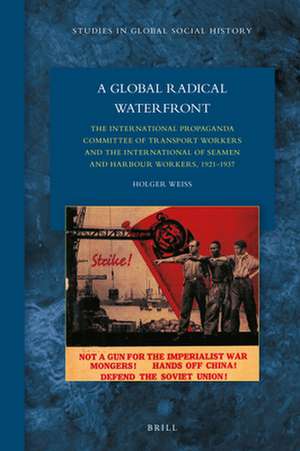
A Global Radical Waterfront: A Global Radical Waterfront, cartea 43
Autor Holger Weissen Limba Engleză Hardback – 17 iun 2021
Preț: 1073.00 lei
Preț vechi: 1393.51 lei
-23%
Puncte Express: 1610
Carte tipărită la comandă
Livrare economică 01-15 octombrie
Livrare prin curier în România Termenul estimat este afișat lângă disponibilitate.
Transport gratuit pentru acest produs Plată online sau ramburs, în funcție de opțiunile comenzii.
Retur gratuit în 14 zile Comandă securizată și suport în română.
Specificații
ISBN-13: 9789004462915
ISBN-10: 9004462910
Pagini: 524
Dimensiuni: 155 x 234 x 29 mm
Greutate: 0.9 kg
Editura: Koninklijke Brill Bv
Colecția A Global Radical Waterfront
Seriile A Global Radical Waterfront, Brill
ISBN-10: 9004462910
Pagini: 524
Dimensiuni: 155 x 234 x 29 mm
Greutate: 0.9 kg
Editura: Koninklijke Brill Bv
Colecția A Global Radical Waterfront
Seriile A Global Radical Waterfront, Brill
Notă biografică
Holger Weiss, Ph.D. (1997), Åbo Akademi University, is Professor of general history and a specialist in global, Atlantic and African history. His most recent publications include The Internationalisation of the Labour Question: Ideological Antagonism, Workers’ Movements and the ILO since 1919, ed. Stefano Bellucci and Holger Weiss (Palgrave MacMillan, 2020).
Cuprins
Acknowledgements
List of Figures, Maps and Tables
List of Abbreviations
Introduction
1 Identifying Individuals and the Use of Aliases and Pseudonyms
2 The Negative Image: A Subversive Organisation for the World Revolution
3 The Limitations of the Sources – the Absence of Women and Individual Voices
4 Radicalising Maritime Transport Workers During the Age of Steamships
PART 1
The International Propaganda Committee for Transport Workers
Introduction to Part 1
1 Organising the Radical Maritime Transport Workers
1 A Communist Answer to a Syndicalist Initiative
2 A Push towards the West
3 The 1923 Berlin Conference and Its Aftermath
2 Establishing a Global Network
1 Opening a Window towards the Global South
2 The Operational Units: The Regional Secretariats and the Port Bureaus
3 A New Unit: The Revolutionary Nuclei
PART 2
The International Propaganda and Action Committee for Transport Workers
Introduction to Part 2
3 1928 and Beyond
Establishing the United Front from Below
1 The 1928 Conference and Its Aftermath
2 The Scandinavian Secretariat and Activities in Northern Europe
4 Reopening Work among Colonial Seamen
1 Visions and Setbacks in Europe
2 Opening a New Chapter: Work among Black Seamen
5 Class-Against-Class and the Red Trade Union Opposition
1 Walter’s Position: “You Have to Start from the Bottom”
2 Organising the Opposition within or outside the Unions?
3 Exit Port Bureau, Enter Interclub
4 Towards an International of Transport Workers?
PART 3
The International of Seamen and Harbour Workers
6 An International for the Global Radical Waterfront
1 October 1930: Framing the Fighting International of Marine Workers
2 The Operational Unit: From Five Bureaus to One Secretariat
3 Aiming for a Global Outreach – Building National Sections
4 Guidelines for Work among Colonial Seamen
5 rilu Criticism and ish Self-Criticism
6 Confronting National Unions, the itf and the Shipping Industry
7 “Hands off China!” – Orchestrating a Global Campaign against Japanese Imperialism
7 Assembling the Global Radical Waterfront
1 A Global Moment: Altona, 21–24 May 1932
2 Calling Black Seamen
3 Full Speed Ahead?
4 The Scandinavian Conference
8 The Copenhagen Secretariat
1 Evacuating Hamburg
2 The Copenhagen Secretariat in Action
3 Joining the Proletarian Anti-Fascist Front
4 Comrade Schmidt and an Obscure Meeting in Paris
5 Moscow Calling: The Commission on Seamen’s Work
9 An Empty Shell
1 The Antwerp Secretariat
2 The Paris Secretariat
3 Calling in Vain for International Solidarity: Hands off Abyssinia
4 Dissolution
5 Liquidation
Postscript
Appendix 1: Timeline
Appendix 2: Identification of Senders and Recipients in Letters Sent from/to ISH Secretariat 1933–1937, Filed in the Comintern Archives
Bibliography
Index
List of Figures, Maps and Tables
List of Abbreviations
Introduction
1 Identifying Individuals and the Use of Aliases and Pseudonyms
2 The Negative Image: A Subversive Organisation for the World Revolution
3 The Limitations of the Sources – the Absence of Women and Individual Voices
4 Radicalising Maritime Transport Workers During the Age of Steamships
PART 1
The International Propaganda Committee for Transport Workers
Introduction to Part 1
1 Organising the Radical Maritime Transport Workers
1 A Communist Answer to a Syndicalist Initiative
2 A Push towards the West
3 The 1923 Berlin Conference and Its Aftermath
2 Establishing a Global Network
1 Opening a Window towards the Global South
2 The Operational Units: The Regional Secretariats and the Port Bureaus
3 A New Unit: The Revolutionary Nuclei
PART 2
The International Propaganda and Action Committee for Transport Workers
Introduction to Part 2
3 1928 and Beyond
Establishing the United Front from Below
1 The 1928 Conference and Its Aftermath
2 The Scandinavian Secretariat and Activities in Northern Europe
4 Reopening Work among Colonial Seamen
1 Visions and Setbacks in Europe
2 Opening a New Chapter: Work among Black Seamen
5 Class-Against-Class and the Red Trade Union Opposition
1 Walter’s Position: “You Have to Start from the Bottom”
2 Organising the Opposition within or outside the Unions?
3 Exit Port Bureau, Enter Interclub
4 Towards an International of Transport Workers?
PART 3
The International of Seamen and Harbour Workers
6 An International for the Global Radical Waterfront
1 October 1930: Framing the Fighting International of Marine Workers
2 The Operational Unit: From Five Bureaus to One Secretariat
3 Aiming for a Global Outreach – Building National Sections
4 Guidelines for Work among Colonial Seamen
5 rilu Criticism and ish Self-Criticism
6 Confronting National Unions, the itf and the Shipping Industry
7 “Hands off China!” – Orchestrating a Global Campaign against Japanese Imperialism
7 Assembling the Global Radical Waterfront
1 A Global Moment: Altona, 21–24 May 1932
2 Calling Black Seamen
3 Full Speed Ahead?
4 The Scandinavian Conference
8 The Copenhagen Secretariat
1 Evacuating Hamburg
2 The Copenhagen Secretariat in Action
3 Joining the Proletarian Anti-Fascist Front
4 Comrade Schmidt and an Obscure Meeting in Paris
5 Moscow Calling: The Commission on Seamen’s Work
9 An Empty Shell
1 The Antwerp Secretariat
2 The Paris Secretariat
3 Calling in Vain for International Solidarity: Hands off Abyssinia
4 Dissolution
5 Liquidation
Postscript
Appendix 1: Timeline
Appendix 2: Identification of Senders and Recipients in Letters Sent from/to ISH Secretariat 1933–1937, Filed in the Comintern Archives
Bibliography
Index