Cantitate/Preț
Produs

1866

Autor Gábor Orbán
en Limba Engleză Paperback
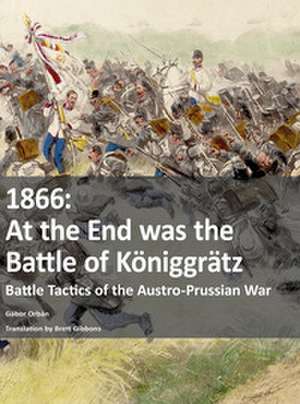
The scholarly inquiry of the 'causes' of Austria's defeat in 1866 is almost as old as the war against rising Prussia itself. Already in the immediate aftermath of the conflict, considerable energy was devoted to identifying the sources of failure. At the time, responsibility was attributed to the misjudgements of the high command, and above all to the commander-in-chief of the k.k. North Army, Feldzeugmeister Ludwig von Benedek. This one-sided interpretation, together with the broader debate surrounding the so-called 'question of guilt' (Schuldfrage), was later treated with increasing nuance. During the twentieth century, historians sought the origins of the defeat at both political and military levels. From a military perspective, research has primarily examined developments in armaments technology, the (strategic-) operational miscalculations of the campaign, and the structural deficiencies of the k.k. Army, which stemmed in large part from severe budgetary restrictions. By contrast, comparatively little attention has been devoted to battle tactics. In 1866, Austria entered the war against Prussia with a tactical doctrine nearly sixty years old, based on an overestimation of the historical tradition of military values. This volume examines precisely this neglected aspect. Within the broader context of armed conflicts since the Revolutionary and Napoleonic Wars against France, it introduces and systematically analyses Austrian military doctrine, with particular emphasis on tactics. The study critically examines the outdated systems of recruitment and training, while also considering the related fields of uniforms and equipment, soldiers' daily life, and military communication. The investigation, however, focuses primarily on two main themes: first, the Austrians' disdain for the employment of firearms; and second, their unshakeable belief in the invincibility of their own close-order battle formations. The bayonet charge, in particular, was accorded a special and almost emblematic status. The volume further explores the interaction between the various arms in wartime and highlights the complex interrelationship between strategic and tactical concepts. It becomes clear that the k.k.. Austrian Army was among the very last of the truly 'Napoleonic' forces; an army whose admirable courage could no longer compensate for hopelessly outdated infantry tactics in the age of industrialised warfare.
Citește tot Restrânge

Preț: 30353 lei

Puncte Express: 455

Carte disponibilă

Livrare economică 29 septembrie-13 octombrie
Livrare express 12-18 septembrie pentru 6753 lei

Livrare prin curier în România Termenul estimat este afișat lângă disponibilitate.
Transport gratuit de la 40000 lei Plată online sau ramburs, în funcție de opțiunile comenzii.
Retur gratuit în 14 zile Comandă securizată și suport în română.

Specificații

ISBN-13: 9783963600746
ISBN-10: 3963600748
Pagini: 224
Ilustrații: over 172 colour and black-and-white illustrations, original photographs and images of uniforms
Dimensiuni: 199 x 265 x 17 mm
Greutate: 1.06 kg
Ediția:Nouă
Editura: Zeughaus Verlag GmbH

Cuprins

Foreword Introduction State of research The army The Austrian army spirit Impact of the financial crisis The clash of arms The long road to war an overview The Schleswig-Holstein Question 1863-1865 Mobilisation and deployment The war begins All quiet in the south The invasion of Bohemia The North Army in crisis Königgrätz Retreat to Olmütz Formation of the k.k. Danube Army Conclusion of peace Forgotten fronts: Tyrol and the Main Campaign The theatre of war The terrain Fortified defensive positions and entrenchments The tactical level General considerations Army organisation Conscription and length of service Drill manuals The firefight Hurrah and charge the Austrian shock tactics Morale, discipline and panic Transport, march, and rations Uniform and equipment of the soldier Colours Cooperation between the branches Excursus: The strategic level Theoretical starting point The operational plans in 1866 Command and control Intelligence Summary Answering the research questions Recap and outlook Concluding words List of sources and references Picture credits Index of places and persons