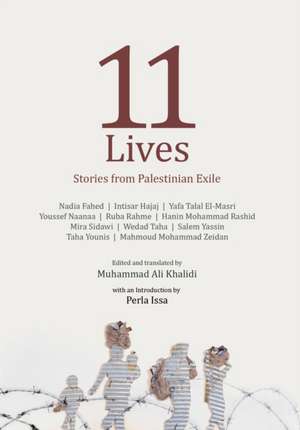
11 Lives
Editat de Muhammad Ali Khalidien Limba Engleză Paperback – 25 oct 2022
Ceea ce aduce nou 11 Lives în peisajul literaturii dedicate Orientului Mijlociu este trecerea de la analiza statistică sau politică rece la vocea directă, nefiltrată, a celor care trăiesc experiența exilului de mai bine de jumătate de secol. Sub îngrijirea editorială a lui Muhammad Ali Khalidi, volumul propune o fereastră rară către cotidianul taberelor de refugiați palestinieni, explorând identitatea celor aflați la a doua sau a treia generație de la strămutare. Ne-a atras atenția modul în care textul reușește să transforme subiectul abstract al „crizei refugiaților” într-o serie de destine concrete, subliniind tensiunea dintre memoria locului părăsit și realitatea precară a prezentului. Putem afirma că această lucrare acoperă o arie tematică similară cu Voices from the Camps de Nabil Marshood, însă abordarea diferă fundamental: dacă Marshood utilizează o metodologie sociologică pentru a documenta viața în taberele din Iordania, 11 Lives mizează pe forța scrierii creative și a literaturii pentru a recupera umanitatea celor invizibili. De asemenea, în timp ce Palestinian Refugees de Are Knudsen oferă o perspectivă academică regională asupra marginalizării politice în Levant, volumul de față este mai degrabă un instrument pedagogic și umanist, fiind ideal pentru seminarele de literatură arabă modernă. Deși Muhammad Ali Khalidi este cunoscut pentru lucrări de metafizică și filosofia științei, precum Natural Kinds sau Cognitive Ontology, experiența sa academică la Beirut îi permite să structureze aceste mărturii într-un mod riguros, dar accesibil. Dacă în lucrările anterioare autorul explora categoriile naturale și structurile cognitive, în 11 Lives el coordonează o explorare a categoriilor umane și a modului în care istoria forțează redefinirea conceptului de „acasă”.
Preț: 122.38 lei
Carte disponibilă
Livrare economică 28 octombrie-11 noiembrie
Livrare express 13-17 octombrie pentru 28.48 lei
Specificații
ISBN-10: 1682193470
Pagini: 300
Dimensiuni: 126 x 203 x 16 mm
Greutate: 0.27 kg
Editura: OR Books
De ce să citești această carte
Recomandăm această carte studenților la științe politice, activiștilor și cititorilor pasionați de memorii. Cititorul câștigă o înțelegere profundă, dincolo de titlurile știrilor, despre ce înseamnă să fii refugiat într-un sistem care pare să fi uitat aceste comunități. Este un motiv concret de a explora literatura palestiniană contemporană printr-o lentilă personală, nu doar prin cronici de război.
Despre autor
Muhammad Ali Khalidi este profesor asociat de filosofie la Universitatea Americană din Beirut. Expertiza sa vastă acoperă domenii diverse, de la filosofia minții și a științei la istoria gândirii islamice. Printre lucrările sale de referință se numără Natural Categories and Human Kinds și Medieval Islamic Philosophical Writings. În acest volum, Khalidi își folosește rigoarea analitică pentru a edita și organiza mărturiile palestinienilor, integrând discursul filosofic despre identitate în contextul social presant al refugiaților din Orientul Mijlociu.
Notă biografică
Descriere scurtă
The 11 lives given voice here are unique, each an expression of the myriad displacements that war and occupation have forced upon Palestinians since the Nakba of 1948. At the same time, they form a collective testament of a people driven from their homes and land by colonial occupation. Each story is singular; and each tells the story of all Palestinians.
As Edward Said argued in 1984, the object of Israel’s colonial warfare is not only material—seeking to minimise Palestinian existence as such—but is also a narrative project that aims to obliterate Palestinian history “as possessed of a coherent narrative direction pointed towards self-determination.”
In these pages, Palestinian refugees narrate their own histories. The product of a creative-writing workshop organized by the Institute for Palestine Studies in Lebanon, 11 Lives tells of children’s adventures in the alleyways of refugee camps, of teenage martyrs and ghosts next-door, of an UNRWA teacher’s dismay at the shallowness of her colleagues, and of the love, labour, and land that form the threads of a red keffiyeh.
What unites these 11 stories is “the inadmissible existence of the Palestinian people” highlighted by Said. Their words persist, as one contributor writes, “between the Nakba and the Naksa, throughout defeats and massacres, love affairs and revolutions.” The stories of Palestinians in exile are also open-ended, and will continue to reverberate across borders until Palestine is free.
With contributions by: Nadia Fahed, Intisar Hajaj, Yafa Talal El-Masri, Youssef Naanaa, Ruba Rahme, Hanin Mohammad Rashid, Mira Sidawi, Wedad Taha, Salem Yassin, Taha Younis, Mahmoud Mohammad Zeidan
Co-published with the Institute of Palestine Studies.