
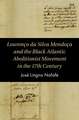
Lourenço da Silva Mendonça and the Black Atlantic Abolitionist Movement in the Seventeenth Century: Cambridge Studies on the African Diaspora
Autor José Lingna Nafaféen Limba Engleză Paperback – 27 feb 2025
| Toate formatele și edițiile | Preț | Express |
|---|---|---|
| Paperback (1) | 220.97 lei 3-5 săpt. | +32.52 lei 4-10 zile |
| Cambridge University Press – 27 feb 2025 | 220.97 lei 3-5 săpt. | +32.52 lei 4-10 zile |
| Hardback (1) | 423.47 lei 3-5 săpt. | +42.15 lei 4-10 zile |
| Cambridge University Press – 24 aug 2022 | 423.47 lei 3-5 săpt. | +42.15 lei 4-10 zile |

Preț: 220.97 lei
Nou
Puncte Express: 331
Preț estimativ în valută:
39.10€ • 45.55$ • 34.14£
39.10€ • 45.55$ • 34.14£
Carte disponibilă
Livrare economică 30 decembrie 25 - 13 ianuarie 26
Livrare express 13-19 decembrie pentru 42.51 lei
Preluare comenzi: 021 569.72.76
Specificații
ISBN-13: 9781009573726
ISBN-10: 1009573721
Pagini: 486
Dimensiuni: 152 x 229 x 28 mm
Greutate: 0.78 kg
Editura: Cambridge University Press
Seria Cambridge Studies on the African Diaspora
ISBN-10: 1009573721
Pagini: 486
Dimensiuni: 152 x 229 x 28 mm
Greutate: 0.78 kg
Editura: Cambridge University Press
Seria Cambridge Studies on the African Diaspora
Cuprins
List of Tables; List of Figures; Acknowledgments; Introduction; 1. The Municipal Council of Luanda and the Politics of the Portuguese Governors in Angola; 2. Ndongo's Political and Cultural Environment: Alliance, Internal Struggle, Puppeteering and Decline; 3. The Journey of Mendonça: Princes of Pungo Andongo in Brazil; 4. Mendonça's Journey to Portugal and Spain, and the Network of the Hebrew Nation and Native Americans; 5. Mendonça's Discourse in the Vatican: Liberation as a Wider Atlantic Question; 6. Mendonça's Quest for Abolition and the Tussle between Portuguese Overseas Council and the House of Ndongo; Conclusion; Bibliography; Index.
Recenzii
'By following Lourenço da Silva Mendonça in Angola, Brazil, Portugal and Spain and unveiling the criminal court case he presented before the Pope in 1684, José Lingna Nafafé reveals a universal message of freedom that in the 17th century crossed the Atlantic and reached the Vatican, doing justice to the African contribution to the abolitionist movement.' Giorgio de Marchis, Roma Tre University
'This is a groundbreaking study on the slave trade and its abolition. Nafafé privileges African perspectives on the debates regarding the legality of enslavement, combining a wide range of sources. The result is an engaging book, reconstructing the experiences of a 17th century Kongolese nobleman turned into an abolitionist. This is a crucial study problematizing the history of the slave trade and of the abolitionist movement, stressing the role of Africans as intellectuals debating rights in European courts. A must read.' Mariana P. Candido, Emory University
'In his extraordinarily well researched and carefully argued book, José Lingna Nafafé reveals the important role of Lourenço da Silva Mendonça in the lead-up to the abolition of slavery. Spending years combing through archives, Nafafé not only uncovered that Africans did indeed support the abolition of the slave trade, but that some were remarkably well placed to make a case for it. This is a substantial contribution to our understanding of African intellectual life and moral reasoning.' John Thornton, Boston University
'This is a groundbreaking study on the slave trade and its abolition. Nafafé privileges African perspectives on the debates regarding the legality of enslavement, combining a wide range of sources. The result is an engaging book, reconstructing the experiences of a 17th century Kongolese nobleman turned into an abolitionist. This is a crucial study problematizing the history of the slave trade and of the abolitionist movement, stressing the role of Africans as intellectuals debating rights in European courts. A must read.' Mariana P. Candido, Emory University
'In his extraordinarily well researched and carefully argued book, José Lingna Nafafé reveals the important role of Lourenço da Silva Mendonça in the lead-up to the abolition of slavery. Spending years combing through archives, Nafafé not only uncovered that Africans did indeed support the abolition of the slave trade, but that some were remarkably well placed to make a case for it. This is a substantial contribution to our understanding of African intellectual life and moral reasoning.' John Thornton, Boston University