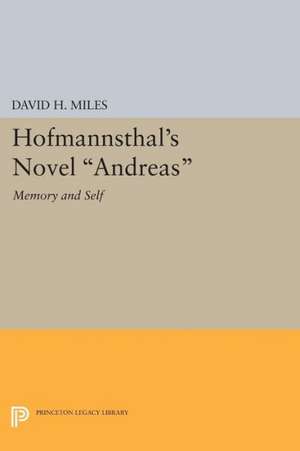
Hofmannsthal`s Novel Andreas – Memory and Self: Princeton Essays in Literature
Autor David H. Milesen Limba Engleză Paperback – 15 feb 2015
Originally published in 1972. The Princeton Legacy Library uses the latest print-on-demand technology to again make available previously out-of-print books from the distinguished backlist of Princeton University Press. These editions preserve the original texts of these important books while presenting them in durable paperback and hardcover editions. The goal of the Princeton Legacy Library is to vastly increase access to the rich scholarly heritage found in the thousands of books published by Princeton University Press since its founding in 1905.
| Toate formatele și edițiile | Preț | Express |
|---|---|---|
| Paperback (1) | 322.67 lei 43-57 zile | |
| Princeton University Press – 15 feb 2015 | 322.67 lei 43-57 zile | |
| Hardback (1) | 621.63 lei 43-57 zile | |
| Princeton University Press – 18 apr 2016 | 621.63 lei 43-57 zile |
Preț: 322.67 lei
Nou
Puncte Express: 484
Preț estimativ în valută:
57.09€ • 66.51$ • 49.85£
57.09€ • 66.51$ • 49.85£
Carte tipărită la comandă
Livrare economică 19 ianuarie-02 februarie 26
Preluare comenzi: 021 569.72.76
Specificații
ISBN-13: 9780691619965
ISBN-10: 0691619964
Pagini: 246
Dimensiuni: 164 x 232 x 13 mm
Greutate: 0.35 kg
Editura: Princeton University Press
Seria Princeton Essays in Literature
ISBN-10: 0691619964
Pagini: 246
Dimensiuni: 164 x 232 x 13 mm
Greutate: 0.35 kg
Editura: Princeton University Press
Seria Princeton Essays in Literature
Descriere
Although Hofmannsthal never completed his only novel Andreas, its theme--the quest for self through memory--haunted the Viennese writer and recurs again and again in his poems, libretti, and essays. Analyzing the fragment, David Miles discusses Hofmannsthal's understanding of memory and myth, Andreas' pivotal role in his work, and its place within