
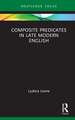
Composite Predicates in Late Modern English: Routledge Focus on Linguistics
Autor Ljubica Leoneen Limba Engleză Paperback – 27 oct 2025
| Toate formatele și edițiile | Preț | Express |
|---|---|---|
| Paperback (1) | 249.45 lei 38-44 zile | |
| Routledge – 27 oct 2025 | 249.45 lei 38-44 zile | |
| Hardback (1) | 424.04 lei 22-36 zile | +14.54 lei 5-11 zile |
| Taylor & Francis – 29 mai 2024 | 424.04 lei 22-36 zile | +14.54 lei 5-11 zile |
Preț: 249.45 lei
Nou
Puncte Express: 374
Preț estimativ în valută:
44.13€ • 51.42$ • 38.54£
44.13€ • 51.42$ • 38.54£
Carte tipărită la comandă
Livrare economică 14-20 ianuarie 26
Preluare comenzi: 021 569.72.76
Specificații
ISBN-13: 9781032530956
ISBN-10: 1032530952
Pagini: 96
Dimensiuni: 140 x 216 x 6 mm
Greutate: 0.13 kg
Editura: Routledge
Seria Routledge Focus on Linguistics
ISBN-10: 1032530952
Pagini: 96
Dimensiuni: 140 x 216 x 6 mm
Greutate: 0.13 kg
Editura: Routledge
Seria Routledge Focus on Linguistics
Cuprins
List of figures
List of tables
Acknowledgments
List of abbreviations and conventions
Chapter 1. Composite predicates in 1750–1850
1.1. Background
1.2. Linguistic overview of composite predicates
1.3. Previous studies and research aims
1.4. The corpus: the Late Modern English-Old Bailey Corpus
1.4.1. Corpus compilation: source data, sampling, text types
1.4.2. Corpus architecture and size
1.5. Method: selectional criteria, corpus-based techniques, and statistical tests
1.6. The structure of the book
Chapter 2. History
2.1. Old English and Middle English: the establishment of composite predicates
2.2. Early Modern English: the spread of composite predicates
2.3. Late Modern English: stability and change
2.4. Present Day English: current forms and uses
Chapter 3. Linguistic Features
3.1. Distribution of composite predicates
3.2. The base verbs
3.3. Phrasal profile and productivity of composite predicates
3.3.1. Phraseological variation across the years 1750–1850
3.3.2. The use of deverbal nouns with more than one verb
3.3.3. Productivity
Chapter 4. Composite Predicates Between Stability and Change
4.1. Stable composite predicates
4.2. Morpho-syntactic features of composite predicate
4.2.1. Syntactic patterns
4.2.2. Articles and determiners
4.2.3. Internal modification
4.2.4. The use of plural forms
4.2.5. Passivization
4.3. Semantic features
Chapter 5. Processes of change
5.1. Grammaticalization and lexicalization
5.2. Phraseological variation and layering between alternative prepositions
5.3. The coinage of new composite predicates
5.4. Semantic change
Chapter 6. Conclusion
Appendix: list of composite predicates
References
Index
List of tables
Acknowledgments
List of abbreviations and conventions
Chapter 1. Composite predicates in 1750–1850
1.1. Background
1.2. Linguistic overview of composite predicates
1.3. Previous studies and research aims
1.4. The corpus: the Late Modern English-Old Bailey Corpus
1.4.1. Corpus compilation: source data, sampling, text types
1.4.2. Corpus architecture and size
1.5. Method: selectional criteria, corpus-based techniques, and statistical tests
1.6. The structure of the book
Chapter 2. History
2.1. Old English and Middle English: the establishment of composite predicates
2.2. Early Modern English: the spread of composite predicates
2.3. Late Modern English: stability and change
2.4. Present Day English: current forms and uses
Chapter 3. Linguistic Features
3.1. Distribution of composite predicates
3.2. The base verbs
3.3. Phrasal profile and productivity of composite predicates
3.3.1. Phraseological variation across the years 1750–1850
3.3.2. The use of deverbal nouns with more than one verb
3.3.3. Productivity
Chapter 4. Composite Predicates Between Stability and Change
4.1. Stable composite predicates
4.2. Morpho-syntactic features of composite predicate
4.2.1. Syntactic patterns
4.2.2. Articles and determiners
4.2.3. Internal modification
4.2.4. The use of plural forms
4.2.5. Passivization
4.3. Semantic features
Chapter 5. Processes of change
5.1. Grammaticalization and lexicalization
5.2. Phraseological variation and layering between alternative prepositions
5.3. The coinage of new composite predicates
5.4. Semantic change
Chapter 6. Conclusion
Appendix: list of composite predicates
References
Index
Notă biografică
Ljubica Leone is currently a postdoctoral fellow at the University of Milan, Italy. She received her PhD in Literary and Linguistic Studies from the University of Salerno, Italy.